Briefly
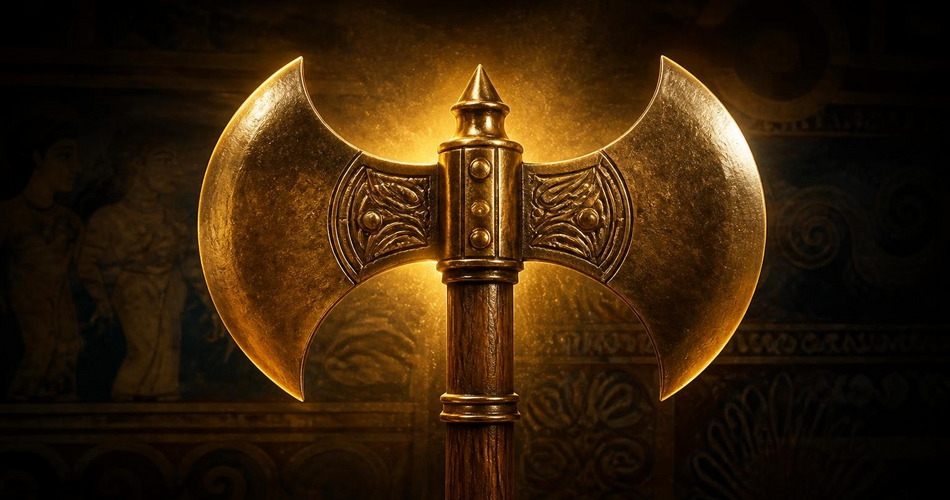
The labrys is a double-headed axe that originated in Minoan Crete, where it served as a sacred symbol of female divinity, authority, and the power of the goddess. Over time, it has come to represent matriarchy, protection, and transformation, and has been adopted by modern feminist and LGBTQ+ movements as an emblem of strength and independence. Its symmetrical blades evoke balance and duality, while its ancient roots tie it to the mysteries of the labyrinth and the cycles of life and death.
What Does Labrys Symbolize?
The labrys is primarily a symbol of female power and divine authority. In Minoan culture, it was closely associated with the Great Goddess, a mother goddess figure who presided over nature, fertility, and the underworld. The double axe also represents the union of opposites — life and death, creation and destruction — due to its two symmetrical blades. In modern contexts, the labrys has become a potent emblem of feminist empowerment, lesbian identity, and the rejection of patriarchal structures. Its shape, resembling a butterfly or a pair of wings, also links it to transformation and spiritual ascent.
Beyond gender symbolism, the labrys signifies protection. It was often placed at entrances or used in rituals to ward off evil. The axe’s cutting edge can sever ties, clear obstacles, or mark a decisive change, making it a symbol of transformation and the courage to break through limitations.
Positive and Negative Meanings
Positive associations: The labrys is seen as a symbol of strength, independence, and female sovereignty. It represents the power to shape one’s own destiny, to protect what is sacred, and to embrace change with courage. In feminist and LGBTQ+ communities, it stands for solidarity, pride, and the reclaiming of ancient feminine authority.
Negative meanings: Because of its association with cutting and violence, the labrys can also evoke aggression, destruction, or a forceful overthrow of order. In some interpretations, its double edge suggests a dual nature that can be dangerous if misused — representing the potential for both creation and destruction, protection and harm. Historically, it has also been co-opted by some extremist groups, though such uses are rare and not part of its mainstream symbolism.
History and Origins of Labrys Symbolism
The labrys first appears in the Minoan civilization of Bronze Age Crete (c. 2700–1450 BCE). Archaeological finds include labrys-shaped votive offerings, frescoes, and ritual objects discovered in palaces and sanctuaries such as Knossos. The word «labrys» itself is thought to derive from the Lydian or Carian language, and is related to the Greek «labyrinth» — the mythical maze that housed the Minotaur. The connection suggests that the labrys was a central symbol in Minoan religion, possibly representing the horns of a sacred bull or the double axe of the goddess.
In Minoan art, the labrys is often depicted alongside goddess figures, priestesses, and in scenes of religious ceremony. It was used in sacrificial rituals and as a symbol of royal or priestly authority. The double axe appears on seals, pottery, and wall paintings, indicating its importance in both public and domestic worship. After the decline of Minoan civilization, the labrys continued to appear in ancient Greek contexts, though its meaning shifted. In classical Greece, it was associated with the Amazons, a mythical race of warrior women, and with the god Hephaestus, who used a double axe to split Zeus’s head and birth Athena.
Labrys Symbolism in Different Cultures
Minoan Crete: The labrys was a sacred object linked to the Great Goddess and the palace of Knossos. It symbolized divine power, fertility, and the cycle of life. Double axes were often placed in sanctuaries or buried with the dead, suggesting a role in afterlife beliefs.
Ancient Greece: The labrys became associated with the Amazons, who were said to carry double axes in battle. It also appeared in the myth of Theseus and the Minotaur, where the labyrinth (possibly named after the labrys) was the setting for the hero’s quest. The axe was also a tool of Hephaestus, the blacksmith god, representing craftsmanship and creative force.
Modern Feminist and LGBTQ+ Movements: In the 1970s, the labrys was adopted by lesbian feminists as a symbol of women’s strength and separatism. It appears on the labrys lesbian flag, designed in 1999, featuring a white labrys on a black triangle (a reference to the Nazi persecution of lesbians). Today, it remains a powerful emblem of lesbian pride and feminist resistance.
Spiritual Meaning of Labrys
In spiritual contexts, the labrys represents the divine feminine in its most authoritative form. It is a tool for cutting through illusion, ego, and obstacles on the path to enlightenment. The double blade symbolizes the balance of opposites — light and dark, masculine and feminine, creation and destruction — and the need to integrate these forces within oneself. Meditating on the labrys can invoke courage, clarity, and the power to make decisive changes. It is also used in some modern pagan and Wiccan traditions as a ritual tool for protection and empowerment, especially in goddess-centered practices.
Labrys in Myths and Folklore
The most famous myth involving the labrys is the story of the Minotaur and the labyrinth. According to Greek tradition, King Minos of Crete commissioned the architect Daedalus to build a labyrinth to contain the Minotaur, a half-man, half-bull creature. The word «labyrinth» is often etymologically linked to «labrys», suggesting that the double axe was a sacred symbol of the palace where the labyrinth was located. Theseus, the Athenian hero, entered the labyrinth to slay the Minotaur, using a ball of thread from Ariadne. While the labrys itself does not appear directly in the myth, its symbolic presence underpins the story’s themes of power, sacrifice, and transformation.
In Minoan folklore, the labrys was likely associated with the goddess and the bull, a central animal in Minoan religion. Bull-leaping frescoes and double-axe motifs appear together, indicating a ritual connection. The axe may have been used in actual bull sacrifices, symbolizing the cycle of death and renewal.
Labrys Tattoo Meaning
As a tattoo, the labrys is a bold statement of identity and belief. It is commonly chosen by women, particularly lesbians and feminists, to express pride in their heritage and strength. The design often emphasizes the symmetrical, wing-like blades, which can also represent freedom and transformation. Some wearers incorporate other symbols such as the moon, flowers, or runes to personalize the meaning. The labrys tattoo can serve as a reminder of inner power, the ability to cut through adversity, and a connection to ancient matriarchal traditions.
Frequently Asked Questions
Q: What does the labrys symbolize in modern times?
A: Today, the labrys is primarily a symbol of feminist and lesbian empowerment, representing female strength, independence, and the reclaiming of ancient goddess traditions. It is also used as a general symbol of transformation and protection.
Q: Is the labrys a religious symbol?
A: In ancient Minoan religion, the labrys was a sacred object associated with the Great Goddess and used in rituals. In modern spirituality, it is used by some pagan and Wiccan traditions as a tool for empowerment and protection.
Q: What is the difference between a labrys and a regular axe?
A: A labrys is a double-headed axe with two symmetrical blades, whereas a typical axe has a single blade. The labrys’s symmetrical design gives it a distinct symbolic meaning related to duality and balance.
Related Symbols
- Double-headed eagle – also represents duality and power
- Labyrinth – shares etymological roots and themes of journey and transformation
- Minotaur – connected through the myth of the labyrinth
- Butterfly – visual resemblance and symbolism of transformation
- Goddess symbols – such as the crescent moon or Venus symbol