Briefly
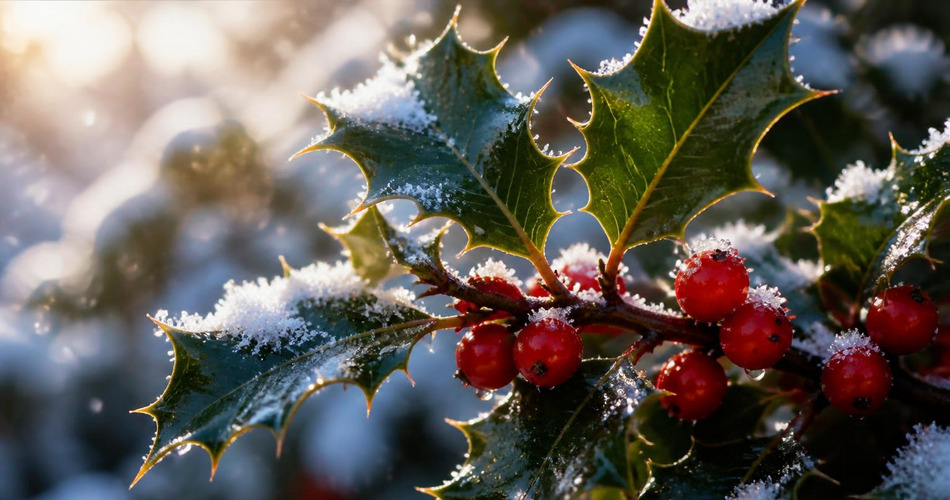
Holly is an evergreen plant with spiny leaves and bright red berries that has been revered for centuries as a symbol of protection, fertility, and eternal life. Its ability to stay green through winter made it a powerful emblem of resilience and renewal in many cultures. In Christian tradition, holly became associated with the crown of thorns and the blood of Christ, while in pre-Christian Europe it was used in winter solstice rituals to ward off evil spirits. Today, holly remains a popular decorative motif during the Christmas season, carrying layered meanings of hope, defense, and the enduring cycle of life.
What Does Holly Symbolize?
Holly primarily symbolizes protection and defense. Its sharp, prickly leaves were thought to repel negative energies and evil spirits, which is why it was often planted near doorways or hung over entrances. The plant’s evergreen nature also represents eternal life and immortality, as it remains green and vibrant even in the harshest winter conditions. Additionally, holly’s bright red berries are associated with fertility, vitality, and the life-giving force of nature. In many traditions, holly embodies the concept of renewal and the promise of spring’s return after the dark winter months.
Positive and Negative Meanings of Holly
Positive associations: Holly is widely seen as a benevolent symbol of protection, good fortune, and hospitality. Hanging holly in a home was believed to safeguard inhabitants from lightning, poison, and malevolent spirits. Its berries and leaves are also linked to fertility and abundance, making it a popular motif in wedding decorations and fertility rites. In Christianity, holly represents the passion of Christ and the promise of eternal life through sacrifice.
Negative meanings: The sharp spines of holly can symbolize pain, suffering, and the prickly aspects of life. In Christian iconography, the leaves are directly tied to the crown of thorns worn by Jesus, evoking themes of martyrdom and sorrow. Additionally, the berries of some holly species are toxic to humans, lending the plant a dual nature of beauty and danger. In folklore, cutting down a holly tree was considered bad luck and could bring misfortune upon the household.
History and Origins of Holly Symbolism
The symbolic use of holly dates back to ancient times. The Druids in Celtic Britain regarded holly as a sacred plant, believing it to possess protective and healing properties. They would bring holly branches into their homes during the winter solstice to provide shelter for woodland spirits and to ensure the return of the sun. The Romans also used holly in their Saturnalia festival, exchanging sprigs as tokens of goodwill and friendship. With the spread of Christianity, holly was gradually incorporated into Christmas celebrations, its red berries symbolizing the blood of Christ and the evergreen leaves representing eternal life. The plant’s pagan associations were reinterpreted through a Christian lens, allowing it to become a central symbol of the holiday season.
Holly Symbolism in Different Cultures
In Celtic mythology, holly was associated with the Holly King, a figure who ruled the dark half of the year from the summer solstice to the winter solstice. The Holly King was seen as a counterpart to the Oak King, representing the cycle of the seasons and the eternal struggle between light and darkness. In Norse tradition, holly was linked to the god Thor and was planted near homes for protection against lightning. In North America, Native American tribes used holly leaves in ceremonial teas and as a symbol of peace and friendship. In modern times, holly is universally recognized as a Christmas symbol, appearing in wreaths, cards, and decorations worldwide, often carrying connotations of warmth, hospitality, and festive cheer.
Spiritual Meaning of Holly
Spiritually, holly is a plant of protection and purification. Its prickly leaves are believed to create a barrier against negative energies, making it a common ingredient in protective amulets and charms. The evergreen nature of holly also symbolizes the soul’s immortality and the enduring spirit of life beyond physical death. In meditation practices, holly can be used to foster resilience and inner strength, reminding the practitioner of the ability to thrive even in difficult circumstances. The bright red berries are seen as a reminder of the life force that pulses through all creation, encouraging a connection to the cyclical rhythms of nature and the promise of renewal after hardship.
Holly in Myths and Folklore
Holly features prominently in European folklore. In England, it was believed that holly could ward off witches and evil spirits, and a sprig hung over the door would protect the household from harm. There is also a tradition that holly berries were once white but turned red after being stained by the blood of Christ, a story that merges pagan and Christian symbolism. In some regions, holly was considered unlucky to bring into the house before Christmas Eve, as it might invite mischief from fairies or spirits. The plant was also used in divination: young women would throw holly leaves into a fire and interpret the patterns to learn about their future husbands. These folk beliefs highlight holly’s enduring role as a plant of both protection and prophecy.
Holly in Dreams
Dreaming of holly can carry a range of meanings depending on the context. Generally, holly in a dream symbolizes protection, resilience, and the need to defend oneself from emotional or spiritual threats. A healthy holly bush with bright berries may indicate a period of good fortune and fertility ahead. Conversely, a withered or bare holly plant might suggest feelings of vulnerability or a need to strengthen one’s boundaries. The sharp leaves can also represent a prickly situation or a person who is difficult to approach. As with all dream symbols, personal associations and the dreamer’s life circumstances play a crucial role in interpretation.
Common Dream Scenarios with Holly
- Seeing holly berries: Often a sign of abundance, joy, and the fruition of efforts. It may also indicate a need to appreciate the simple pleasures in life.
- Being pricked by holly leaves: Suggests that something or someone is causing irritation or pain. It can be a warning to set firmer boundaries or to address a conflict.
- Decorating with holly: Reflects a desire for protection, comfort, and festive celebration. It may also point to upcoming social gatherings or family reunions.
- Eating holly berries: A cautionary dream, as holly berries are toxic. It may represent taking risks or engaging in harmful behavior that needs to be reconsidered.
Holly in Superstitions and Omens
- Hanging holly in the home: Believed to bring good luck and protect against evil spirits, especially during the winter solstice and Christmas season.
- Bringing holly indoors before Christmas Eve: Considered unlucky in some traditions, as it might disturb the spirits of the forest or invite misfortune.
- Cutting down a holly tree: Thought to bring bad luck or even death to the person who fells it, reflecting the plant’s sacred status.
- Holly berries as a weather omen: An abundance of berries was said to predict a harsh winter ahead, as the plant produces more fruit when stressed.
Holly in Art and Literature
Holly appears in numerous works of art and literature, often as a symbol of Christmas, protection, or the enduring spirit of life. In medieval illuminated manuscripts, holly leaves and berries were used as decorative borders, especially in religious texts, where they represented the crown of thorns and the blood of Christ. The plant is also featured in the traditional English Christmas carol “The Holly and the Ivy,” which contrasts the masculine holly (representing Christ) with the feminine ivy (representing the Virgin Mary). In visual art, holly is a common motif in winter landscapes and still-life paintings, such as those by the Dutch Golden Age painters, who used it to symbolize the transience of life and the promise of renewal. In modern literature, holly often appears in Christmas stories and poems, evoking themes of homecoming, family, and seasonal cheer.
Holly Tattoo Meaning
Holly tattoos are chosen for their rich symbolism of protection, resilience, and eternal life. The sharp leaves can represent a person’s ability to defend themselves or their loved ones, while the red berries symbolize vitality and passion. A holly tattoo may also be a tribute to one’s heritage, particularly for those of Celtic or Northern European descent, as the plant is deeply rooted in those cultures. Some people choose holly as a Christmas-themed tattoo, celebrating the holiday spirit and the warmth of family traditions. The evergreen nature of holly makes it a fitting symbol for endurance through difficult times and the hope of renewal.
Meanings of Different Holly Types and Colors
While most holly species share common symbolic themes, variations in color and form can add nuance. The classic English holly (Ilex aquifolium) with its dark green leaves and bright red berries is the most iconic, representing protection, fertility, and the Christmas spirit. American holly (Ilex opaca) has similar symbolism but is often associated with the American South and its traditions. Variegated holly varieties, with leaves edged in cream or yellow, can symbolize uniqueness and the blending of opposites. Holly with yellow berries (such as Ilex aquifolium ‘Bacciflava’) is rarer and may represent optimism, creativity, or a lighter approach to protection. The spiny leaves of all holly types consistently reinforce the theme of defense, while the smooth-leaved varieties (like Ilex glabra) are sometimes seen as less protective but more welcoming.
Frequently Asked Questions about Holly
Q: Is holly associated with Christmas because of pagan traditions?
A: Yes, holly was used in pre-Christian winter solstice celebrations by the Druids and Romans, and later adopted by Christians as a symbol of the season.
Q: Are holly berries poisonous?
A: Yes, holly berries contain toxic compounds that can cause nausea, vomiting, and other symptoms if ingested by humans or pets.
Q: What does holly symbolize in Celtic mythology?
A: In Celtic mythology, holly is associated with the Holly King, who represents the dark half of the year, and symbolizes protection, strength, and the cycle of seasons.
Q: Can holly be used in protective rituals?
A: Yes, holly has long been used in protective rituals, such as hanging sprigs over doorways or carrying a leaf for good luck and defense against negative energies.
Related Symbols
- Mistletoe – Another winter plant associated with fertility, protection, and Christmas traditions.
- Ivy – Often paired with holly in songs and decorations, symbolizing fidelity and eternal life.
- Oak – In Celtic mythology, the Oak King is the counterpart to the Holly King, representing the light half of the year.
- Evergreen trees – Like holly, they symbolize eternal life and resilience through winter.
- Christmas wreath – Often made with holly, representing the cycle of the year and the promise of renewal.