Briefly
The number nine is widely recognized as a symbol of completion, wisdom, and spiritual enlightenment. It represents the end of a cycle and the attainment of a higher understanding. In many traditions, nine is considered a sacred number that embodies universal love, eternity, and the culmination of life’s journey. Its significance appears across numerology, mythology, religion, and folklore, often marking a threshold between the earthly and the divine.
What Does Number Nine Symbolize?
Number nine symbolizes completion and fulfillment. As the highest single digit, it marks the end of a numerical cycle and the beginning of a new one. This makes it a powerful emblem of finality and achievement. In numerology, nine is associated with humanitarianism, compassion, and a deep sense of responsibility toward others. It also represents wisdom gained through experience, often signifying a person who has learned life’s lessons and now seeks to share that knowledge.
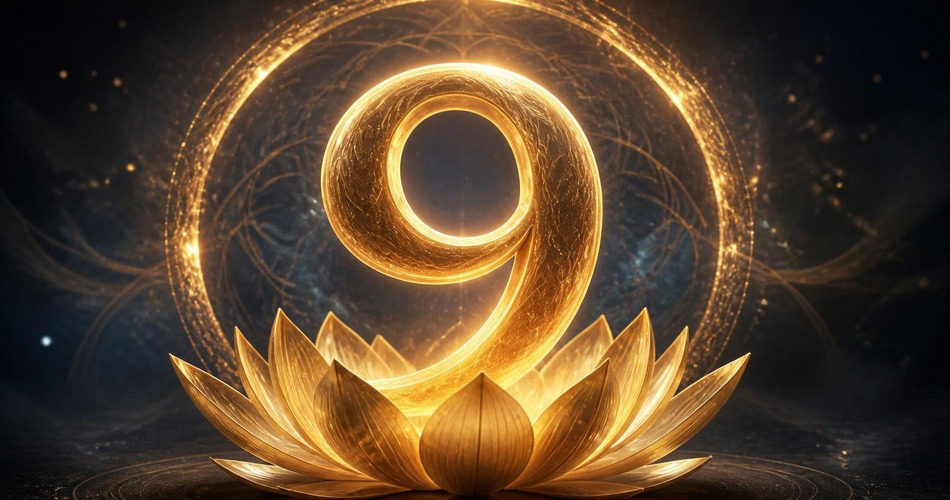
Beyond completion, nine is linked to spiritual awakening and inner strength. It encourages introspection and the pursuit of truth. The number’s shape, resembling a circle with a tail, suggests both wholeness and a path leading outward, reinforcing its dual nature as an ending that leads to new beginnings.
Positive and Negative Meanings
Positive associations: Number nine is seen as a number of generosity, selflessness, and universal love. It embodies idealism, creativity, and the ability to see the bigger picture. Those influenced by nine are often natural leaders who inspire others through their wisdom and compassion. It also signifies the successful completion of long-term goals and the attainment of spiritual enlightenment.
Negative meanings: On the downside, nine can indicate a tendency toward escapism, emotional sensitivity, or a feeling of being misunderstood. Its association with endings may bring melancholy or a sense of loss. In some contexts, nine is linked to obsession or a reluctance to let go of the past, as the completion it represents can be both liberating and painful.
History and Origins of the Symbolism
The symbolic weight of number nine dates back to ancient civilizations. In Pythagorean numerology, nine was considered the first square of an odd number (3×3) and was associated with the Muses and the celestial spheres. The Greeks saw it as a number of perfection and limit, as it is the last of the single digits. In Chinese culture, nine (jiǔ) has been revered for millennia as a symbol of the emperor and cosmic harmony. The Forbidden City in Beijing famously features nine rows of nine door knobs, and the number appears repeatedly in imperial architecture to represent the emperor’s supreme authority.
In Hindu tradition, nine is sacred because it represents the nine planets (Navagraha) that influence human destiny. The number also appears in the nine forms of the goddess Durga during the Navratri festival. These early associations cemented nine as a number of divine power and cosmic order.
Symbolism in Different Cultures
In Chinese culture, nine is the ultimate yang number, symbolizing strength, longevity, and the emperor’s divine mandate. The Dragon robe of the emperor often featured nine dragons, and the number appears in many aspects of imperial life. It is also associated with the nine sons of the dragon in Chinese mythology, each with distinct powers.
In Norse mythology, the number nine is central: Odin hung on Yggdrasil for nine days to gain wisdom, and the universe is said to contain nine worlds connected by the world tree. This reflects nine as a number of knowledge and cosmic structure.
In Christianity, nine is linked to the nine fruits of the Holy Spirit (Galatians 5:22-23) and the nine choirs of angels. It symbolizes divine completeness and the fullness of God’s grace. The ninth hour (3 PM) is the traditional time of Christ’s death, marking a moment of spiritual completion.
Spiritual Meaning
Spiritually, number nine represents the culmination of a spiritual journey. It is often seen as the number of enlightenment and the end of a karmic cycle. Those who resonate with nine are thought to have a strong connection to the divine and a natural ability to heal or guide others. In meditation and prayer, nine is used as a number of focus and surrender, symbolizing the release of ego and the embrace of universal truth.
Nine also appears in the concept of the nine-day novena in Catholic tradition, where prayers are offered for nine consecutive days to seek intercession. This practice underscores nine as a number of patience, faith, and spiritual completion.
Number Nine in Myths and Folklore
In Greek mythology, the nine Muses are the daughters of Zeus and Mnemosyne, each presiding over a different art or science. They represent the creative and intellectual inspiration that nine embodies. The number also appears in the nine circles of Hell in Dante’s Inferno, where each circle corresponds to a specific sin and its punishment, illustrating nine as a number of moral judgment and consequence.
In Celtic folklore, nine is a magical number often associated with the Otherworld. The number nine appears in tales of enchantment, such as the nine hazel trees of wisdom that drop nuts into the Well of Segais. Similarly, in Slavic folklore, nine is used in spells and rituals for protection and divination, highlighting its enduring mystical reputation.
Number Nine in Dreams
Dreaming of the number nine often signifies that a phase of life is coming to an end. It may indicate that the dreamer is about to achieve a long-sought goal or is ready to move on to a new chapter. Nine in dreams can also represent wisdom gained from past experiences, urging the dreamer to trust their intuition and embrace change.
If the number appears repeatedly, it may be a message to focus on spiritual growth or to complete unfinished business. The context of the dream—such as seeing nine objects, hearing the number, or writing it—can provide additional clues about the area of life that requires closure or transformation.
Number Nine in Superstitions and Omens
In many cultures, nine is considered a lucky number. In Chinese tradition, the number is so auspicious that couples often schedule weddings on the ninth day of the ninth month, and businesses use nine in phone numbers and addresses to attract good fortune. In Western superstition, nine is sometimes seen as a number of fulfillment, and a nine-year cycle is believed to bring major life changes.
However, nine also carries ominous associations in some contexts. In Japanese culture, the word for nine (ku) can mean suffering, leading to its avoidance in hospitals and hotels. Similarly, in some European folklore, nine is linked to death and the supernatural, such as the nine waves of the sea that carry souls to the afterlife. These contrasting beliefs reflect nine’s dual nature as both a completion and a threshold.
Number Nine in Art and Literature
Number nine has inspired numerous works of art and literature. Dante Alighieri’s Divine Comedy uses the nine circles of Hell as a central structural element, each circle representing a different sin and its punishment. This use of nine reinforces the idea of moral order and ultimate judgment. In music, Beethoven’s Ninth Symphony is one of the most famous compositions, often associated with themes of joy and universal brotherhood—fitting for nine’s humanitarian symbolism.
In visual art, the nine Muses have been depicted in countless paintings and sculptures from the Renaissance onward, symbolizing the creative inspiration that nine represents. The number also appears in modern literature, such as in Ray Bradbury’s Fahrenheit 451, where the number nine is subtly woven into the narrative to signify transformation and renewal.
Frequently Asked Questions
Q: What does the number nine symbolize in numerology?
A: In numerology, nine represents completion, wisdom, humanitarianism, and spiritual enlightenment. It is the number of the old soul who has learned life’s lessons and seeks to serve others.
Q: Is nine a lucky number?
A: In many cultures, yes. Chinese culture considers nine extremely lucky, while in some Western traditions it is also seen as fortunate. However, in Japan it can be avoided due to its association with suffering.
Q: What does seeing the number nine repeatedly mean?
A: Repeatedly seeing nine may indicate that a major life cycle is ending and that you are being called to embrace spiritual growth or complete unfinished business. It is often seen as a sign of transformation.
Q: How is nine used in religious contexts?
A: In Christianity, nine appears as the fruits of the Spirit and the nine choirs of angels. In Hinduism, it represents the nine planets and the nine forms of the goddess Durga. In Buddhism, nine symbolizes the nine levels of enlightenment.
Related Symbols
- Number Three – The foundation of nine as 3×3, representing creativity and growth.
- Number Seven – Another sacred number often associated with perfection and spiritual completion.
- Number Twelve – Symbolizes cosmic order and completeness, often contrasted with nine’s finality.
- Circle – Represents wholeness and eternity, similar to nine’s cyclical nature.
- Dragon (Chinese) – Closely linked to the number nine in imperial symbolism.