
Briefly
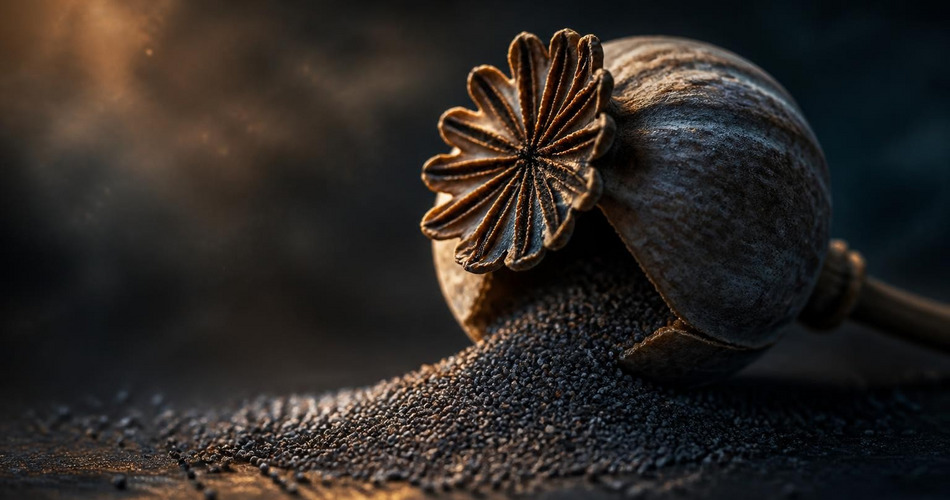
The poppy seed pod is a potent symbol of sleep, death, and remembrance, largely due to its historical association with opium and the red poppies that bloomed on World War I battlefields. Its countless tiny seeds also represent fertility, abundance, and the cyclical nature of life and death. Across cultures, the poppy seed pod embodies a duality of peaceful rest and dangerous oblivion, making it a complex and enduring symbol.
What Does Poppy Seed Pod Symbolize?
The poppy seed pod primarily symbolizes sleep and death, stemming from the narcotic properties of the opium poppy. The pod’s shape, with its crown-like top and numerous seeds, also makes it a symbol of fertility and abundance. In many contexts, the poppy seed pod represents the cycle of life, death, and rebirth, as the seeds ensure the plant’s continuation. Additionally, the red poppy has become a universal emblem of remembrance for soldiers who died in war, particularly after World War I.
The symbolism of the poppy seed pod is deeply rooted in its biology and history. The pod contains thousands of tiny seeds, which can remain dormant for years before germinating, symbolizing potential, memory, and resurrection. The milky latex from the unripe pod is the source of opium, linking the pod to altered states of consciousness, dreams, and the fine line between healing and harm.
Positive and Negative Meanings
Positive associations: The poppy seed pod is often seen as a symbol of peaceful sleep, rest, and the release from pain. Its seeds represent fertility, abundance, and the promise of new life. In the context of remembrance, the poppy honors the sacrifice of soldiers and serves as a reminder of the cost of war, promoting reflection and gratitude.
Negative meanings: The poppy seed pod also carries negative connotations due to its connection with opium and addiction. It can symbolize oblivion, escapism, and the dangers of substance abuse. In some contexts, the poppy represents death and the fragility of life, serving as a memento mori. The pod’s association with sleep can also imply stagnation or a desire to avoid reality.
History and Origins of Poppy Seed Pod Symbolism
The use of the poppy as a symbol dates back to ancient civilizations. The Sumerians referred to the opium poppy as the “joy plant,” and it was used in Mesopotamia for its sedative and pain-relieving properties. In ancient Greece, the poppy was associated with Hypnos, the god of sleep, and his son Morpheus, the god of dreams. The Greeks also linked the poppy to Demeter, the goddess of agriculture, as the poppy grew among the grain fields, symbolizing fertility and abundance.
The modern symbolism of the poppy seed pod as a remembrance emblem originated from the World War I poem “In Flanders Fields” by John McCrae, which described the red poppies growing on the graves of soldiers. This led to the adoption of the red poppy as a symbol of remembrance in many Commonwealth countries. The poppy seed pod itself, with its seeds, also represents the potential for new growth from destruction.
Poppy Seed Pod Symbolism in Different Cultures
In Greek and Roman mythology, the poppy was sacred to several deities. The Greeks associated it with Hypnos and Demeter, while the Romans linked it to Somnus, the god of sleep. The poppy’s ability to induce sleep and its bright red color made it a symbol of both death and resurrection in various mystery cults.
In Chinese culture, the opium poppy has a complex history. While it was used medicinally, its addictive properties led to widespread abuse and social problems, particularly during the Opium Wars. As a result, the poppy seed pod can symbolize both healing and destruction, as well as the dangers of temptation.
In Western culture, the red poppy is overwhelmingly a symbol of remembrance for war dead, especially in the United Kingdom, Canada, Australia, and New Zealand. Poppy wreaths are laid at war memorials, and artificial poppies are worn on Remembrance Day. The poppy seed pod, with its seeds, also appears in art and jewelry as a symbol of fertility and the cycle of life.
Spiritual Meaning of Poppy Seed Pod
Spiritually, the poppy seed pod represents the transition between waking and sleeping states, the conscious and subconscious mind. It is often seen as a tool for accessing deeper levels of awareness through dreams and meditation. The pod’s seeds symbolize the soul’s potential and the many possibilities within each individual. In some spiritual traditions, the poppy is associated with the third eye chakra, representing intuition and inner vision.
The poppy seed pod also serves as a reminder of the impermanence of life. Its beauty is fleeting, and its narcotic properties can lead to spiritual numbness if misused. Thus, it encourages a balanced approach to rest and activity, and a respect for the power of natural substances.
Poppy Seed Pod in Myths and Folklore
In Greek mythology, the poppy was created by Hypnos, the god of sleep, to help people rest. Another myth tells of Demeter, goddess of the harvest, who created the poppy to help her sleep after the loss of her daughter Persephone. The poppy’s ability to induce forgetfulness is also featured in the story of the Lotus Eaters in Homer’s “Odyssey,” though the lotus is often identified with the poppy or a similar plant.
In European folklore, poppies were believed to have magical properties. They were sometimes used in love divinations or to bring about prophetic dreams. However, they were also associated with witchcraft and the danger of being lulled into a false sense of security. The red color of the poppy was thought to represent the blood of fallen warriors, a belief that predates the World War I symbolism.
Poppy Seed Pod in Dreams
Dreaming of a poppy seed pod often relates to themes of sleep, death, or the need for rest. It may indicate a desire to escape from reality or a need to remember something important. The pod’s seeds can symbolize potential and new beginnings, while the pod itself may represent a period of dormancy or incubation.
In dream interpretation, the poppy seed pod can also be a warning against overindulgence or addiction. It may appear when the dreamer is avoiding confronting difficult emotions or situations. Alternatively, it can signify a peaceful transition, such as acceptance of a loss or the end of a phase in life.
Common Dream Scenarios
- Seeing a field of poppies: May represent a desire for peace or a need to honor the dead; can also indicate a longing for escape.
- Holding a poppy seed pod: Suggests holding onto potential or a secret; may also symbolize control over one’s own rest or dreams.
- Eating poppy seeds: Could symbolize ingesting knowledge or taking in something that will bring sleep or forgetfulness.
- A withered poppy pod: Represents the end of a cycle, loss, or the passage of time.
- Opening a poppy pod and seeing the seeds: Reveals hidden potential, fertility, or the many possibilities in a situation.
Poppy Seed Pod in Superstitions and Omens
In some traditions, poppies were considered both lucky and unlucky. Finding a poppy seed pod was sometimes seen as an omen of a good harvest or fertility. However, bringing poppies into the home was thought to bring sleepiness or even death to the household. In parts of Europe, it was believed that if you slept with a poppy under your pillow, you would have prophetic dreams, but also risk being trapped in a dream forever.
During wartime, the appearance of poppies on battlefields was seen as a sign that the souls of the dead were at rest. This superstition contributed to the adoption of the poppy as a remembrance symbol. In some cultures, poppy seeds were used in love charms, but also in spells to induce sleep or forgetfulness.
Poppy Seed Pod in Art and Literature
One of the most famous literary references to the poppy is John McCrae’s 1915 poem “In Flanders Fields,” which begins: “In Flanders fields the poppies blow / Between the crosses, row on row.” This poem directly led to the red poppy becoming an international symbol of remembrance. The poppy also appears in L. Frank Baum’s “The Wonderful Wizard of Oz,” where a field of poppies causes Dorothy and her companions to fall into a deep sleep, illustrating the flower’s narcotic power.
In visual art, the poppy has been a popular subject for many painters. Claude Monet painted several works titled “Poppy Field” (Les Coquelicots), capturing the vibrant red flowers in the French countryside. Vincent van Gogh also painted poppies, and the flower appears in still lifes by artists such as Odilon Redon. The poppy seed pod itself is often depicted in botanical illustrations and contemporary art as a symbol of life’s cycles.
In film, the poppy field scene in the 1939 movie “The Wizard of Oz” remains iconic, visually representing the dangers of temptation and the power of sleep. More recently, the poppy has been used in films and television to evoke themes of war, memory, and addiction.
Poppy Seed Pod Tattoo Meaning
Poppy seed pod tattoos are chosen for various reasons. Many people get them to honor fallen soldiers or loved ones, drawing on the remembrance symbolism. Others are drawn to the poppy’s association with sleep and dreams, using the tattoo to represent a peaceful state of mind or a connection to the subconscious. The seeds within the pod can symbolize fertility, creativity, or the potential for new beginnings.
However, because of the poppy’s link to opium, some tattoo wearers may choose the design to represent overcoming addiction or as a reminder of the dangers of substance abuse. The dual nature of the poppy seed pod makes it a versatile and deeply personal tattoo symbol.
Meanings of Different Poppy Seed Pod Colors and Varieties
The red poppy (Papaver rhoeas) is the most recognized symbol of remembrance and is associated with the blood of soldiers. The white poppy is sometimes used as a symbol of peace, representing a commitment to non-violence and an end to war. The opium poppy (Papaver somniferum) is the source of narcotics and carries the strongest connotations of sleep, dreams, and addiction.
In some contexts, the color of the poppy seed pod itself—often green or brown when dried—can affect its symbolism. A green pod may represent growth and potential, while a dried, brown pod signifies the end of the life cycle and the release of seeds. The crown-like shape of the pod’s top is sometimes associated with royalty or the afterlife.
Frequently Asked Questions
Q: What does a poppy seed pod symbolize?
A: It symbolizes sleep, death, remembrance, fertility, and abundance, with both positive and negative connotations.
Q: Why is the poppy a symbol of remembrance?
A: The red poppy became a symbol of remembrance after World War I, inspired by the poem “In Flanders Fields” and the poppies that grew on the battlefields.
Q: Is the poppy seed pod considered lucky or unlucky?
A: It has been seen as both: lucky for fertility and harvest, but unlucky if brought into the home as it might bring sleep or death.
Q: What is the difference between red and white poppy symbolism?
A: Red poppies symbolize remembrance of war dead, while white poppies are often used as a symbol of peace and a commitment to non-violence.
Related Symbols
- Poppy flower – the bloom itself, often symbolizing beauty and transience
- Opium – the narcotic derived from the poppy, representing addiction and altered states
- Sleep – the poppy’s primary association, representing rest and dreams
- Death – the poppy as a memento mori and symbol of mortality
- Remembrance – the poppy as an emblem of honoring the dead
- Fertility – the many seeds representing abundance and new life


