Briefly
The spider web is a powerful symbol found in cultures worldwide, representing the intricate weave of life, fate, and the interconnectedness of all things. It often embodies creativity and patience, as the spider meticulously crafts its web, but also carries connotations of entrapment and illusion. The web’s delicate yet resilient structure makes it a rich metaphor for both the fragility and strength of human existence.
What Does a Spider Web Symbolize?
A spider web primarily symbolizes the interconnectedness of life. Just as each strand of the web is linked to others, so are events, people, and actions bound together in a larger pattern. The web also represents fate and destiny, as seen in the ancient Greek concept of the Moirai (Fates) spinning the thread of life. Additionally, the spider web stands for creativity and patience—the spider’s methodical weaving mirrors the artist’s or artisan’s dedication to their craft. In many traditions, the web is a protective symbol, believed to catch negative energies or harmful spirits before they reach the individual.
Positive and Negative Meanings
Positive associations: Spider webs are often seen as symbols of creativity, patience, and diligence. They remind us that great works are built strand by strand, through sustained effort. The web’s geometric precision also suggests order and harmony. In some cultures, finding a spider web in the morning is considered good luck, as it indicates that the spider has woven a protective net over the home.
Negative meanings: On the darker side, spider webs can symbolize entrapment, deception, and illusion. The web is a trap for prey, so it can represent being caught in a difficult situation or a web of lies. Cobwebs in an abandoned house evoke neglect, decay, and the passage of time. In dreams, a spider web may indicate feeling stuck or manipulated.
History and Origins of the Symbolism
The symbolism of the spider web dates back to ancient times. In Greek mythology, the story of Arachne—a mortal weaver who challenged the goddess Athena—links the spider’s web to hubris and punishment, but also to artistic mastery. The web’s radial design appears in petroglyphs and cave art, suggesting early humans recognized its significance. In many indigenous cultures, the spider web is a sacred symbol: the Lakota people tell of the Spider Grandmother who weaves the web of life, and the dreamcatcher, originally Ojibwe, is a physical representation of a spider web meant to filter dreams. These ancient associations continue to influence modern interpretations.
Spider Web Symbolism in Different Cultures
In Native American traditions, the spider web is often associated with the Spider Grandmother, a creator and protector figure. The dreamcatcher, a hoop with a woven net, is designed to catch good dreams and allow bad ones to pass through. Among the African Anansi stories, the spider Anansi is a trickster and culture hero who uses his web to outwit larger animals, symbolizing intelligence and resourcefulness. In Hinduism, the web of Indra is a metaphor for the interconnectedness of the universe—each jewel at the web’s intersections reflects all others. In European folklore, spider webs were sometimes used as bandages to stop bleeding, reflecting a belief in their healing properties. The web’s appearance in a home was often read as an omen of either good fortune or impending misfortune, depending on the context.
Spiritual Meaning of Spider Webs
Spiritually, the spider web is a symbol of the web of life—the idea that all beings are connected and that every action has a ripple effect. It encourages mindfulness of one’s place in the larger cosmos. The web also represents the spirit world; in shamanic traditions, the web is a bridge between the physical and spiritual realms. Meditating on a spider web can inspire reflection on how one’s choices weave the fabric of one’s destiny. Some see the web as a reminder to be patient and trust the process of creation, as the spider does not rush its work.
Spider Webs in Myths and Folklore
Perhaps the most famous myth involving a spider web is the Greek tale of Arachne. Arachne boasted that her weaving was superior to Athena’s; after a contest, Athena turned her into a spider, condemning her to weave forever. This story links the spider web to pride, artistry, and eternal creation. In West African folklore, the spider Anansi is a trickster who uses his web to achieve his goals, often teaching moral lessons about cleverness and humility. In Japanese folklore, the spider Jorōgumo is a shape-shifting creature that lures victims with her web, representing seduction and danger. These myths show the dual nature of the web as both a creative and a perilous symbol.
Spider Webs in Dreams
Dreaming of a spider web often relates to feelings of being trapped or entangled in a situation. It may reflect anxiety about a relationship, job, or personal dilemma. Alternatively, a web in a dream can symbolize creativity and the need to weave together different aspects of one’s life. The condition of the web matters: a pristine, dew-covered web suggests clarity and potential, while a torn or dusty web indicates neglect or unresolved issues. The presence of the spider itself adds another layer—if the spider is actively weaving, it may represent the dreamer’s own efforts to shape their destiny.
Common Dream Scenarios
- Walking into a spider web: Feeling suddenly confronted by an obstacle or hidden problem.
- Being trapped in a spider web: A sense of helplessness or being controlled by external forces.
- Weaving a spider web: Taking an active role in creating your own life path or artistic project.
- Seeing a beautiful, dew-covered web: Appreciation of life’s intricate beauty and potential.
- Destroying a spider web: Breaking free from a limiting situation or letting go of old patterns.
Spider Webs in Superstitions and Omens
Many superstitions surround spider webs. In European folk belief, finding a spider web on your clothing means you will soon receive new clothes or money. A web in the house is often considered lucky, as it is thought to catch bad luck. However, if a web falls onto your face, it may be an omen of deceit or gossip. In some traditions, killing a spider that has woven a web brings bad luck, while letting it live ensures continued protection. Cobwebs in a new home are sometimes seen as a sign that the previous occupants left behind unresolved energy.
Spider Webs in Art and Literature
One of the most beloved literary spider webs appears in E.B. White’s Charlotte’s Web, where the spider Charlotte weaves words into her web to save her friend Wilbur the pig. Here, the web becomes a symbol of friendship, sacrifice, and the power of words. In visual art, the spider web has been used by artists like Louise Bourgeois, whose giant spider sculptures (such as Maman) evoke the mother figure as both protector and weaver—though the sculptures are spiders, the web is implied. In poetry, spider webs often appear as metaphors for memory, time, and the delicate connections between people. The web’s geometric beauty has also inspired patterns in architecture and design, from Gothic tracery to modern latticework.
Spider Web Tattoo Meaning
Spider web tattoos carry varied meanings depending on placement and context. Traditionally, a spider web tattoo on the elbow was associated with time spent in prison, symbolizing being “caught” in the system. However, outside that context, the tattoo often represents creativity, patience, and the interconnectedness of life. It can also signify overcoming a period of entrapment or hardship. A web with a spider adds the element of the weaver—control, cunning, or artistic mastery. The design’s symmetry and detail make it a popular choice for those who appreciate intricate body art.
Meanings of Different Types, Colors, or Variations
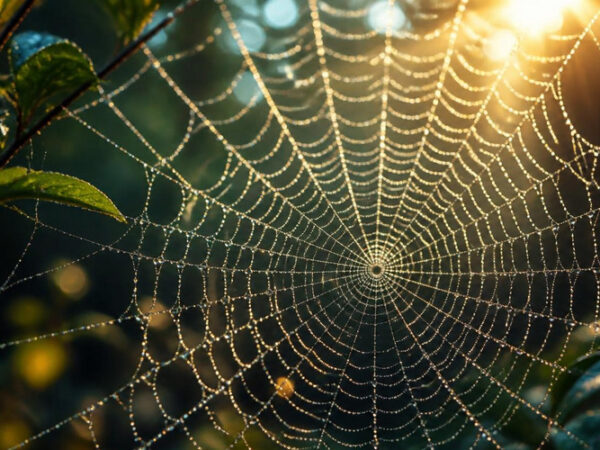
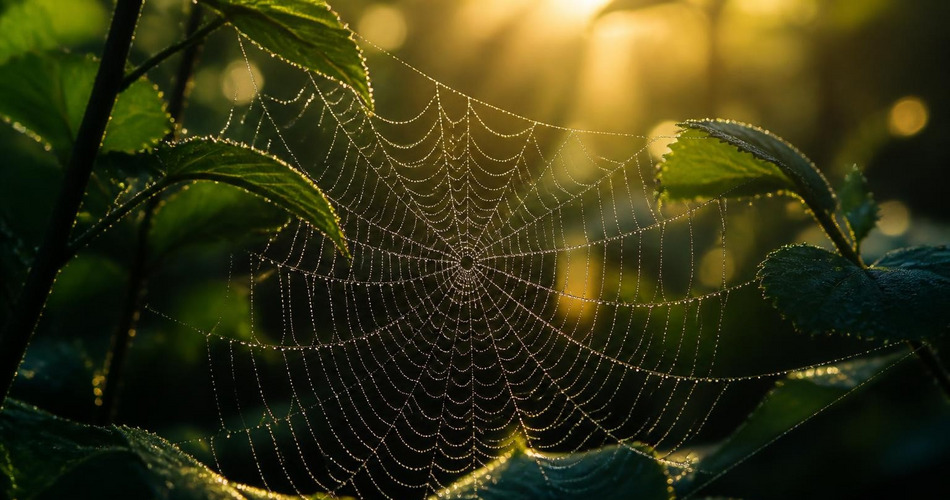
The appearance of a spider web can alter its symbolism. A dew-covered web sparkling in the morning light symbolizes new beginnings, clarity, and beauty. A broken or torn web suggests disruption, loss, or the need to rebuild. Cobwebs—dusty, abandoned webs—evoke neglect, the passage of time, and forgotten memories. The spiral orb web common in gardens represents the cycle of life and the cosmos, while a funnel web (with a retreat) may symbolize hidden dangers or a need for shelter. In color symbolism, a white web can represent purity and spiritual connection, while a dark web might hint at mystery or the shadow self.
Frequently Asked Questions
Q: What does it mean if I find a spider web in my house?
A: In many cultures, a spider web indoors is considered a sign of good luck and protection, as it is believed to catch negative energy. However, some superstitions view it as a sign of neglect or hidden secrets.
Q: Is a spider web a symbol of death?
A: Not typically. While cobwebs can symbolize decay and the passage of time, the spider web more often represents life’s interconnectedness, creativity, and fate. It is not a direct death symbol.
Q: What does a spider web tattoo mean on the elbow?
A: Historically, an elbow spider web tattoo was associated with imprisonment, but today it is often chosen for its aesthetic appeal and can symbolize resilience, creativity, or having overcome a difficult period.
Q: Why is the spider web a symbol of fate?
A: The web’s radial structure and the spider’s methodical weaving have been compared to the threads of destiny spun by the Fates in Greek mythology, making it a natural symbol for fate and the interconnectedness of events.
Related Symbols
- Spider: The weaver, representing creativity, patience, and sometimes danger.
- Dreamcatcher: A physical representation of a spider web used for protection and filtering dreams.
- Labyrinth: A complex, winding path that can symbolize life’s journey and the search for meaning.
- Net: A mesh used for catching or containing, similar to the web’s function.
- Mandala: A geometric design representing the universe, often with radial symmetry like a web.