Briefly
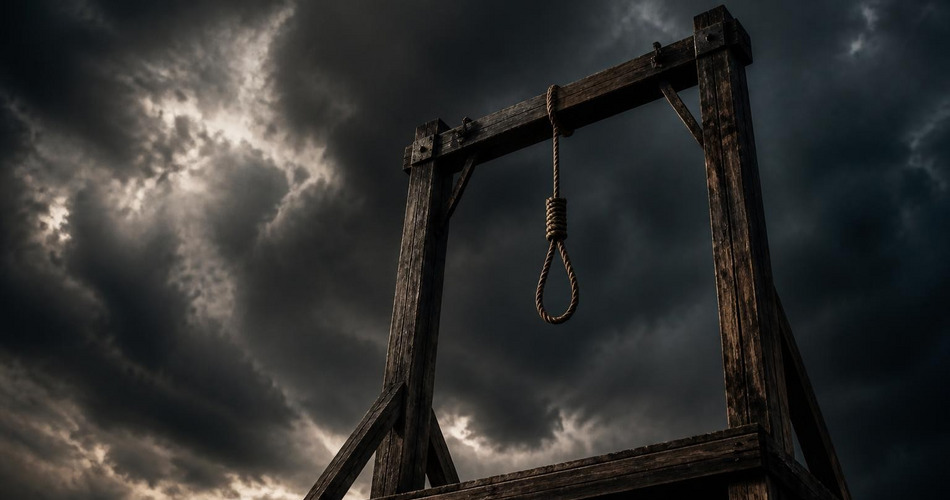
The gallows is a wooden structure historically used for execution by hanging. As a symbol, it represents the ultimate form of judicial punishment, the finality of death, and the authority of the law. It evokes fear, shame, and the consequences of wrongdoing, but also can signify justice served and the maintenance of social order. The gallows carries a heavy emotional weight, often associated with oppression, mortality, and the transition between life and death.
What Does Gallows Symbolize?
At its core, the gallows symbolizes capital punishment and the power of the state over life and death. It is a stark reminder of mortality and the consequences of crime. The structure itself—a horizontal beam supported by two upright posts—creates a shape that echoes the cross, linking it to sacrifice and judgment. In many contexts, the gallows represents the ultimate authority of the law, serving as a deterrent against serious offenses. It also embodies the idea of public shame, as executions were often carried out in front of crowds, marking the condemned as outcasts.
Beyond its literal meaning, the gallows has become a metaphor for any inescapable situation or impending doom. Phrases like “gallows humor” reflect a dark, ironic attitude in the face of death. The symbol thus carries dual connotations: the grim reality of execution and the human response to that reality.
Positive and Negative Meanings
Positive associations: In societies that upheld capital punishment, the gallows symbolized the triumph of justice over evil. It represented the enforcement of laws and the protection of the community from dangerous individuals. For some, it stood as a necessary tool for maintaining order and deterring crime, embodying the principle that actions have consequences.
Negative meanings: More commonly, the gallows evokes fear, oppression, and the cruelty of state‑sanctioned death. It is a symbol of shame, humiliation, and the irreversible finality of execution. The gallows also represents the abuse of power when used unjustly, and it can signify the darkest aspects of human nature—vengeance, cruelty, and the disregard for life.
History and Origins of the Gallows Symbolism
The gallows has been used for executions across many cultures for centuries, with its symbolic meaning evolving alongside legal and social attitudes. In medieval Europe, public hangings were common, and the gallows became a prominent fixture in town squares. The structure itself was often built from local timber, making it a permanent reminder of the law’s reach. Over time, the gallows came to symbolize not only punishment but also the social stigma attached to the condemned and their families.
The symbolism of the gallows is deeply tied to the concept of “the king’s justice”—the idea that the monarch or state held the power of life and death. In England, the “Tyburn tree” (a type of gallows) became infamous as a site of public executions, and its name entered the language as a symbol of capital punishment. The gallows also appears in legal iconography, such as the scales of justice balanced by a sword and a noose, reinforcing its role as an emblem of ultimate authority.
Gallows Symbolism in Different Cultures
In Western cultures, the gallows is primarily associated with criminal justice and the death penalty. It appears in legal symbols, literature, and folklore as a warning against transgression. In some European traditions, the site of a gallows was considered cursed or haunted, and the wood from the structure was thought to bring bad luck.
In other parts of the world, similar structures existed, such as the “scaffold” in China or the “hanging tree” in colonial America. While the specific forms varied, the symbolism remained consistent: the gallows represented the ultimate punishment and the authority of the ruling power. In many cultures, the gallows also took on a spiritual dimension, seen as a gateway between the earthly and the afterlife, where the soul of the executed would be judged.
Spiritual Meaning of Gallows
Spiritually, the gallows is often viewed as a symbol of transition—a passage from life to death, and from the physical world to whatever lies beyond. It can represent the moment of judgment, where a person’s deeds are weighed and consequences are met. In some belief systems, the gallows is a place where the soul is released, and the structure itself becomes a marker of that threshold.
The gallows also carries a warning about the moral and spiritual consequences of one’s actions. It serves as a reminder of the fragility of life and the inevitability of death, urging individuals to live with integrity and awareness of their choices.
Gallows in Myths and Folklore
In folklore, the gallows is often surrounded by superstition and dark tales. One common belief is that the ghost of a hanged person lingers near the gallows, unable to move on. The phrase “gallows bird” refers to a person deserving of hanging, and “gallows humor” describes the macabre jokes made in the face of death. Some stories tell of the “Tyburn ghost” haunting the site of old executions.
In English folklore, it was said that touching a gallows brought bad luck, and that pieces of the rope used in a hanging could be used as charms—either for protection or to cause harm. The gallows also appears in tales of highwaymen and outlaws, where the threat of the “hangman’s noose” is ever present. These myths reinforce the gallows as a symbol of fear, fate, and the inescapable consequences of a criminal life.
Gallows in Dreams
Dreaming of a gallows often reflects deep‑seated fears about punishment, guilt, or a sense of being trapped in an inescapable situation. It may indicate that the dreamer feels judged by others or by their own conscience. The gallows in a dream can also symbolize a major life transition or the end of a particular phase, carrying both fear and the potential for release.
Psychologically, the gallows may represent the dreamer’s anxiety about authority figures or the consequences of past actions. It can be a call to confront one’s fears or to accept responsibility for choices made.
Common Dream Scenarios
- Seeing an empty gallows: This may symbolize an impending threat or a fear of punishment that has not yet materialized. It can also represent a feeling of being watched or judged.
- Standing on the gallows: Often indicates a sense of helplessness or that the dreamer feels they are about to face a harsh consequence. It may reflect guilt or a belief that one is being unfairly targeted.
- Witnessing an execution at the gallows: This can represent the end of something—a relationship, a job, or a personal habit. It may also symbolize the dreamer’s fear of losing control or being powerless.
- Escaping from the gallows: A positive sign of overcoming obstacles, avoiding punishment, or finding a way out of a difficult situation. It suggests resilience and the ability to change one’s fate.
Gallows in Superstitions and Omens
Superstitions surrounding the gallows are numerous and often grim. In many European traditions, it was considered unlucky to walk under a gallows or to touch its wood. The rope used in a hanging was believed to possess magical properties—some thought it could cure illnesses or bring good luck, while others saw it as a curse.
- It was said that if a condemned person’s shadow fell on the gallows before execution, it was an omen of their guilt.
- In some regions, a piece of gallows wood kept in the home was thought to ward off evil spirits, but only if taken before the execution took place.
- The number of steps leading to the gallows was sometimes considered significant, with odd numbers believed to be unlucky.
- Dreaming of a gallows was often interpreted as a warning of impending misfortune or the need to change one’s ways.
Gallows Tattoo Meaning
Gallows tattoos are relatively uncommon but carry strong symbolic weight. They often represent a fascination with mortality, a rebellious attitude toward authority, or a personal reminder of the fragility of life. For some, the gallows tattoo symbolizes having faced a near‑death experience or having overcome a period of intense judgment or punishment.
The design can be combined with other elements, such as a noose, a hangman, or a crow, to enhance the meaning. In certain subcultures, the gallows tattoo is a mark of defiance against the system, a declaration that one is prepared to face the consequences of their choices. It can also serve as a memorial to someone who was executed, either historically or personally.
Meanings of Different Types of Gallows
While the basic structure of a gallows is consistent, variations carry additional symbolic nuances. The Tyburn tree, a triangular gallows used in England, is particularly associated with the history of public executions and the spectacle of punishment. Its three‑sided shape sometimes symbolizes the three persons of the Trinity in a dark parody, or the three aspects of justice: judgment, punishment, and mercy.
Portable gallows, used in military or field executions, emphasize the immediacy of punishment and the absence of a permanent seat of justice. The material of the gallows—often rough, untreated wood—adds to its symbolism of raw, unadorned death. In contrast, a gallows built from stone or metal might represent the cold, unyielding nature of the law.
Frequently Asked Questions
Q: What does a gallows symbolize?
A: A gallows primarily symbolizes capital punishment, the authority of the law, death, and the consequences of crime. It can also represent fear, shame, and the finality of judgment.
Q: Why are gallows associated with justice?
A: Historically, gallows were used to carry out legal executions, making them a direct instrument of judicial punishment. They thus became a symbol of the state’s power to enforce laws and deliver ultimate justice.
Q: Is there any positive symbolism to gallows?
A: In some contexts, the gallows represents the triumph of justice over evil and the protection of society. However, its positive associations are limited and often overshadowed by its grim nature.
Q: What does dreaming of a gallows mean?
A: Dreaming of a gallows often indicates feelings of guilt, fear of punishment, or a sense of being trapped. It can also symbolize a major life transition or the end of a difficult period.
Related Symbols
- Noose – the instrument of hanging, symbolizing death, fate, and entrapment.
- Scaffold – a broader term for execution platforms, representing public judgment and shame.
- Executioner – the figure who carries out the sentence, embodying the cold hand of justice.
- Cross – the shape of the gallows echoes the cross, linking it to sacrifice, suffering, and redemption.
- Hangman’s knot – a specific type of noose, often used in symbolism of finality and doom.
- Tyburn tree – a historical gallows, symbolizing the spectacle of public execution and the power of the monarchy.