Briefly
Lapis lazuli is a deep blue metamorphic rock that has been valued as a gemstone and pigment for over 6,000 years. It symbolizes wisdom, truth, and spiritual enlightenment, often associated with the heavens and inner vision. Historically, it was worn by royalty and priests to signify power and divine connection. Its enduring blue color represents the vastness of the cosmos and the depth of human understanding.
What Does Lapis Lazuli Symbolize?
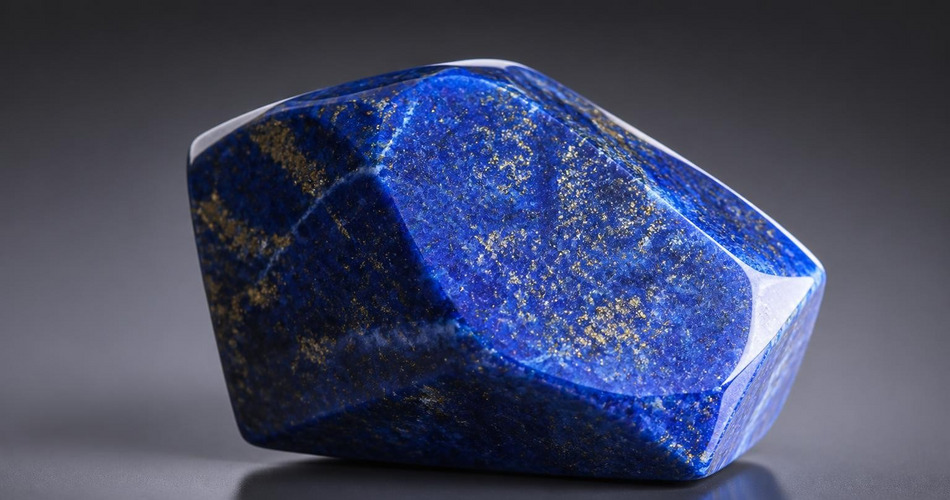
Lapis lazuli symbolizes wisdom, truth, and spiritual awareness. Its rich blue hue, often flecked with golden pyrite, evokes the night sky and the celestial realm, making it a stone of cosmic insight. In many traditions, it represents the ability to see beyond illusion and access inner knowledge. It is also a symbol of royalty, authority, and divine favor, worn by pharaohs and high priests to affirm their status as intermediaries between gods and humans.
Positive and Negative Meanings
Positive associations: Lapis lazuli is believed to enhance intellectual ability, stimulate the desire for knowledge, and encourage honest communication. It is associated with self-awareness, mental clarity, and creative expression. Many consider it a stone of friendship and harmony, promoting truth in relationships.
Negative meanings: In some traditional beliefs, wearing lapis lazuli during times of personal moral failing or dishonesty was thought to cause the stone to fade or crack, reflecting the wearer’s inner conflict. This was seen as a warning sign of spiritual or ethical turmoil.
History and Origins of Lapis Lazuli Symbolism
Lapis lazuli has been mined in the Badakhshan Province of Afghanistan for more than 6,000 years, making it one of the oldest known gemstones. Ancient Mesopotamians prized it highly, using it in cylinder seals and temple ornaments to invoke divine protection. In ancient Egypt, it was ground into powder for eye makeup and used in burial masks, most famously on Tutankhamun’s funerary mask, where it represented the heavens and the renewal of life after death. The stone’s name derives from the Latin lapis (stone) and the Persian lājvard (blue), reflecting its long journey through diverse cultures.
Lapis Lazuli Symbolism in Different Cultures
In ancient Egypt, lapis lazuli was associated with the sky goddess Nut and the afterlife. It was often placed in tombs to guide the soul through the underworld. The Sumerians believed the stone contained the soul of their gods, and they used it in statues and temple furnishings to invite divine presence. In ancient Greece and Rome, lapis lazuli was linked to Aphrodite and Venus, symbolizing love and beauty. In Chinese culture, it was called “Kingfisher Blue” and was used in finely carved jewelry and snuff bottles, signifying status and refinement. During the Renaissance in Europe, lapis lazuli was ground into ultramarine pigment, the most expensive blue paint, used exclusively for the robes of the Virgin Mary and Christ in religious art to denote holiness and divinity.
Spiritual Meaning of Lapis Lazuli
Spiritually, lapis lazuli is considered a stone of awakening and enlightenment. It is believed to activate the third eye chakra, enhancing intuition, psychic abilities, and spiritual perception. Many use it in meditation to quiet the mind and connect with higher states of consciousness. It is also associated with the throat chakra, promoting truthful and authentic expression. In crystal healing traditions, it is thought to protect the aura from negative energy and to guide the user toward self-realization.
Lapis Lazuli in Myths and Folklore
In Sumerian myth, the goddess Inanna (Ishtar) was said to carry a lapis lazuli rod, symbolizing her power over love and war. The Epic of Gilgamesh, one of the earliest known literary works, describes the gate of the city of Uruk as made of lapis lazuli, representing the boundary between the mortal and divine worlds. In Egyptian mythology, the god Thoth, associated with writing and wisdom, was sometimes depicted with a lapis lazuli scepter, emphasizing the stone’s link to knowledge and divine order.
Lapis Lazuli in Dreams
Dreaming of lapis lazuli is sometimes interpreted as a sign of increased spiritual awareness or a call to seek deeper truth in one’s life. The deep blue color in dreams may represent the subconscious mind or hidden knowledge coming to the surface.
Common Dream Scenarios
- Finding a piece of lapis lazuli: Often seen as an invitation to pursue wisdom or to trust one’s intuition more fully.
- Receiving lapis lazuli jewelry: May symbolize a forthcoming opportunity for honest communication or a deepening of a relationship.
- A cracked or dull lapis lazuli: Could reflect feelings of dishonesty or a disconnection from one’s inner truth.
Lapis Lazuli in Art and Literature
Lapis lazuli was the source of the vibrant ultramarine pigment used by Renaissance painters such as Titian and Jan van Eyck. In van Eyck’s “The Ghent Altarpiece” (1432), the deep blue robes of the Virgin Mary were painted with lapis lazuli, symbolizing her purity and divine nature. The poet Lord Byron referenced the stone in his work “The Giaour” (1813), comparing the eyes of a slave girl to “the blue of the skies of my own land” — a blue he likened to lapis lazuli. In modern literature, W.B. Yeats wrote the poem “Lapis Lazuli” (1938) using the stone as a symbol of timeless artistic vision and resilience against tragedy.
Lapis Lazuli Tattoo Meaning
Though not a common tattoo subject itself, the image of a lapis lazuli stone or a gemstone cut in its shape is chosen by some as a permanent symbol of wisdom, spiritual insight, or a quest for truth. It can also represent a connection to ancient history or a personal commitment to honesty and integrity.
Frequently Asked Questions
Q: What does lapis lazuli symbolize?
A: Lapis lazuli primarily symbolizes wisdom, truth, and spiritual enlightenment, along with royalty, authority, and divine connection.
Q: Is lapis lazuli a birthstone?
A: Lapis lazuli is one of the modern birthstones for December, though it is not part of the traditional list.
Q: What chakra is lapis lazuli associated with?
A: It is most often associated with the third eye and throat chakras, enhancing intuition, mental clarity, and authentic expression.
Q: How can you tell real lapis lazuli?
A: Real lapis lazuli has a rich, even blue color with small flecks of golden pyrite. It is denser than imitation materials, and a simple scratch test or bright light inspection can reveal fake dyes or resin fillers.
Related Symbols
- Sapphire — another blue gemstone symbolizing wisdom and royalty
- Amethyst — associated with spiritual awareness and protection
- Turquoise — a stone of protection and communication, often connected to sky and water
- Ultramarine — the pigment derived from lapis lazuli, used in religious art
- Third Eye Chakra — the energy center linked to intuition and inner vision