Briefly
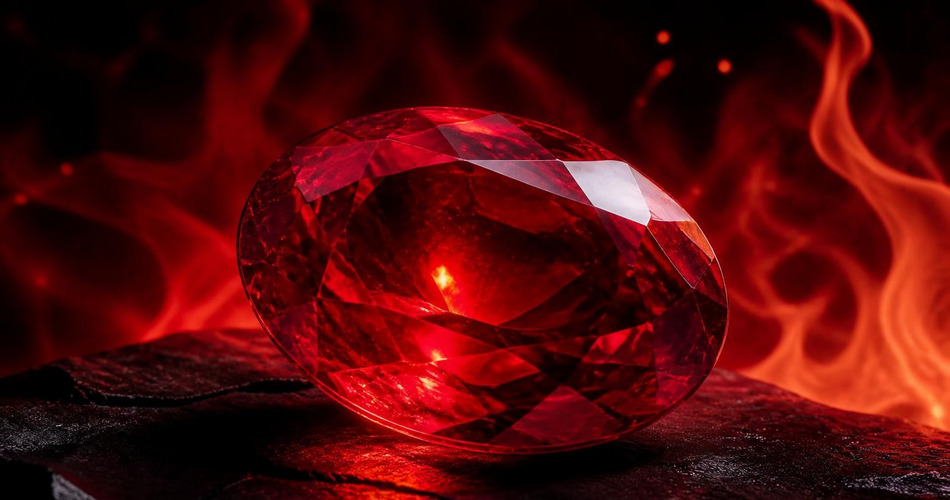
The ruby is a red gemstone long associated with passion, vitality, and life force. Its deep color has linked it to blood, fire, and the sun, giving it meanings of energy, courage, and protection across many cultures. At the same time, rubies have symbolized wealth, power, and desire, prized by royalty and treasured in jewelry. The same qualities that make the ruby a stone of love and strength can also appear in negative forms, such as greed, jealousy, or violent passion.
What Does Ruby Symbolize?
Ruby symbolism centers on the color red and all that red has meant to human societies. Passion is perhaps the most direct association: the stone has been linked to romantic love, desire, and intense emotion since ancient times. Its color resembles blood, which connects it to life force, vitality, and the beating heart.
Beyond love, the ruby has served as a symbol of power and status. Because it is one of the hardest natural gemstones after diamond and has been rare and difficult to mine, it was historically reserved for rulers and elites. Many Asian cultures called it the gem of kings, and wearing a ruby was a way of displaying authority and divine favor.
Protection is another central theme. Across India, Burma, and Europe, rubies were carried as amulets to guard against injury, poison, and evil. The stone was expected to warn its owner of danger by darkening or changing color. It was also associated with the sun and fire, giving it meanings connected to light, energy, and undying strength.
Positive and Negative Meanings
Positive associations: Ruby represents love, courage, vitality, prosperity, and protection. It has been regarded as a stone of health because of its link to blood and the heart, and as a bringer of good fortune and success. In many traditions it invites confidence, leadership, and creative energy.
Negative meanings: The intensity of ruby symbolism has a shadow side. Because the gem is tied to desire and wealth, it can symbolize greed, pride, or an obsessive attachment to possessions. Its blood-red color may also suggest anger, jealousy, or violence, especially when passion turns destructive. In some old European beliefs, a flawed or darkened ruby was thought to bring misfortune or to signal approaching disaster.
History and Origins of the Symbolism
The ruby’s history as a symbolic stone reaches back more than two thousand years. In ancient India, where rubies were found in the Mogok region of present-day Myanmar and in Sri Lanka, Sanskrit texts described the stone as ratnaraj, meaning «king of gemstones». Indian tradition held that rubies carried the essence of the sun and could protect warriors in battle, bring peace to enemies, and strengthen the body.
Ancient Burmese culture believed that rubies grew deep inside the earth from the blood of dragons, and that a warrior who implanted a ruby under his skin became invincible. That folklore, while rooted in myth rather than fact, shows how deeply the stone was associated with supernatural protection and bodily power.
In classical Rome, ruby was sometimes confused with other red stones such as spinel and garnet, but the name eventually came to describe the red corundum we know today. The word «ruby» itself derives from the Latin ruber, meaning red. Through the medieval and Renaissance periods, European lapidaries repeated and expanded the older stories, describing the ruby as a stone that could repel plague, reveal poison, and calm the mind.
Ruby Symbolism in Different Cultures
Across Asia, the ruby has especially strong status. In China and India, it has been associated with prosperity and imperial authority. Chinese nobles decorated their robes and seals with carved rubies, and the stone was seen as a charm for good fortune and longevity. In Hindu tradition, rubies are connected with the sun and the planet Mars, and wearing one has been thought to strengthen confidence and ambition.
In the Buddhist cultures of Southeast Asia, rubies were placed in temple ornaments and royal regalia. Myanmar, Thailand, and Sri Lanka all produced fine rubies that circulated along trade routes, and the stone came to symbolize both sacred devotion and earthly power. The Burmese tradition of gifting rubies to honored guests linked the gem with generosity and loyalty.
In Western cultures, the ruby has symbolized love and courage especially strongly. Red is the color of the heart, and the ruby became a conventional gift to represent enduring romantic commitment. At the same time, European royalty used rubies to signal authority; crowns, scepters, and rings featuring large red stones were common across the continent. The Black Prince’s Ruby in the British Crown Jewels, though actually a spinel, shows how central the ruby was to royal symbolism.
Spiritual Meaning of Ruby
Spiritually, the ruby is regarded as a stone of vital energy. Its color connects it to the root chakra, which is often associated with grounding, survival, and the physical life force, and to the heart, as a stone of love and courage. Meditating with a ruby has traditionally been believed to awaken energy, focus the mind, and strengthen resolve.
Because rubies are among the most durable of gemstones, they represent permanence and spiritual endurance. Many traditions treat the ruby as a symbol of indestructible faith, a reminder that the soul, like the stone, remains bright under pressure. In Christian symbolism, the deep red of the ruby was sometimes compared to the blood of Christ and used to represent divine love and sacrifice.
In esoteric traditions, the ruby has been paired with the sun and with fire. It appears in texts on alchemy and gem magic as a stone of transformation, able to purify the holder and bring hidden truths to light. These ideas are seldom based on measurable effects, but they shaped the ruby’s reputation for centuries and still influence how it is used in spiritual practice today.
Ruby in Myths and Folklore
Many myths about the ruby center on the idea that it is a living or self-protective stone. Burmese legend told of a dragon that shed its blood to form rubies in the earth, making each gem a fragment of a powerful creature. It was also said that rubies would sink into the ground or grow dull if their owner lost honor, and that they would shine again when restored to a worthy person.
Indian folklore described rubies as stones that could bring their owners wealth and victory. One widespread belief held that the quality of a ruby influenced the fate of its owner: a bright, clear stone brought joy and success, while a damaged one brought grief. The stone was often called the «teardrop of the sun» in poetic traditions, linking it to warmth, passion, and divine light.
European legends carried similar themes. Medieval lapidaries claimed that a ruby could warm cold water, chase away evil spirits, and guard against nightmares. Knights were said to set rubies in their armor or shields as protection in combat, and physicians recommended rubbing a ruby against the skin to improve the blood. None of these claims survive scientific scrutiny, but they reveal what people across ages believed the ruby could do.
Ruby in Dreams
In dream interpretation, the ruby generally appears as a symbol of passion, value, and inner strength. Because gems in dreams often stand for qualities of the self, a ruby may point to a person’s most cherished desires, talents, or relationships. The dream context matters: receiving a ruby may suggest a gift of love or recognition, while losing one may point to anxiety about losing something precious.
The color of the dream ruby carries additional meaning. A bright, clear ruby is associated with positive energy, healthy love, and confidence. A dark or cracked ruby may reflect worries about jealousy, anger, or a sense that something valuable has been damaged. As with all dream symbols, personal associations are important; a person who loves jewelry will understand the stone differently from someone who fears its intensity.
Common Dream Scenarios
- Finding a ruby — often linked to discovering a hidden talent, opportunity, or new relationship.
- Receiving a ruby as a gift — may suggest affection, loyalty, or an offer of lasting commitment.
- Losing a ruby — frequently connected to fear of loss in love, status, or financial security.
- Wearing a ruby ring — can represent a commitment, such as a marriage or a promise tied to passion.
- A broken or cracked ruby — may point to disappointment, betrayal, or damage to something once valued.
- A ruby glowing or shining — often read as a sign of hope, vitality, or emotional clarity.
Ruby in Superstitions and Omens
Superstitions about the ruby developed independently in several parts of the world, but they share common themes of protection and warning. In Burma, warriors believed a ruby placed under the skin made them invulnerable to swords and spears. In India, rubies were worn to guard against enemies and to prevent bad dreams. European tradition held that a ruby set in a ring would darken when danger or sickness approached the wearer.
Rubies were also part of household superstitions. Some European texts claimed that a ruby thrown into water would make it boil or that swallowing a small ruby dust could cure stomach ailments. Wealthy families passed down rubies as heirlooms, believing the stones carried the protection and luck of their ancestors. While these customs have faded, the idea of ruby as a protective stone persists in jewelry and gift-giving.
Ruby in Art and Literature
In Western literature, rubies often stand for passionate love, temptation, or hidden treasure. One well-known example appears in the poem «The Rubaiyat of Omar Khayyam», where the ruby is used as a metaphor for wine, dawn, and ephemeral joy. The image of the cup, the sunrise, and the red gem blend into a symbol of living fully in the present moment.
In prose, rubies frequently appear as objects of desire or clues in adventure stories. R. L. Stevenson’s adventure novel Treasure Island refers to jewels including rubies among the pirates’ plunder, and countless subsequent adventure tales use rubies to represent the lure of wealth and the danger that comes with it. The ruby also appears in fantasy and fairy-tale traditions as a stone with magical powers, such as the ruby slippers in L. Frank Baum’s The Wonderful Wizard of Oz, which are red shoes tied to homecoming and inner power. Though the famous film version uses silver slippers instead, the book’s ruby slippers carry the gem’s associations with vitality and magic.
Tattoo Meaning of Ruby
Ruby tattoos are not as widespread as symbols like hearts or roses, but they appear among people drawn to the gem’s meanings of passion, courage, and resilience. A ruby tattoo often combines the stone with its setting, such as a ring or pendant, and may be chosen as a permanent reminder of a strong love, a personal victory, or a vow of loyalty.
The color red dominates the design, making ruby tattoos visually striking and emotionally direct. Because the stone is associated with the heart and blood, a ruby tattoo can also symbolize life itself or a commitment to living boldly. Some designs include a cracked or rough ruby to represent healing and the beauty of imperfection, drawing on the common idea that pressure and time create a precious gem.
Meanings of Different Ruby Colors and Variations
The classic ruby is a rich, vivid red, but natural rubies range in hue from pinkish red to deep purplish red. The most valued shade has been called pigeon’s blood, a bright red with a hint of blue. This shade carries the strongest associations of passion and power, and it has historically been reserved for royal and ceremonial use.
Pink sapphires are sometimes marketed as pink rubies because they share the same mineral, corundum; color determines the naming. Pink varieties soften the ruby’s symbolism, suggesting tender love, playfulness, or youthful affection rather than fierce passion. Star rubies, which display a six-rayed light pattern called asterism, are treated as especially lucky and protective; the star shape adds meanings of guidance, destiny, and spiritual insight.
Synthetic rubies, first produced in the late 19th century, carry the same color associations as natural stones but lack the history and rarity that give natural rubies their symbolic weight. For most people, the meaning of a ruby depends more on its color and context than on its origin, whether natural, lab-created, or inherited.
Frequently Asked Questions
Q: What does a ruby symbolize?
A: A ruby symbolizes passion, love, courage, vitality, protection, and wealth. Its red color links it to blood and fire, and different cultures have used it as a stone of power and devotion.
Q: Is ruby a lucky stone?
A: In many traditions, yes. Rubies have been regarded as bringers of prosperity, protection, and good fortune, particularly in India and Southeast Asia, where they were given as gifts and set in royal regalia.
Q: What is the spiritual meaning of ruby?
A: Spiritually, the ruby is associated with the life force, courage, and passion. It has been connected to the sun, the root and heart chakras, and the idea of an indestructible inner flame.
Q: What does a ruby ring symbolize?
A: A ruby ring symbolizes passionate commitment and enduring love. Ruby is a traditional gemstone for the 40th wedding anniversary and is also associated in some calendars with July birthdays.
Q: Can ruby appear in dreams?
A: Yes. In dream interpretation, a ruby generally represents passion, value, or inner strength; finding a ruby may mean discovering something precious, while losing one can reflect fear of loss.
Related Symbols
- Garnet — another red gemstone, historically confused with ruby and sharing its associations of passion and protection.
- Spinel — a red stone long mistaken for ruby, including in famous crown jewels.
- Red — the color that drives ruby symbolism, representing love, danger, energy, and power.
- Fire — the element most often connected to ruby, signifying vitality and transformation.
- Blood — a bodily symbol linked to ruby through color, suggesting life force and sacrifice.