Briefly
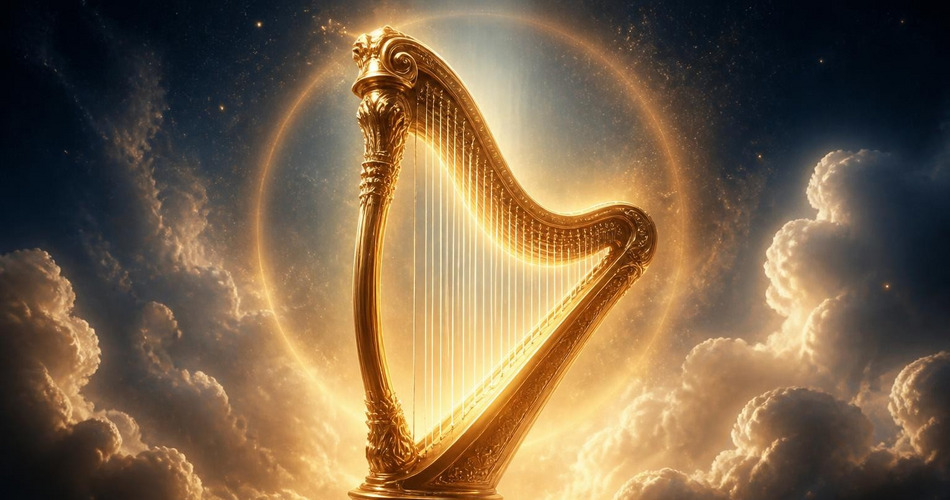
The harp is a stringed instrument that has long symbolized celestial harmony, poetic inspiration, and national identity. Its resonant tones evoke both the tranquility of heaven and the depth of human emotion. Across cultures, the harp represents a bridge between the earthly and the divine, often associated with angels, bards, and the soul’s journey. Its elegant frame and gentle sound make it a powerful emblem of peace, creativity, and healing.
What Does the Harp Symbolize?
The harp primarily symbolizes harmony—both musical and spiritual. Its strings, when plucked, create a blend of notes that suggests balance and unity. This makes the harp a natural emblem for peace, reconciliation, and the ordering of chaos into beauty. In many traditions, the harp also stands for poetic inspiration and the transmission of wisdom, as bards and minstrels used it to accompany epic tales and sacred songs.
Additionally, the harp is a potent symbol of national pride, most famously for Ireland, where it appears on coats of arms and currency. It also represents the connection between heaven and earth, often depicted in the hands of angels or as a tool for divine communication. In a personal context, the harp can signify inner tranquility, emotional expression, and the healing power of music.
Positive and Negative Meanings of the Harp
Positive associations: The harp is widely linked to peace, serenity, and spiritual elevation. Its music is thought to calm the mind, soothe sorrow, and create a sense of sacred space. In Celtic tradition, the harp was a symbol of the bardic arts, embodying knowledge, eloquence, and the preservation of cultural memory. It also represents hope and transcendence, as its sound seems to lift the spirit toward the heavens.
Negative meanings: In some folklore, the harp can evoke melancholy or longing, especially in Irish music where the “harp of Tara” is associated with loss and exile. The instrument’s delicate strings also make it a symbol of fragility—beauty that can be easily broken. In certain contexts, the harp’s association with sorrowful ballads gives it a bittersweet quality, reminding listeners of the pain behind the beauty.
History and Origins of Harp Symbolism
The harp is one of the oldest known musical instruments, with depictions dating back to ancient Mesopotamia and Egypt around 3000 BCE. Early harps were often associated with religious rituals and royal courts, symbolizing divine favor and the ordered cosmos. In ancient Greece, the lyre—a close relative of the harp—was linked to the god Apollo and the mythical musician Orpheus, who could charm all living things with his playing.
The Celtic harp, or cláirseach, emerged in Ireland and Scotland by the early medieval period. It became a symbol of the Gaelic aristocracy and the bardic class, who used it to recite genealogies, laws, and heroic tales. During the 16th and 17th centuries, the harp was adopted as a national emblem of Ireland, representing resistance against English rule and the enduring spirit of the Irish people. This historical layer gives the harp a rich political and cultural significance beyond its musical function.
Harp Symbolism in Different Cultures
In Celtic culture, the harp is synonymous with the bardic tradition. It symbolizes storytelling, historical memory, and the power of words set to music. The Irish harp, in particular, is a national symbol appearing on passports, coins, and official documents. It also represents the sovereignty of Ireland, often depicted with a winged maiden (the personification of Ireland) playing the instrument.
In Christian iconography, the harp is frequently held by angels, symbolizing heavenly praise and the music of the spheres. It appears in medieval manuscripts and Renaissance paintings as an attribute of King David, who played the harp to soothe King Saul’s troubled spirit. This biblical association reinforces the harp’s meaning as a tool for spiritual comfort and divine connection.
In West African tradition, the kora—a harp-lute—serves a similar role. Played by griots, it accompanies oral histories and praise songs, symbolizing wisdom, lineage, and the continuity of culture. The kora’s construction from a gourd and animal skin ties it to nature and the ancestral world.
Spiritual Meaning of the Harp
Spiritually, the harp represents the bridge between the material and the divine. Its strings are often seen as conduits for prayer or meditation, with each note carrying intention upward. In many mystical traditions, the sound of the harp is believed to purify the atmosphere, calm the mind, and open the heart to higher guidance. The instrument’s shape—a graceful curve with vertical strings—has been interpreted as a ladder or a gateway to the heavens.
In New Age and holistic practices, the harp is used in sound healing to balance chakras and release emotional blockages. The vibrations of its strings are thought to resonate with the body’s energy centers, promoting relaxation and inner peace. This aligns with the ancient concept of “music of the spheres,” where the cosmos itself is a harmonious harp played by the divine.
Harp in Myths and Folklore
In Greek mythology, the lyre (a harp-like instrument) was invented by Hermes and given to Apollo, who became the god of music and poetry. The most famous myth involving a harp is that of Orpheus, whose music could charm animals, trees, and even the gods of the underworld. His lyre, after his death, was placed among the stars as the constellation Lyra.
In Irish folklore, the harp is central to the story of the Dagda, a chief god who owned a magical harp called Uaithne. When the Dagda played it, the seasons followed in order; it could also summon sorrow or laughter. Another legend tells of the “Harp of Tara,” which was said to play three types of music: the strain of sorrow, the strain of joy, and the strain of sleep. These tales emphasize the harp’s power over emotion and nature.
In Welsh mythology, the harp is associated with the bard Taliesin, who gained prophetic wisdom after tasting a magic potion. His harp-playing was said to reveal hidden truths and inspire creativity. Across these myths, the harp consistently appears as a tool of transformation, linking music to magic and the supernatural.
Harp in Dreams
Dreaming of a harp often reflects a desire for harmony and peace in one’s life. It may indicate a need to express creativity or to reconnect with spiritual values. Hearing harp music in a dream can symbolize divine guidance or a message from the subconscious, urging the dreamer to listen more deeply to their inner voice.
A broken harp in a dream might represent lost opportunities, emotional pain, or a disruption of harmony. Playing a harp in a dream suggests that the dreamer has the ability to bring order and beauty to their surroundings, while seeing others play may indicate admiration for someone’s artistic or spiritual gifts.
Common Dream Scenarios Involving the Harp
- Playing a harp in a dream: Represents creative expression, emotional balance, or a call to develop one’s talents.
- Hearing harp music without seeing the instrument: Suggests a spiritual message or a reminder to seek inner peace.
- A broken or out-of-tune harp: Symbolizes discord, unresolved grief, or a need to repair relationships.
- Receiving a harp as a gift: Indicates recognition of one’s artistic abilities or a new phase of personal growth.
- A harp floating or glowing: Points to transcendent experiences, meditation, or a connection to the divine.
Harp in Superstitions and Omens
In Irish folk tradition, the harp was sometimes seen as a protective object. Hanging a harp in the home was believed to ward off evil spirits and bring good luck to musicians. Conversely, breaking a harp string was considered an omen of bad news or the end of a creative period. In some Celtic customs, the sound of a harp at a funeral was thought to guide the soul to the afterlife, while a silent harp in a house could signify a loss of joy.
In Christian superstition, dreaming of an angel playing a harp was taken as a sign of impending spiritual comfort or, in some interpretations, a warning to repent. These beliefs, though varied, all underscore the harp’s role as a messenger between worlds.
Harp in Art and Literature
The harp appears prominently in Western art and literature. In William Blake’s poem “The Little Boy Found,” the harp is a symbol of divine care. Blake also depicted harps in his illustrations for the Book of Job, where angels play them in heavenly scenes. In James Joyce’s “Ulysses,” the harp is used as a motif for Irish identity and nostalgia, particularly in the “Sirens” episode where the sound of a harp evokes longing and loss.
In painting, the harp is a common attribute of angels in Renaissance works by artists such as Fra Angelico and Botticelli. The Irish painter Jack B. Yeats often included harps in his landscapes to symbolize the spirit of Ireland. In music, the harp is central to the work of composers like Claude Debussy (“Danse sacrée et danse profane”) and Carlos Salzedo, who expanded its expressive range. These examples show the harp as a versatile symbol, equally at home in sacred and secular contexts.
Harp Tattoo Meaning
A harp tattoo is most commonly chosen as a symbol of Irish heritage and pride. It can represent a connection to one’s roots, a love of music, or a personal commitment to harmony and peace. The design often incorporates Celtic knots, shamrocks, or angel wings to reinforce these meanings. For musicians, a harp tattoo may signify devotion to their art and the transformative power of sound.
In a broader sense, a harp tattoo can also symbolize the wearer’s spiritual journey, their role as a storyteller, or their desire to bring beauty into the world. The placement and style—whether realistic, tribal, or minimalist—can further personalize the meaning.
Meanings of Different Types of Harps
- Celtic harp (cláirseach): Symbolizes Irish and Scottish identity, bardic tradition, and cultural resilience. Its smaller size and curved pillar distinguish it from the concert harp.
- Concert harp (pedal harp): Represents classical elegance, technical mastery, and the grandeur of orchestral music. Often associated with refinement and formal beauty.
- Lever harp: A more portable version, symbolizing folk traditions, accessibility, and the democratization of music. It is often linked to personal creativity and community gatherings.
- Kora (West African harp-lute): Embodies oral history, griot wisdom, and the connection between ancestors and the living. Its gourd body ties it to earth and nature.
- Lyre (ancient Greek harp): Represents divine inspiration, poetry, and the power of music to civilize. It is closely tied to Apollo and Orpheus.
Frequently Asked Questions About Harp Symbolism
Q: What does a harp symbolize in Christianity?
A: In Christianity, the harp is a symbol of heavenly praise and divine comfort. It is often associated with angels and King David, who played the harp to soothe King Saul. It represents the music of the spheres and the soul’s longing for God.
Q: Why is the harp a symbol of Ireland?
A: The harp became a symbol of Ireland in the medieval period, representing the Gaelic order and bardic culture. It was later adopted as a national emblem during the struggle for independence, appearing on flags, coins, and official seals. The harp’s association with Irish identity remains strong today.
Q: What does a broken harp symbolize?
A: A broken harp often symbolizes loss, grief, or the end of a creative period. In Irish folklore, it can represent the silencing of a bard or the suppression of a nation’s voice. In personal symbolism, it may indicate emotional pain or a need for healing.
Q: Is the harp associated with angels?
A: Yes, the harp is one of the most common attributes of angels in Christian art. It symbolizes the angelic role of praising God and conveying divine messages. The harp’s gentle sound is thought to mirror the peace of heaven.
Related Symbols
- Lyre – Ancient Greek ancestor of the harp, symbolizing poetry and divine inspiration.
- Kora – West African harp-lute, representing oral tradition and ancestral wisdom.
- Angel wings – Often paired with the harp to signify spiritual elevation and protection.
- Shamrock – Another Irish national symbol, often combined with the harp in patriotic imagery.
- Music notes – Represent the creative and expressive power that the harp embodies.
- Celtic knot – Used in harp tattoos and decorations to emphasize eternal connection and heritage.