
Briefly
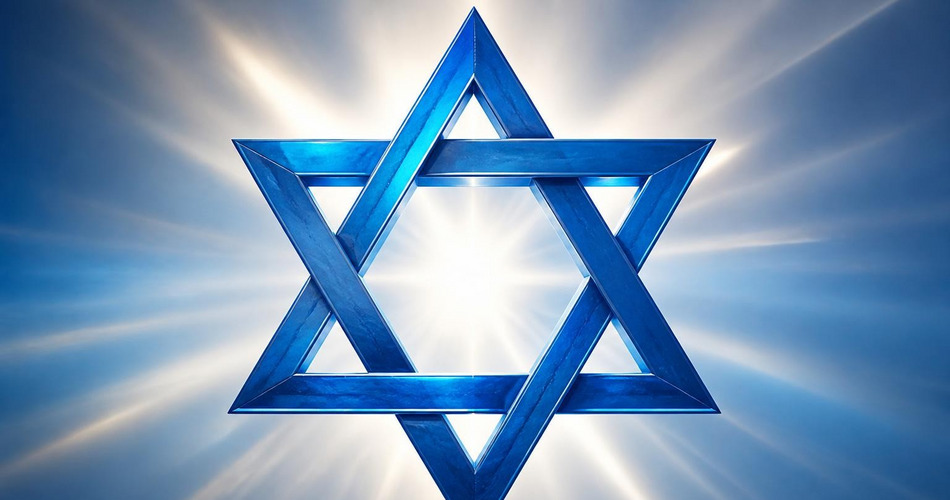
The Star of David, also known as the Magen David (Shield of David), is a six-pointed star composed of two overlapping equilateral triangles. It is the most recognizable symbol of Jewish identity and Judaism, representing the relationship between God and humanity, the six directions of the universe, and the balance between the spiritual and material worlds. Beyond its religious significance, the star has come to symbolize protection, unity, and the enduring spirit of the Jewish people throughout history.
What Does Star Of David Symbolize?
The Star of David primarily symbolizes Jewish identity and faith. The hexagram shape—two interlocking triangles—is often interpreted as the union of heaven and earth, or the connection between God and humankind. One triangle points upward, representing the divine, while the other points downward, representing the earthly realm. Together they signify the constant interaction between the spiritual and the physical.
In Jewish mysticism (Kabbalah), the six points of the star correspond to the six directions of space (north, south, east, west, up, down) with the center representing the spiritual core. The star is also seen as a symbol of protection, rooted in the ancient belief that King David’s shield was shaped like a hexagram and offered divine safeguarding.
Positive and Negative Meanings
Positive associations: The Star of David is overwhelmingly a positive emblem of Jewish pride, heritage, and continuity. It represents faith in God, the unity of the Jewish people, and the strength to persevere through adversity. In modern times, it appears on the flag of Israel as a symbol of national sovereignty and hope.
Negative meanings: The star also carries painful historical connotations. During the Nazi era, Jews were forced to wear a yellow Star of David as a badge of shame and persecution. This usage transformed the symbol into one of victimization and oppression. However, after the Holocaust, the star was reclaimed as a powerful sign of resilience and survival.
History and Origins of the Star Of David Symbolism
The hexagram itself is an ancient geometric motif found in many cultures, but its specific association with Judaism emerged gradually. The earliest known Jewish use of the hexagram appears on a seal from the 7th century BCE found in Sidon. However, it was not widely adopted as a Jewish symbol until the medieval period.
By the 17th century, the Star of David became a common emblem on Jewish synagogues, manuscripts, and tombstones. It gained official status when the Zionist movement adopted it for the flag of Israel in 1948. The name “Shield of David” likely originates from a medieval legend that King David’s shield was inscribed with the hexagram, imbuing it with protective power.
Star Of David Symbolism in Different Cultures
While the Star of David is most strongly identified with Judaism, the hexagram appears in other traditions. In Hinduism, the Shatkona (six-pointed star) symbolizes the union of Shiva and Shakti, the masculine and feminine principles. In Islam, the hexagram is known as the Seal of Solomon, a ring that gave King Solomon power over jinn and animals, and it appears in Islamic art and architecture.
In Christian contexts, the hexagram has been used as a decorative motif in churches and manuscripts, sometimes representing the six days of creation. However, its meaning in these cultures is distinct from the Jewish Star of David, which remains uniquely tied to Jewish identity and faith.
Spiritual Meaning of the Star Of David
In Jewish spirituality, the Star of David embodies the relationship between God and the world. The six points are often linked to the six attributes of God (chesed, gevurah, tiferet, etc.) in Kabbalistic thought. The central space of the star represents the sefirah of malchut (kingdom), the divine presence in the material world.
The star also serves as a reminder of the unity of the Jewish people. The two triangles can be seen as the merging of the spiritual and the physical, or the harmony between the written and oral Torah. Meditating on the star is believed to bring balance and protection.
Star Of David in Myths and Folklore
Jewish folklore holds that King David’s shield was shaped like a hexagram and that the symbol protected him in battle. Another legend tells that the Star of David was engraved on the seal of King Solomon, giving him power over demons and spirits. In medieval Jewish mysticism, the hexagram was used in amulets and protective charms to ward off evil.
In broader folklore, the hexagram appears in alchemical and magical traditions as a symbol of the union of opposites—fire and water, male and female, spirit and matter. These meanings, however, are separate from the specifically Jewish interpretation of the Star of David.
Star Of David in Superstitions and Omens
The Star of David is sometimes regarded as a protective omen. In Jewish folk tradition, hanging a Star of David amulet in a home or wearing it as jewelry is believed to ward off the evil eye and bring good fortune. Conversely, the forced wearing of the yellow star during the Holocaust turned the symbol into an omen of persecution and death for many Jews.
Today, the star is rarely seen as a negative omen; instead, it is a symbol of hope and resilience. Some people still use it in protective talismans, especially within Kabbalistic practices.
Star Of David in Art and Literature
The Star of David appears prominently in Jewish art, from ancient synagogue mosaics to modern paintings. Marc Chagall, the renowned Jewish artist, frequently incorporated the star into his stained-glass windows and canvases, such as the “Jerusalem Windows” (1962) at the Hadassah Medical Center, where the star symbolizes divine light and Jewish heritage.
In literature, the star is a central motif in works about the Holocaust. For example, in Art Spiegelman’s graphic novel Maus, Jews are depicted as mice wearing Star of David badges, using the symbol to convey persecution and survival. The star also appears on the flag of Israel, designed in 1948, making it one of the most recognizable national symbols in the world.
Star Of David Tattoo Meaning
Tattoos of the Star of David are common among Jews and non-Jews alike. For many, the tattoo is a declaration of Jewish pride, faith, and connection to the community. It can also represent protection, memory of ancestors, or solidarity with the State of Israel. Some people choose the star in combination with other symbols, such as the Hebrew word “chai” (life) or the Hamsa hand, to amplify its protective meaning.
In Jewish tradition, tattooing is generally discouraged based on Leviticus 19:28, so the practice remains controversial within some religious circles. Nonetheless, the Star of David tattoo remains a popular expression of identity.
Meanings of Different Types, Colors, or Variations
The most common version of the Star of David is a blue hexagram on a white background, as seen on the flag of Israel. Blue is associated with divinity and the sky in Jewish symbolism. The star can also appear in gold, black, or other colors, each carrying slightly different connotations:
- Blue Star of David: Represents faith, royalty, and the divine presence.
- Yellow Star of David: Historically forced upon Jews during the Holocaust, now reclaimed as a symbol of remembrance and resilience.
- Gold Star of David: Often used in jewelry and ceremonial objects, symbolizing value and spiritual light.
- Interlocking triangles in other colors: May emphasize the union of opposites or specific Kabbalistic meanings.
Frequently Asked Questions
Q: What does the Star of David symbolize?
A: It primarily symbolizes Jewish identity, faith in God, protection, and the unity of the Jewish people. It also represents the connection between the spiritual and material worlds.
Q: Is the Star of David a religious symbol?
A: Yes, it is the central symbol of Judaism and appears on synagogues, religious texts, and the flag of Israel. It also has mystical significance in Kabbalah.
Q: Why is it called the Shield of David?
A: According to Jewish folklore, King David’s shield was shaped like a hexagram and protected him in battle. The name “Magen David” (Shield of David) reflects this protective meaning.
Q: Does the Star of David appear in other religions?
A: The hexagram shape appears in Hinduism (Shatkona), Islam (Seal of Solomon), and other traditions, but its specific meaning as the Star of David is uniquely Jewish.
Related Symbols
- Hexagram – The geometric shape underlying the Star of David, used in various cultures.
- Seal of Solomon – A hexagram in Islamic and mystical traditions, associated with King Solomon’s wisdom and power.
- Menorah – Another central Jewish symbol, representing the temple and divine light.
- Hamsa – A protective hand symbol often combined with the Star of David in Jewish amulets.
- Chai – The Hebrew word for “life,” frequently paired with the Star of David in jewelry and tattoos.