Briefly
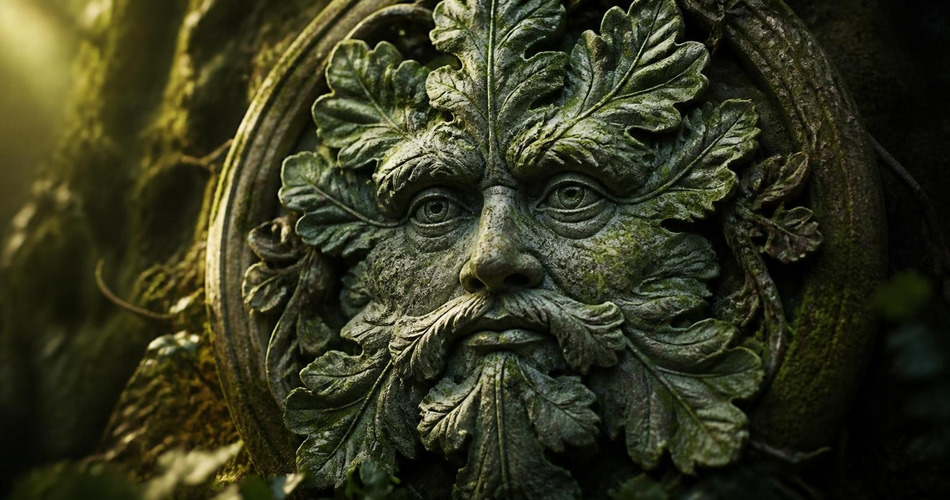
The Green Man is a mythological figure commonly found in European folklore and medieval architecture, typically depicted as a face made of or surrounded by leaves. He symbolizes nature, growth, rebirth, and the cyclical renewal of life. Often associated with spring and the vitality of the forest, the Green Man represents humanity’s deep connection to the natural world and the enduring power of vegetation.
What Does Green Man Symbolize?
The Green Man primarily symbolizes nature and the life force that drives plant growth and seasonal renewal. He embodies the cycle of birth, death, and rebirth seen in the natural world, particularly the return of greenery in spring after winter’s dormancy. In many interpretations, he also represents the wild, untamed aspects of nature, as well as fertility and abundance. The Green Man is often seen as a guardian of forests and a symbol of humanity’s interdependence with the environment.
Positive and Negative Meanings
Positive associations: The Green Man is overwhelmingly associated with positive qualities such as vitality, growth, renewal, and harmony with nature. He evokes the life-giving power of plants and the promise of spring, making him a symbol of hope and regeneration. In modern contexts, he is often used as an emblem of environmentalism and ecological awareness.
Negative meanings: In some interpretations, the Green Man can also represent the untamed, chaotic side of nature that is indifferent to human concerns. His leafy visage may evoke the wild forest as a place of danger or the overwhelming force of unchecked growth. Rarely, he is linked to death and decay as part of the natural cycle, but this is not a dominant theme.
History and Origins of Green Man Symbolism
The term “Green Man” was popularized in the 20th century by folklorist Lady Raglan in her 1939 essay “The Green Man in Church Architecture.” However, the motif itself dates back much further. Similar leaf-faced figures appear in ancient Roman and Celtic art, often associated with nature deities. The Green Man became especially prominent in medieval European church carvings, where he was used as a decorative element symbolizing the power of nature and, in some contexts, the resurrection of Christ. These carvings can be found in cathedrals and churches across England, France, and Germany.
Green Man Symbolism in Different Cultures
While the Green Man is most strongly associated with European folklore, similar figures appear in other cultures. In Celtic mythology, the god Cernunnos is a horned deity often depicted surrounded by foliage, embodying the wild forest and animal life. In Hindu tradition, the god Pashupati, a form of Shiva, is sometimes shown with a leafy headdress, representing his lordship over animals and nature. In Slavic folklore, the Leshy is a forest spirit who protects the woods and can appear as a man covered in leaves. These cross-cultural parallels suggest a universal human archetype of the nature spirit.
Spiritual Meaning of Green Man
In modern spirituality, particularly within Neopaganism and Wicca, the Green Man is revered as a symbol of the Earth’s fertility and the male aspect of nature. He is often paired with the Goddess as a representation of the sacred union that brings life. The Green Man is also seen as a guardian of the natural world and a reminder of the spiritual connection between humans and the environment. His image is used in rituals celebrating the changing seasons, especially spring and summer festivals.
Green Man in Myths and Folklore
The Green Man appears most famously in the medieval poem Sir Gawain and the Green Knight, where the Green Knight is a mysterious, green-skinned figure who challenges the knights of King Arthur. This character embodies the wild, testing nature of the forest and the cycle of challenge and renewal. In English folklore, the Green Man is also linked to the figure of Jack-in-the-Green, a character in May Day celebrations who is covered in leaves and represents the spirit of spring. These myths emphasize the Green Man’s role as a bringer of fertility and as a force that must be respected.
Green Man in Dreams
Dreaming of the Green Man may indicate a need to reconnect with nature or to embrace personal growth and renewal. His appearance can symbolize a period of transformation, much like the changing seasons. The dream may also reflect a desire for greater harmony with the natural world or a reminder of the cycles of life and death. As with many dream symbols, the context and the dreamer’s personal associations are important for interpretation.
Common Dream Scenarios
- Seeing a Green Man in a forest: May represent a call to explore your inner self or to seek wisdom in nature.
- A Green Man speaking or offering leaves: Could symbolize guidance or a gift of new ideas and growth.
- A Green Man fading or dying: Might indicate fear of change or the end of a natural cycle in your life.
Green Man in Superstitions and Omens
In some rural European traditions, encountering a Green Man figure was considered a good omen for the harvest or for fertility. Carrying a small carving of a Green Man was thought to bring protection and good luck, especially for farmers. However, in other beliefs, the Green Man’s wild nature meant that seeing him in a forest could be a warning to respect the woods and not to take more than needed from nature.
Green Man in Art and Literature
The Green Man motif is most famously found in medieval church architecture, where hundreds of stone carvings of leaf-faced heads adorn the capitals, corbels, and roof bosses of cathedrals such as Chartres in France and Exeter in England. In literature, the figure appears as the Green Knight in the 14th-century poem Sir Gawain and the Green Knight, where he tests the hero’s honor and courage. More recently, the Green Man has appeared in novels such as Kingsley Amis’s The Green Man (1969), a ghost story that uses the figure as a symbol of supernatural forces. In visual art, the Green Man has been revived by contemporary artists as an emblem of environmentalism and pagan spirituality.
Green Man Tattoo Meaning
A Green Man tattoo often symbolizes a deep connection to nature, personal growth, and the cycle of life. It can represent the wearer’s respect for the environment or their belief in renewal and rebirth. The tattoo is popular among those who follow nature-based spiritual paths, as well as individuals who see the Green Man as a protective guardian. The design typically features a face emerging from leaves, sometimes with vines or flowers, emphasizing the theme of growth.
Meanings of Different Types, Colors, or Variations
While the classic Green Man is depicted with green leaves, variations exist. Some carvings show the face with vines emerging from the mouth, symbolizing the voice of nature. Others incorporate flowers or fruits, highlighting fertility and abundance. In modern interpretations, the Green Man may be shown with antlers, linking him to the Celtic god Cernunnos. The color green itself is central, representing life, growth, and the natural world.
Frequently Asked Questions
Q: Is the Green Man a pagan god?
A: The Green Man is not a specific deity but a symbolic figure found in many cultures. He is often associated with nature spirits and has been adopted by modern pagan traditions as a representation of the male aspect of nature.
Q: Where can I see Green Man carvings?
A: Green Man carvings are found in many medieval churches and cathedrals across Europe, especially in England, France, and Germany. Notable examples include Exeter Cathedral and Chartres Cathedral.
Q: What does the Green Man represent in Christianity?
A: In medieval Christian contexts, the Green Man was sometimes used as a symbol of resurrection and the renewal of life, echoing the story of Christ’s resurrection. However, his meaning was not officially defined and varied by region.
Related Symbols
- Cernunnos – Celtic horned god of the forest
- Jack-in-the-Green – English folk figure of spring
- Leshy – Slavic forest spirit
- Green Knight – Character from Arthurian legend
- Tree of Life – Symbol of growth and connection