Briefly
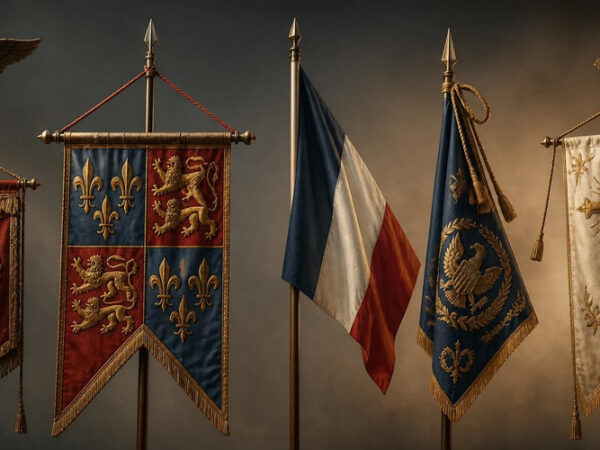
A banner is a piece of cloth bearing symbols, words, or designs, often attached to a pole or hung from a structure. Throughout history, banners have served as powerful symbols of identity, allegiance, and triumph. They are used to represent nations, armies, organizations, and causes, communicating messages of unity, pride, and authority. Banners can also signify victory, celebration, or mourning, and their colors and emblems carry deep cultural and spiritual meanings.
What Does a Banner Symbolize?
A banner primarily symbolizes identity – it declares who or what a group stands for. In military contexts, a battle standard rallies troops and marks the commander’s position. In civic life, banners represent cities, guilds, or institutions. They also symbolize victory and triumph, as captured banners were spoils of war and raised banners signaled conquest. Additionally, banners convey communication: they can announce a message, celebrate an event, or mourn a loss. The act of raising or lowering a banner carries ritual significance, marking moments of honor, defeat, or transition.
Positive and Negative Meanings
Positive associations: Banners evoke pride, unity, and collective strength. They inspire loyalty and courage, serving as focal points for shared purpose. A banner raised high can symbolize hope, achievement, and the triumph of a cause. In religious contexts, banners represent divine protection and spiritual guidance.
Negative meanings: Banners can also represent division, nationalism, and propaganda. They may be used to enforce conformity or to intimidate opponents. Captured or torn banners symbolize defeat and humiliation. In times of conflict, banners become targets, embodying the aggression and hostility of the groups they represent.
History and Origins of Banner Symbolism
The use of banners dates back to ancient civilizations. The Roman vexillum was a military standard hung from a crossbar, used to identify legions. Early Chinese armies employed banners made of silk to signal troop movements. In medieval Europe, heraldic banners displayed coats of arms and became central to chivalric culture. The Bayeux Tapestry (11th century) vividly depicts Norman and Saxon banners, illustrating their role in battle. Over time, banners evolved into national flags, but their symbolic function as markers of identity and allegiance remained constant.
Banner Symbolism in Different Cultures
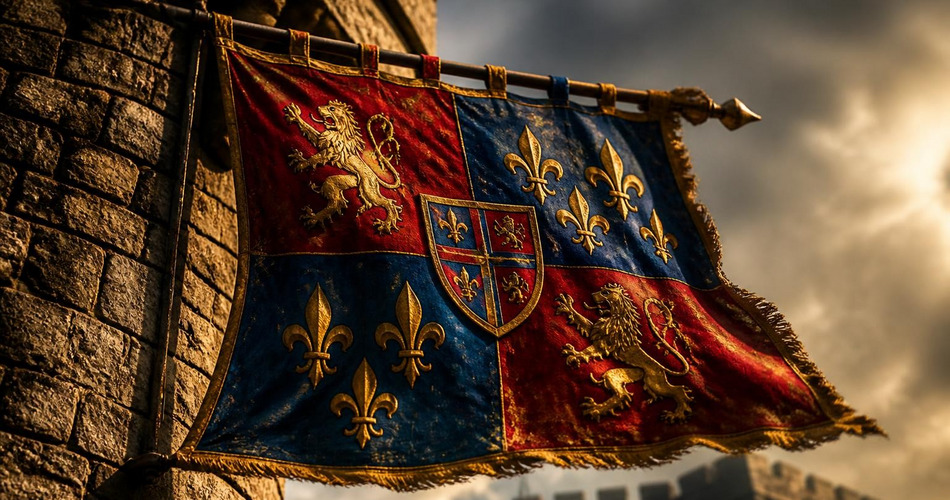
In medieval European heraldry, banners were strictly regulated by rules of tincture and design. A knight’s banner was a personal statement of lineage and honor. In East Asia, particularly China and Japan, banners were used in military formations and religious processions, often featuring dragons, phoenixes, or calligraphy. In the Islamic world, banners (such as the black standard of the Abbasids) carried religious and political significance. Among Native American tribes, feathered banners and staffs served as totems and markers of tribal identity. In modern times, banners remain central to political rallies, sports events, and social movements, continuing their role as symbols of collective identity and voice.
Spiritual Meaning of Banners
In many spiritual traditions, banners represent divine presence and protection. In Christianity, processional banners depict saints, the cross, or biblical scenes, carried during feast days to invoke blessings. In Buddhism, prayer flags and banners (such as the dhvaja) symbolize the victory of wisdom over ignorance. The dhvaja is one of the eight auspicious symbols, representing spiritual triumph. In Hinduism, banners are raised in temples to honor deities and mark sacred space. Spiritually, a banner can signify the soul’s journey toward enlightenment, with its fluttering fabric symbolizing the wind of change and the impermanence of life.
Banners in Myths and Folklore
Banners appear in myths and folklore as powerful objects of fate and prophecy. In Arthurian legend, the banner of King Arthur – a golden dragon on a white field – was said to be enchanted, ensuring victory in battle. Norse sagas mention the Raven Banner, a magical standard that could predict the outcome of a fight. In Slavic folklore, banners were believed to carry the spirit of the tribe, and losing a banner was a sign of doom. These stories emphasize the banner as a living symbol, imbued with the collective will and destiny of its people.
Banners in Dreams
Dreaming of a banner often relates to themes of recognition, achievement, and identity. A banner in a dream can symbolize a desire for honor or a warning about one’s allegiance. The condition and context of the banner provide further clues. Common interpretations include:
- Seeing a banner waving: Indicates upcoming success, public recognition, or a call to unite with others.
- Carrying a banner: Suggests taking a stand for a belief or leading a cause; may reflect personal responsibility.
- A torn or fallen banner: Represents defeat, loss of status, or the end of an era. It can also signal a need to let go of outdated loyalties.
- A banner with unknown symbols: Points to hidden aspects of identity or a message that needs deciphering.
Banners in Superstitions and Omens
In various folk traditions, banners were considered omens. A banner that tore during a ceremony was seen as a bad omen, foretelling misfortune for the group it represented. Conversely, a banner that remained upright in a storm was considered a sign of divine favor. In some cultures, it was believed that a banner should never touch the ground, as that would bring dishonor or defeat. Soldiers often carried personal banners or flags as good luck charms, believing they protected the bearer in battle.
Banners in Art and Literature
Banners appear prominently in art and literature as symbols of identity and conflict. In the Bayeux Tapestry, banners are meticulously depicted, showing the heraldry of Norman and Saxon forces. In Shakespeare’s Henry V, the banner of St. George is a rallying point for English troops, symbolizing national pride and divine right. In J.R.R. Tolkien’s The Lord of the Rings, the banner of the White Tree of Gondor is raised at the Battle of the Pelennor Fields, representing hope and the return of the king. In visual art, Renaissance paintings often include banners to identify saints or historical figures, such as in Paolo Uccello’s Battle of San Romano, where banners mark the Florentine and Sienese forces.
Banner Tattoo Meaning
Banner tattoos are popular for their ability to frame text or symbols. They often feature a ribbon-like banner with a name, date, or motto. Symbolically, a banner tattoo represents personal identity, a commitment to a cause, or the memory of a significant event. The banner can also signify triumph over adversity, with the design evoking medieval heraldry or military honors. Common variations include banners with flowers, skulls, or religious icons, each adding layers of meaning.
Meanings of Different Types of Banners
The symbolism of a banner can vary based on its type, color, and design:
- Heraldic banners: Represent family lineage, honor, and feudal allegiance. Each charge and tincture carries specific meanings (e.g., gold for generosity, red for military strength).
- Religious banners: Used in processions to invoke divine protection. Colors like white (purity) and blue (heaven) are common.
- Military standards: Symbolize unity, discipline, and the spirit of the regiment. Capturing an enemy standard is a major victory.
- Protest banners: Represent collective voice and social change. They are tools of communication and solidarity.
- Festival banners: Celebrate community events, often featuring bright colors and festive imagery.
Frequently Asked Questions
Q: What does a banner symbolize in a dream?
A: In dreams, a banner often symbolizes recognition, achievement, or a call to unite with others. A torn banner may indicate defeat or the need to let go of outdated loyalties.
Q: What is the origin of banner symbolism?
A: Banner symbolism dates back to ancient civilizations such as Rome and China, where banners were used to identify military units and convey authority. Medieval heraldry formalized their use as symbols of lineage and honor.
Q: Are banners considered lucky or unlucky?
A: In many folk traditions, banners are considered lucky if they remain intact and upright. A torn or fallen banner is often seen as a bad omen, foretelling misfortune or defeat.
Related Symbols
- Flag – A national or organizational symbol, closely related to banners but often with official status.
- Standard – A military or ceremonial banner, especially one carried on a pole.
- Pennant – A long, triangular banner used in sports or naval contexts, symbolizing victory or competition.
- Heraldry – The system of designing and displaying coats of arms, of which banners are a key part.
- Totem – A natural or symbolic object representing a group, similar to a banner’s identity function.