Briefly
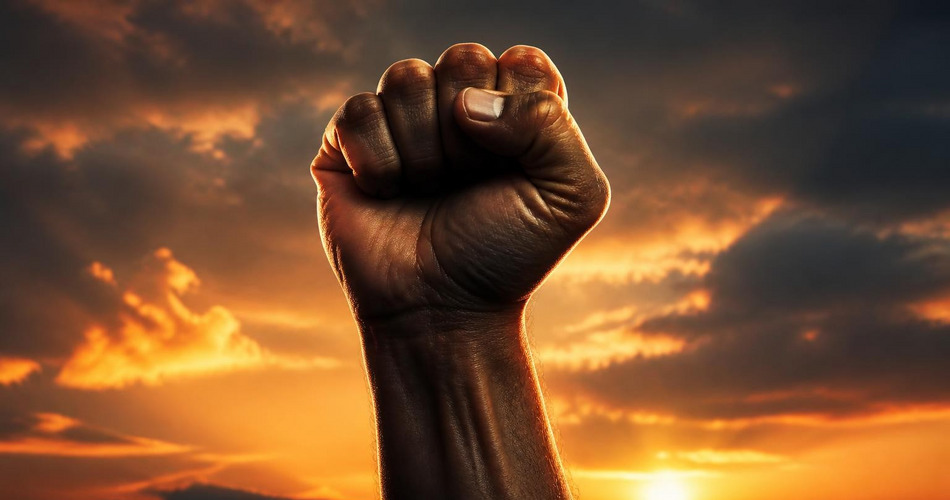
The clenched fist is a universal gesture that conveys strength, defiance, and unity. It is most commonly recognized as a symbol of protest and solidarity, often used by social and political movements to express collective power and resistance against oppression. Beyond its political associations, the clenched fist can also represent determination, anger, or a commitment to a cause. Its meaning varies by context, but it consistently communicates an assertive, unyielding stance.
What Does Clenched Fist Symbolize?
The clenched fist symbolizes solidarity and collective action. When raised in a group, it signals unity among people who share a common goal or grievance. It also represents resistance against authority or injustice, as seen in countless protests and demonstrations worldwide. On an individual level, a clenched fist can express personal strength, resolve, or anger. In many cultures, it is a gesture of defiance, a refusal to submit, and a declaration of one’s own power.
Positive and Negative Meanings of Clenched Fist
Positive associations: The clenched fist is often linked to empowerment, courage, and the fight for justice. It embodies the spirit of collective action and the determination to overcome obstacles. In movements for civil rights, labor rights, and political change, the raised fist has been a beacon of hope and unity.
Negative meanings: In some contexts, the clenched fist can be interpreted as a threat or a sign of aggression. It may symbolize anger, hostility, or an unwillingness to compromise. When used in confrontational situations, it can escalate tension and be perceived as a challenge or an act of intimidation.
History and Origins of Clenched Fist Symbolism
The clenched fist as a symbol has ancient roots. In Roman times, the manus fica (fig sign) involved a fist with the thumb between fingers, but the simple raised fist was used as a gesture of defiance. The modern political use of the clenched fist emerged in the 20th century. It was adopted by the labor movement, notably by the Industrial Workers of the World (IWW) in the early 1900s, and later by the Black Panther Party in the 1960s as a symbol of black power and resistance. The iconic image of athletes Tommie Smith and John Carlos raising their fists during the 1968 Olympics medal ceremony brought the gesture worldwide attention as a protest against racial inequality.
Clenched Fist Symbolism in Different Cultures
In Western cultures, the clenched fist is predominantly associated with political protest and social movements. In East Asian cultures, a clenched fist can signify determination and strength, but it is also used in martial arts as a gesture of respect or readiness. In some African cultures, the raised fist has been used as a symbol of liberation and unity, particularly during anti-colonial struggles. In the Middle East, the clenched fist has appeared in protests for democracy and human rights. Across many cultures, the gesture transcends language and communicates a universal message of resistance and solidarity.
Spiritual Meaning of Clenched Fist
Spiritually, the clenched fist can represent the gathering of inner strength and the focusing of personal power. In meditation and energy work, a clenched fist may be used to channel determination or to ground oneself in moments of challenge. Some interpret it as a symbol of the will to overcome obstacles and the refusal to be defeated. However, it is also seen as a gesture that can block the flow of energy if held too tightly, suggesting a need for balance between strength and openness.
Clenched Fist in Myths and Folklore
While the clenched fist does not appear prominently in classical mythology, it appears in folklore as a gesture of warding off evil or bad luck. In some European traditions, making a fist was believed to protect against the evil eye or malevolent spirits. In African American folklore, the raised fist became a symbol of resistance and survival during slavery and segregation. The gesture’s presence in folk tales and oral histories often underscores themes of defiance and collective strength.
Clenched Fist in Dreams
Dreaming of a clenched fist can reflect feelings of anger, frustration, or a need to assert oneself. It may indicate that the dreamer is holding onto strong emotions or preparing to take a stand in a waking situation. Alternatively, a clenched fist in a dream can symbolize inner strength and the determination to overcome a challenge. The context of the dream—whether the fist is raised in protest, pointed at the dreamer, or held by the dreamer—provides further insight into its meaning.
Common Dream Scenarios Involving Clenched Fist
- Raising a clenched fist: This often represents a desire to speak out or take action against an injustice. It may indicate that the dreamer is ready to stand up for themselves or others.
- Seeing someone else clench their fist: This can symbolize perceived aggression or conflict from others. It may warn of upcoming confrontations or the need to address unresolved tensions.
- Being unable to unclench your fist: This may reflect feelings of being stuck in a state of anger or resistance. It suggests a need to release pent-up emotions and find a way to let go.
- A fist shaking in anger: This dream scenario often points to suppressed rage or frustration that needs to be expressed in a healthy manner.
Clenched Fist in Superstitions and Omens
In some superstitions, a clenched fist is considered a protective gesture. For example, making a fist with the thumb tucked inside is thought to ward off bad luck or evil spirits in certain European folk traditions. Conversely, showing a clenched fist to someone is sometimes seen as an omen of conflict or a challenge. In modern contexts, a raised fist in a photograph or public display is often interpreted as a sign of defiance and a call to action.
Clenched Fist in Art and Literature
The clenched fist appears prominently in 20th-century political art. The Black Panther Party’s logo features a raised fist, and the image has been reproduced in countless posters, murals, and graphics. The photograph of Tommie Smith and John Carlos raising their fists at the 1968 Olympics is one of the most iconic images of protest in history. In literature, the clenched fist is often used as a metaphor for resistance. For instance, in Ralph Ellison’s Invisible Man, the protagonist’s struggle for identity and recognition is symbolized by moments of clenched fists. The gesture also appears in poetry and song lyrics, such as in the labor anthem “Which Side Are You On?” where the fist represents solidarity among workers.
Clenched Fist Tattoo Meaning
A clenched fist tattoo is a popular design that symbolizes strength, resilience, and a fighting spirit. It is often chosen by individuals who have overcome adversity or who identify with social justice causes. The tattoo can represent solidarity with a movement, such as the labor or civil rights movements. It may also be a personal emblem of determination and the refusal to give up. Variations include a fist holding a chain, representing breaking free from oppression, or a fist with a rose, combining strength with love or beauty.
Meanings of Different Types or Variations of Clenched Fist
- Raised fist: The most common variation, symbolizing protest, unity, and defiance. It is often used in political demonstrations and as a logo for activist groups.
- Fist with thumb tucked: In some cultures, this is a protective gesture believed to ward off evil. It can also represent a more subtle form of resistance.
- Fist bump: A friendly variation of the clenched fist, used as a greeting or sign of camaraderie. It symbolizes mutual respect and solidarity without aggression.
- Clenched fist with a weapon: This variation appears in revolutionary art and symbolizes armed resistance or the fight for liberation.
Frequently Asked Questions about Clenched Fist
Q: What does a raised clenched fist mean?
A: A raised clenched fist is a universal symbol of solidarity, protest, and resistance. It is often used in political movements to show unity and defiance against oppression.
Q: Is a clenched fist always aggressive?
A: Not necessarily. While it can express anger or threat, it is more commonly associated with strength, determination, and collective action. Context is key to interpreting its meaning.
Q: What is the origin of the clenched fist as a symbol?
A: The modern political use of the clenched fist originated in the early 20th century labor movement and was later adopted by civil rights and anti-war movements. Its roots go back to ancient gestures of defiance.
Q: Can a clenched fist be a positive symbol?
A: Yes. It often represents empowerment, courage, and the fight for justice. Many people wear it as a tattoo or display it in art to celebrate resilience and unity.
Related Symbols
- Raised fist – The most direct variation, often used interchangeably with the clenched fist.
- Open hand – Represents openness, peace, and honesty, contrasting with the closed fist.
- Handshake – Symbolizes agreement, trust, and partnership.
- Crossed arms – Can indicate defensiveness or solidarity, similar to the clenched fist.
- Thumbs up – A positive gesture of approval, opposite in meaning to the defiant fist.