Briefly
The Harvest Moon is the full moon that occurs closest to the autumnal equinox, typically in September or October. Its bright, early evening light historically allowed farmers to continue harvesting after sunset, giving the moon its name. Symbolically, the Harvest Moon represents abundance, gratitude, and the fulfillment of the growing season. It marks a time of reaping what has been sown, both literally and metaphorically, and signals the transition from the warmth of summer to the introspection of autumn.
What Does Harvest Moon Symbolize?
The Harvest Moon is a powerful symbol of abundance and the culmination of cycles. It represents the reward for hard work and patience, as crops reach their peak and are gathered in. This moon also embodies gratitude—a moment to appreciate the earth’s bounty and the labor that brought it forth. Additionally, the Harvest Moon symbolizes the balance between light and dark, as it appears at the equinox when day and night are equal. Its warm, golden glow is often associated with comfort, community, and shared celebration.
Positive and Negative Meanings
Positive associations: The Harvest Moon is overwhelmingly a positive symbol. It evokes feelings of plenty, generosity, and togetherness. In many cultures, it is a time for festivals, feasts, and giving thanks. The moon’s extra light is a gift that extends the workday, allowing for a successful harvest. It also encourages reflection on personal growth and the fruits of one’s efforts.
Negative meanings: On the negative side, the Harvest Moon can signify the end of growth and the onset of scarcity. It marks the transition toward winter, a season of cold, darkness, and potential hardship. For some, it may symbolize the inevitability of decay and the loss of summer’s vitality. The harvest itself can also represent the finality of a cycle, reminding us that all things must come to an end.
History and Origins of Harvest Moon Symbolism
The term “Harvest Moon” dates back centuries, originating in agricultural societies that relied on the moon’s phases for planting and harvesting. Unlike other full moons, the Harvest Moon rises at nearly the same time for several consecutive nights, providing extended twilight and extra light for gathering crops. This phenomenon was crucial before modern lighting, and the moon became a symbol of practical aid and seasonal rhythm. The name was popularized in the English language through almanacs and folk traditions, and it remains a fixture in agricultural calendars.
Harvest Moon Symbolism in Different Cultures
Many cultures celebrate the Harvest Moon with distinct traditions. In East Asia, the Mid-Autumn Festival (also known as the Moon Festival) honors the harvest moon with mooncakes, lanterns, and family reunions. In Korea, Chuseok is a major harvest festival that includes feasts and ancestral rites. Japan’s Tsukimi, or moon-viewing, involves offering dumplings and seasonal produce to the full moon. Native American tribes often named the full moons; the Harvest Moon was called the “Corn Moon” or “Harvest Moon” by some, marking the time for gathering staple crops. European harvest festivals, such as Lammas and Mabon, align with the same seasonal shift, though they are not moon-specific. Across these cultures, the Harvest Moon symbolizes community, gratitude, and the earth’s generosity.
Spiritual Meaning of Harvest Moon
Spiritually, the Harvest Moon is a time for gratitude and reflection. It encourages individuals to assess what they have accomplished and to give thanks for the abundance in their lives. The moon’s bright, gentle light is seen as a guide for inner harvest—reaping the benefits of personal growth and letting go of what no longer serves. Many spiritual traditions view this moon as an opportunity to balance giving and receiving, and to prepare for the introspective months ahead. It is also a moment to honor the cycles of nature and one’s place within them.
Harvest Moon in Myths and Folklore
Folklore surrounding the Harvest Moon often emphasizes its role as a helper to farmers. In European tales, the moon was said to be especially kind during harvest time, providing light for the weary workers. Some Native American stories describe the Harvest Moon as a signal for tribes to gather for the final hunt and to store food for winter. In Celtic mythology, the harvest period was sacred, and the moon was associated with the goddess of the earth and fertility. While specific myths vary, the common thread is the moon’s association with provision, community, and the turning of the seasons.
Harvest Moon in Art and Literature
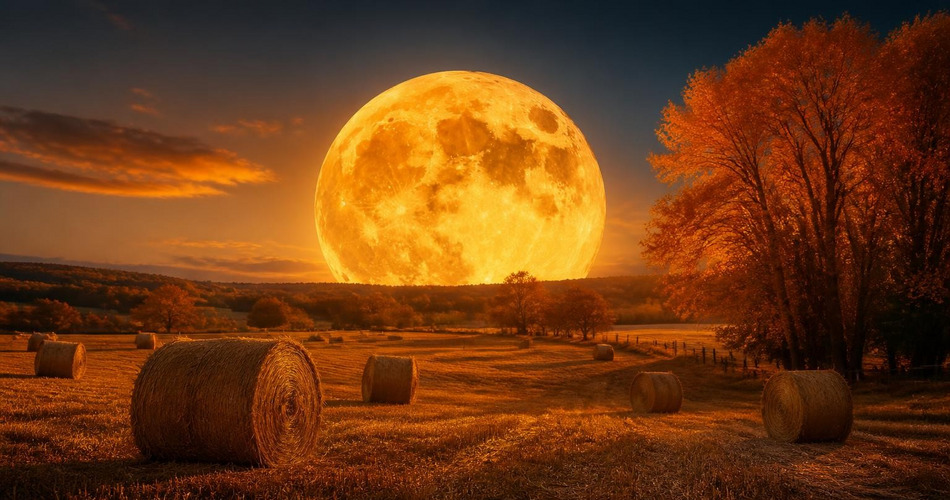
The Harvest Moon has inspired numerous works of art and literature. One of the most famous examples is the song “Harvest Moon” by Neil Young, released in 1992, which evokes nostalgia and romantic longing under the autumn moon. The poet Henry Wadsworth Longfellow wrote a poem titled “The Harvest Moon,” celebrating its beauty and the bounty it oversees. In visual art, the harvest moon appears in pastoral paintings and prints, often depicted as a large, golden orb rising over fields of grain. Japanese woodblock prints, such as those by Utagawa Hiroshige, frequently feature the harvest moon in serene landscapes. The moon also appears in films and books as a symbol of rural life, change, and the passage of time.
Frequently Asked Questions
Q: When does the Harvest Moon occur?
A: The Harvest Moon is the full moon that falls closest to the autumnal equinox, usually in September or October.
Q: Why is it called the Harvest Moon?
A: It is named for the extra light it provides at dusk, historically helping farmers harvest their crops late into the evening.
Q: What does the Harvest Moon symbolize?
A: It symbolizes abundance, gratitude, the completion of cycles, and the transition from summer to autumn. It also represents community and the rewards of hard work.
Q: Is the Harvest Moon bigger or brighter than other full moons?
A: It often appears larger and more colorful near the horizon due to the “moon illusion,” but it is not physically different from other full moons.
Related Symbols
- Autumn Equinox – the astronomical event that marks the start of autumn and is closely tied to the Harvest Moon.
- Full Moon – the lunar phase of which the Harvest Moon is a specific instance.
- Harvest – the act of gathering crops, which the Harvest Moon directly supports.
- Thanksgiving – a holiday in many cultures that expresses gratitude for the harvest.
- Cycles of Nature – the broader theme of seasonal change and renewal that the Harvest Moon embodies.