Briefly
The beehive is a powerful symbol of industry, cooperation, and the rewards of collective effort. It represents a well-organized community where each member contributes to the common good, producing something valuable and sweet. At the same time, the beehive can warn against the loss of individuality and the dangers of overwork. Its meaning spans from ancient agricultural societies to modern corporate logos, always evoking images of productivity, order, and the natural sweetness of life.
What Does the Beehive Symbolize?
The beehive primarily symbolizes industry and hard work. Bees are known for their tireless labor, and the hive is the physical manifestation of their collective effort. It also stands for cooperation and community, as bees work together seamlessly for the survival and prosperity of the whole. The honey produced represents the sweet rewards of such collaboration—abundance, nourishment, and the fruits of labor. Additionally, the beehive symbolizes order and organization, with its precise hexagonal cells and structured hierarchy. It can also represent fertility and the cycle of life, as the hive is a place of birth, growth, and renewal.
Positive and Negative Meanings of the Beehive
Positive associations: The beehive is overwhelmingly seen as a positive symbol. It embodies diligence, teamwork, and the ability to achieve great things through coordinated effort. It represents prosperity, as honey is a valuable and sweet resource. The hive also symbolizes community, home, and the safety of a well-functioning society. In many contexts, it stands for the ideal of a harmonious and productive collective.
Negative meanings: On the negative side, the beehive can represent the loss of individuality, where the needs of the group overwhelm personal identity. It may also warn against overwork and burnout, as bees labor ceaselessly. In some interpretations, the hive’s rigid structure can symbolize oppressive conformity or a system that exploits its members. A disturbed beehive can also represent danger, aggression, or the sudden release of pent-up energy.
History and Origins of Beehive Symbolism
The beehive has been a symbol for thousands of years. In ancient Egypt, the bee was associated with royalty and the sun god Ra, and beehives were seen as models of a well-ordered kingdom. The Greeks and Romans admired bees for their industry and social organization; Aristotle and Virgil wrote about bees as examples of ideal citizenship. In medieval Europe, the beehive became a symbol of the Church, representing the faithful working together under divine guidance. The phrase “busy as a bee” entered the language, and the hive was used in heraldry to signify industry and thrift. During the Enlightenment, the beehive was adopted by Masonic lodges as a symbol of cooperative labor and moral virtue. In the 19th century, the beehive became a popular emblem for insurance companies and savings banks, emphasizing security and collective savings.
Beehive Symbolism in Different Cultures
In many cultures, the beehive is a symbol of community and hard work. In Celtic tradition, bees were considered messengers between worlds, and the hive was a place of wisdom and hidden knowledge. In Slavic folklore, the beehive was a symbol of hospitality and abundance, often associated with the home. In Hindu culture, bees are linked to the god Vishnu and the goddess Bhrami, representing diligence and the sweetness of devotion. In Native American traditions, the beehive is less common but bees are seen as symbols of productivity and the importance of working together for the tribe. In modern Utah, the beehive is the state emblem, chosen by Mormon pioneers to represent industry and self-sufficiency, and it appears on the state flag and seal.
Spiritual Meaning of the Beehive
Spiritually, the beehive represents the soul’s journey toward unity and purpose. It symbolizes the idea that individual efforts contribute to a greater whole, reflecting the interconnectedness of all life. The hive’s hexagonal cells are seen as a sacred geometric pattern, representing harmony and divine order. In many spiritual traditions, the beehive is a reminder of the sweetness that comes from disciplined practice and service to others. It also symbolizes the inner sanctuary where one can find nourishment and renewal. The beehive can be a metaphor for the spiritual community, where each member supports the others in the pursuit of higher truth.
Beehive in Myths and Folklore
In Greek mythology, bees were said to have originated from the tears of the sun god Helios or from the nymphs who cared for the infant Zeus. The beehive appears in the story of Aristaeus, the god of beekeeping, who learned to manage hives from the sea nymphs. In Norse mythology, the mead of poetry was made from honey, and the beehive was associated with inspiration and wisdom. In European folklore, it was believed that bees must be told of important events, such as births and deaths, or they would leave the hive. This practice, known as “telling the bees,” reflects the belief that the hive is a sentient community connected to human affairs. In many folk traditions, a beehive near the home was considered good luck, bringing prosperity and protection.
Beehive in Dreams
Dreaming of a beehive often relates to themes of productivity, community, and the need for organization. A busy, active hive may indicate that the dreamer is engaged in fruitful work or that they are part of a well-functioning team. A quiet or empty hive can suggest feelings of loneliness, a lack of purpose, or the need to reconnect with others. Being attacked by bees from a hive may represent stress, conflict, or feeling overwhelmed by responsibilities. The dream context is crucial: a well-maintained hive is generally positive, while a chaotic or damaged hive points to disorder in one’s life.
Common Dream Scenarios Involving Beehives
- Seeing a beehive from a distance: Represents an awareness of community or a project that requires collective effort. It may also indicate admiration for others’ teamwork.
- Approaching a beehive: Suggests a desire to become more involved in a group or to take on new responsibilities. It can also warn of potential conflict if the hive is disturbed.
- A beehive full of honey: Symbolizes abundance, success, and the sweet rewards of hard work. It is a very positive dream sign.
- An empty or abandoned beehive: Reflects feelings of isolation, loss of purpose, or the end of a collaborative phase. It may encourage the dreamer to seek new connections.
- Being stung by bees near a hive: Indicates that the dreamer feels hurt or attacked by others in a group setting. It may also represent guilt or a need to address a painful issue.
- Destroying a beehive: Suggests a desire to break free from a restrictive group or to challenge an established order. It can also represent fear of the consequences of one’s actions.
Beehive in Superstitions and Omens
In many folk traditions, a beehive is considered a good omen. Finding a swarm of bees settling on a property was seen as a sign of prosperity and good fortune. In some regions, it was believed that a beehive should never be bought or sold, but only given as a gift, to ensure its luck. A beehive that produces honey abundantly is a sign of a blessed home. Conversely, a hive that dies or is abandoned is considered an ill omen, foretelling misfortune or the departure of good spirits. In some cultures, it is unlucky to kill a bee, as bees are thought to carry the souls of the dead. The practice of “telling the bees” about a death in the family was believed to prevent the hive from dying or leaving.
Beehive in Art and Literature
The beehive appears in numerous works of art and literature. In Virgil’s Georgics, the beehive is used as a model for an ideal human society. In the novel The Secret Life of Bees by Sue Monk Kidd, the beehive serves as a central metaphor for community, healing, and female empowerment. Laline Paull’s The Bees is a dystopian novel told from the perspective of a worker bee, exploring themes of hierarchy and individuality within the hive. In heraldry, beehives appear on coats of arms to symbolize industry and thrift; for example, the coat of arms of Manchester, England, features a beehive. In visual art, beehives are often depicted in still-life paintings alongside honeycombs and flowers, representing abundance and the harmony of nature. The beehive is also the state emblem of Utah, appearing on its flag, seal, and highway signs, a direct reference to the Mormon pioneers’ values of hard work and self-reliance.
Beehive Tattoo Meaning
A beehive tattoo often symbolizes a strong connection to community, family, or a group that the wearer values. It can represent the wearer’s own hard work and dedication, as well as the sweet rewards that come from effort. Some choose a beehive tattoo to honor their heritage, especially if they come from Utah or have Mormon roots. Others get it as a symbol of the importance of teamwork and cooperation in their personal or professional life. A beehive tattoo with bees flying around can emphasize activity and busyness, while a simple hive outline may focus on the idea of home and sanctuary. The design can also incorporate honeycombs, flowers, or honey drips to enhance the meaning of abundance and sweetness.
Meanings of Different Types of Beehives
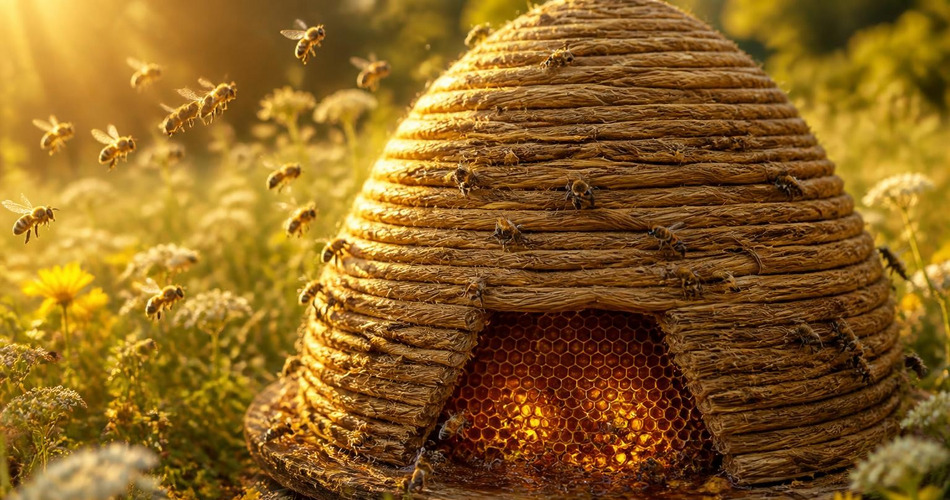
- Skep (traditional straw beehive): Often symbolizes rural tradition, simplicity, and a connection to ancient beekeeping practices. It appears in folklore and heraldry as a classic emblem of industry.
- Modern Langstroth hive: Represents innovation, efficiency, and the scientific approach to beekeeping. It symbolizes organized productivity and the ability to harvest honey without destroying the colony.
- Top-bar hive: Emphasizes natural beekeeping and sustainability. It symbolizes a more harmonious relationship with nature and a respect for the bees’ own architecture.
- Empty beehive: Can represent potential, a fresh start, or the absence of community. It may also symbolize a period of rest or waiting.
- Active beehive with bees: The most positive representation, symbolizing life, energy, and the constant flow of work and reward.
Frequently Asked Questions about Beehive Symbolism
Q: What does a beehive symbolize in the Bible?
A: In the Bible, the Promised Land is described as a land flowing with milk and honey, so the beehive indirectly symbolizes abundance and divine blessing. However, beehives themselves are not frequently mentioned.
Q: Is a beehive a good luck symbol?
A: Yes, in many cultures a beehive is considered a good luck charm, especially when it is active and producing honey. It is associated with prosperity, fertility, and a harmonious home.
Q: What does a beehive tattoo mean?
A: A beehive tattoo typically symbolizes community, hard work, and the rewards of collective effort. It can also represent family, heritage, or a personal commitment to productivity.
Q: Why is the beehive a symbol of Utah?
A: The beehive was adopted as the state emblem of Utah in 1959 to represent the Mormon pioneers’ values of industry, thrift, and self-sufficiency. It appears on the state flag and seal.
Q: What does it mean to dream of a beehive?
A: Dreaming of a beehive often relates to teamwork, productivity, and social connections. The dream’s details—whether the hive is active, empty, or disturbed—provide further insight into the dreamer’s feelings about their community and work.
Related Symbols to the Beehive
- Bee: The individual worker, symbolizing diligence, communication, and the sweetness of life.
- Honey: Represents abundance, healing, and the reward of hard work.
- Honeycomb: Symbolizes the perfect geometric order, community, and the interconnectedness of all things.
- Hexagon: A shape of harmony and efficiency, often associated with the structure of the beehive.
- Queen Bee: Represents leadership, fertility, and the central authority within a community.
- Swarm: Symbolizes a collective movement, new beginnings, or a powerful force of nature.