Briefly
An idol is a physical object—often a statue, figurine, or image—that is venerated as a representation of a deity, spirit, or revered figure. Throughout history, idols have served as focal points for worship, prayer, and ritual, embodying the presence of the divine or the sacred. At the same time, the concept of idol carries a strong negative charge in many traditions, where it is associated with false worship, materialism, and spiritual corruption. The symbolism of an idol thus oscillates between devotion and danger, reverence and prohibition.
What Does Idol Symbolize?
An idol primarily symbolizes the presence of the divine in a tangible form. By giving shape to an invisible power, the idol makes the sacred accessible and relatable. It represents a bridge between the human and the transcendent, a point where prayer and offerings can be directed. In many ancient cultures, idols were believed to house the spirit or essence of the god they depicted, making them living symbols rather than mere representations.
Beyond its religious function, an idol can also symbolize authority, power, and permanence. A towering statue of a ruler or deity asserts dominance and endurance. Conversely, in a secular context, an “idol” can stand for any person or thing that is excessively admired or adored—a celebrity, a material possession, or an abstract ideal—highlighting the human tendency to worship outside the realm of the divine.
Positive and Negative Meanings
Positive associations: Idols can inspire devotion, focus the mind during meditation, and create a sense of connection to the sacred. They serve as educational tools in religious traditions, teaching stories and values through visual form. In art, idols are celebrated for their craftsmanship and beauty, embodying cultural identity and spiritual heritage.
Negative meanings: Idols are condemned in many religions as objects of false worship that distract from the true divine. The term “idolatry” implies a dangerous misplacement of reverence, often linked to moral decay, greed, and superstition. In a broader sense, idolizing anything—money, fame, a person—can lead to disillusionment and spiritual emptiness.
History and Origins of Idol Symbolism
The practice of creating idols dates back to the earliest human civilizations. Small figurines from the Neolithic period, such as the “Venus” figurines, are among the oldest known examples—likely representing fertility or mother goddesses. In ancient Mesopotamia, Egypt, Greece, and Rome, idols were central to public and private worship. Temples housed cult statues that were bathed, clothed, and fed as if alive.
The biblical tradition, especially in Judaism and Islam, strongly prohibited idol making, framing it as a direct violation of divine law. The story of the Golden Calf in Exodus exemplifies the danger of turning to a physical idol when spiritual leadership seems absent. This prohibition influenced later Christian attitudes, though the use of icons and statues in Catholicism and Orthodoxy sparked centuries of debate (the Iconoclastic Controversy).
In East Asia, idols of Buddha, bodhisattvas, and Hindu deities are ubiquitous in temples and homes, serving as aids to meditation and devotion rather than objects of worship in themselves. The line between representation and presence remains a key theological question across cultures.
Symbolism of Idols in Different Cultures
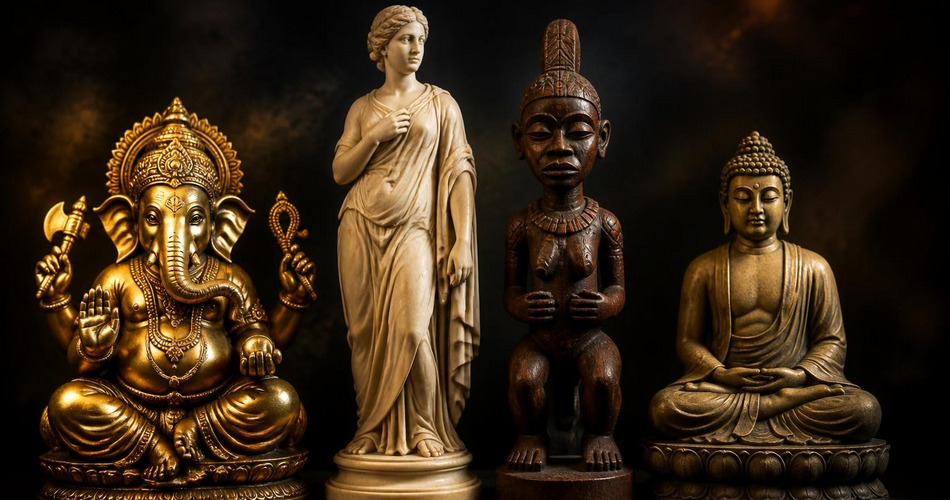
In Hinduism, the murti (a statue or image of a deity) is considered a vessel for the divine during rituals. The consecration ceremony (prana pratishtha) is believed to bring the god’s presence into the idol, making it a living entity for worship. Different deities—Ganesha, Shiva, Lakshmi—carry specific symbolic attributes that the idol visually communicates.
In Buddhism, statues of the Buddha are not worshipped as gods but serve as reminders of the enlightened qualities one seeks to cultivate. The mudras (hand gestures) and postures of Buddha idols each symbolize different aspects of the path, such as meditation, teaching, or protection.
In ancient Greek and Roman religion, cult statues were housed in temples and treated as the actual home of the god. Festivals involved carrying the idol in processions, and the statue was often adorned with jewelry and clothing. The famous statue of Athena Parthenos in the Parthenon was a massive chryselephantine idol that symbolized the city’s patron goddess and civic identity.
In African traditional religions, carved wooden or stone idols often represent ancestors or nature spirits. They are used in rituals to communicate with the spirit world and are treated with great respect, sometimes being anointed with oils or blood.
In Islam and Judaism, the prohibition against idols is absolute. The aniconic tradition emphasizes the transcendence of God, who cannot be represented in any physical form. This has led to a rich tradition of calligraphy and geometric art instead.
Spiritual Meaning of Idols
Spiritually, an idol can be a powerful tool for concentration and devotion. By focusing the mind on a physical representation, the worshipper directs their thoughts and emotions toward the divine. In many traditions, the idol is not the god itself but a conduit for divine energy. The spiritual meaning thus hinges on intention: the same object can be a sacred aid or a profane obstacle depending on the heart of the user.
In modern spiritual contexts, “idol” can also refer to anything that occupies the central place in one’s life—career, relationships, or self-image. Recognizing and dismantling such inner idols is seen as a path to spiritual freedom.
Idols in Myths and Folklore
Myths often explore the ambiguous power of idols. The Greek myth of Pygmalion tells of a sculptor who falls in love with his own ivory statue, which the goddess Aphrodite brings to life. This story reflects the idea that an idol can become more than mere matter when infused with divine will or human longing.
In Jewish folklore, the Golem is a clay figure brought to life by mystical means—a kind of idol that serves its creator but can become dangerous. The story of the Golden Calf in the Bible is a foundational myth warning against the seduction of visible gods when the invisible God seems absent.
In Japanese folklore, the Jizō statues are small stone idols placed at crossroads and cemeteries to protect children and travelers. They are often dressed in red bibs and hats by devotees, blending folk piety with Buddhist symbolism.
Idols in Dreams
Dreaming of an idol can carry multiple meanings depending on context. An idol in a dream may represent something you have placed at the center of your life—a person, goal, or belief—that you may be overvaluing. It can also symbolize spiritual guidance or a need for focus. If the idol is broken or toppled, it may indicate disillusionment or the collapse of a false ideal. If it is glowing or speaking, it could suggest a message from the subconscious or a call to deeper devotion. As with all dream symbols, personal associations are crucial.
Common Dream Scenarios
- Worshipping an idol: May reflect a need for spiritual connection or a warning about excessive attachment to material things.
- Breaking an idol: Often signifies liberation from a limiting belief, addiction, or unhealthy relationship.
- Finding an idol: Could indicate discovering a new source of inspiration or a hidden aspect of yourself.
- An idol coming to life: Suggests that something you thought was inert or symbolic is becoming active in your life—perhaps a repressed emotion or a new phase.
- Multiple idols: May represent conflicting values or divided loyalties.
Idols in Superstitions and Omens
In many cultures, idols are treated with superstitious care. It is considered bad luck to drop or break an idol, as it may be seen as a sign of divine displeasure or a loss of protection. Some traditions hold that idols must be properly consecrated before they can be safely used; an unconsecrated idol might attract malevolent spirits. Conversely, finding a small idol unexpectedly is sometimes viewed as a good omen, indicating blessing or guidance. In folk magic, idols are used as talismans for protection, love, or prosperity, but their misuse is believed to bring misfortune.
Idols in Art and Literature
Idols have been a recurring subject in Western art and literature. In Ovid’s Metamorphoses, the story of Pygmalion explores the artist’s relationship with his creation. Nathaniel Hawthorne’s short story “The Artist of the Beautiful” deals with the tension between mechanical creation and living art, echoing idol themes. In film, the idol appears in adventure stories such as Raiders of the Lost Ark, where a golden idol triggers a series of booby traps—symbolizing the danger of greed and false worship. William Blake’s poetry often critiques the “idol” of reason and materialism, contrasting it with visionary imagination. In modern visual art, artists like Damien Hirst have used religious imagery and idols to comment on consumer culture and the commodification of the sacred.
Idol Tattoo Meaning
An idol tattoo can carry deeply personal meaning. It may represent a spiritual protector, a connection to one’s cultural heritage, or a reminder of a guiding principle. For some, a tattoo of a Hindu deity or Buddha serves as a devotional mark. For others, a broken idol tattoo symbolizes overcoming addiction or false beliefs. The choice of idol—whether a classical statue, a tribal figure, or a pop-culture icon—reflects the wearer’s values and journey. As with any tattoo, the meaning is shaped by the individual’s story and intention.
Meanings of Different Types of Idols
- Stone idols: Often associated with permanence, endurance, and ancient traditions. They are common in temple architecture and megalithic sites.
- Wooden idols: Symbolize organic life, growth, and the connection to nature. They are frequently used in African and Pacific Islander art.
- Metal idols (gold, bronze): Represent wealth, power, and divine radiance. Gold idols are especially linked to royalty and the sun.
- Clay or terracotta idols: Suggest humility, earthiness, and the transient nature of material form. They are often used in seasonal festivals and then dissolved.
- Small portable idols (household shrines): Symbolize personal devotion and the integration of the sacred into daily life.
Frequently Asked Questions
Q: What is the difference between an idol and an icon?
A: An icon is typically a two-dimensional religious image, especially in Eastern Christianity, venerated as a window into the divine. An idol is a three-dimensional object that is often believed to contain the presence of the deity. The distinction is theological: icons are considered representations, while idols are sometimes seen as actual embodiments.
Q: Are idols always religious?
A: No. In modern usage, “idol” can refer to any person or thing that is excessively admired, such as a pop star or a sports figure. This secular idolatry carries the same symbolic weight of misplaced devotion.
Q: Why are idols prohibited in some religions?
A: The prohibition stems from the belief that God is transcendent and cannot be confined to a physical form. Idolatry is seen as a violation of the first commandment and a source of spiritual corruption, as it directs worship away from the true divine.
Q: Can an idol be used for good?
A: Yes. In many traditions, idols serve as tools for meditation, education, and community focus. The intention of the worshipper determines whether the idol is a helpful aid or a harmful distraction.
Related Symbols
- Statue – a broader category of three-dimensional representation, often secular.
- Icon – a sacred image, especially in Orthodox Christianity, with its own theology of veneration.
- Totem – an animal or plant symbol used by indigenous cultures as a clan emblem or spiritual guide.
- Fetish – an object believed to possess magical powers, often used in African and Afro-Caribbean traditions.
- Murti – the Hindu term for a consecrated image of a deity, emphasizing divine presence.
- Golden Calf – a biblical symbol of idolatry and rebellion against God.