Briefly
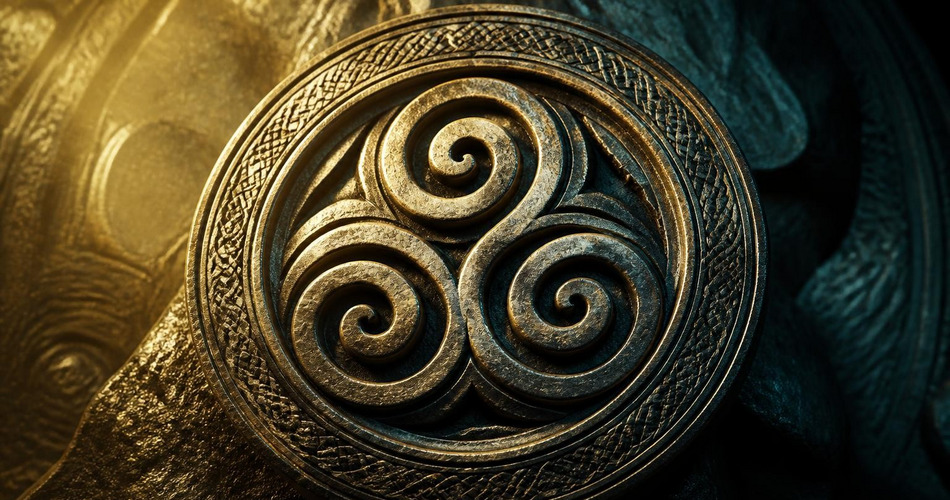
The triskelion is an ancient symbol composed of three interlocking spirals or three bent legs radiating from a center. It represents motion, progress, and the cyclical nature of life. Found in Celtic, Greek, and other cultures, it often signifies the three realms of earth, sea, and sky, or the cycles of life, death, and rebirth. Its dynamic design conveys energy and forward movement, making it a powerful emblem of personal growth and transformation.
What Does the Triskelion Symbolize?
The triskelion is primarily a symbol of motion and progress. Its three radiating arms suggest continuous forward movement, like a wheel turning or a spiral expanding. This makes it an emblem of personal development, ambition, and the drive to overcome obstacles. The number three itself is significant in many cultures, representing the triad of life—birth, life, death—or the three elements of earth, sea, and sky. In a broader sense, the triskelion embodies the concept of cycles: the passage of time, the changing seasons, and the eternal recurrence of events.
Beyond motion, the triskelion is also associated with protection. In Celtic tradition, it was often carved on stones and weapons to ward off evil spirits and bring good fortune. The interlocking nature of the symbol suggests unity and strength, as if the three parts are locked together in a harmonious whole. This aspect of protection and unity makes it a popular choice for amulets and talismans.
Positive and Negative Meanings
Positive associations: The triskelion is overwhelmingly seen as a positive symbol. It represents energy, vitality, and the relentless pursuit of goals. It is a symbol of victory and achievement, as the three arms can be interpreted as legs running forward. In Celtic spirituality, it signifies the interconnectedness of all things and the cyclical renewal of nature. It is also a symbol of protection, often used to bring safety and good luck.
Negative meanings: There are few negative connotations directly attached to the triskelion. However, in some contexts, the three-legged version (triskeles) has been associated with the island of Sicily and, by extension, with regional political movements. Some interpretations of the symbol as a representation of the underworld or the darker aspects of the triple goddess can evoke fear or unease, but these are not widely accepted negative meanings. Overall, the triskelion is considered a benign and auspicious emblem.
History and Origins of the Triskelion
The triskelion has ancient origins, with the earliest examples dating back to the Neolithic period. The triple spiral motif appears on megalithic monuments such as Newgrange in Ireland, built around 3200 BCE. This early form consists of three interconnected spirals, often interpreted as a symbol of the sun, the cycle of life, or the three realms of Celtic cosmology.
In Celtic art, the triskelion became a prominent motif during the La Tène period (5th-1st centuries BCE). It was used in metalwork, stone carvings, and illuminated manuscripts. The Celts associated the number three with sacredness, and the triskelion embodied this triadic principle. The symbol also appears in ancient Greek pottery and coins, where it is known as the triskeles—three bent legs forming a wheel. This version was used on the coins of Lycia and later became the emblem of Sicily.
The triskelion’s endurance across millennia and cultures testifies to its powerful visual appeal and its ability to convey fundamental concepts of motion, balance, and unity.
Triskelion Symbolism in Different Cultures
In Celtic culture, the triskelion is one of the most recognizable symbols. It appears on the Book of Kells and on many ancient stone crosses. The Celts saw it as a representation of the three worlds: the spiritual world, the mortal world, and the celestial world. It also symbolized the triple goddess—maiden, mother, and crone—and the cycle of life, death, and rebirth.
In Greek culture, the triskeles (three legs) was used as a symbol of motion and the sun. It appeared on coins and pottery, often associated with the god Hermes, who was a messenger and traveler. The three legs represented the three corners of the known world: Europe, Asia, and Africa.
In Sicily, the triskelion (often called the trinacria) is the official emblem of the region. It features three bent legs and the head of Medusa in the center. This version symbolizes the three capes of Sicily: Pelorus, Passero, and Lilibeo. It represents the island’s geography and its historical connection to Greek and Roman cultures.
In modern Western culture, the triskelion is often used as a symbol of Celtic heritage, neo-pagan spirituality, and personal growth. It appears in jewelry, tattoos, and logos, carrying forward its ancient meanings of motion and protection.
Spiritual Meaning of the Triskelion
Spiritually, the triskelion represents the journey of the soul through the cycles of existence. Its three arms can symbolize the past, present, and future, or the stages of life: birth, life, and death. In meditation, the triskelion is used to focus on the interconnectedness of all things and the continuous flow of energy.
The symbol is also associated with the concept of the “triple spiral” found in Celtic spirituality, which represents the three realms of land, sea, and sky, or the three aspects of the divine feminine. For many, the triskelion is a reminder of the constant change and evolution of the universe, encouraging acceptance of life’s transitions and the pursuit of spiritual growth.
Triskelion in Myths and Folklore
In Celtic mythology, the triskelion is closely linked to the triple goddess and the cycles of nature. It appears in tales of the Tuatha Dé Danann, the mythical people of Ireland, who were said to have brought the symbol with them. The triple spiral is also associated with the Otherworld and the passage of souls between worlds.
In Greek mythology, the triskeles is sometimes connected to the Gorgon Medusa, whose head appears in the center of the Sicilian triskelion. The three legs are said to represent the three Gorgon sisters or the three Fates who control destiny. The symbol thus carries connotations of fate, destiny, and the inescapable cycles of time.
Triskelion in Dreams
Dreaming of a triskelion may symbolize movement, progress, or a need to embrace change. The three arms can represent different aspects of your life that need to be balanced or integrated. Because the triskelion is a symbol of cycles, such a dream might indicate that you are in a period of transition or that you are about to complete a cycle and begin a new one. As with all dream symbols, personal context is crucial for interpretation.
Triskelion in Superstitions and Omens
In Celtic folklore, the triskelion was considered a powerful protective symbol. It was often carved on doorways, weapons, and tools to ward off evil spirits and bring good luck. The three interlocking spirals were thought to confuse malevolent forces, preventing them from entering a home or harming the bearer. In some traditions, wearing a triskelion amulet was believed to ensure safe travel and success in endeavors.
Triskelion in Art and Literature
One of the most famous examples of the triskelion in art is in the Book of Kells, an illuminated manuscript from the 9th century. The symbol appears in the intricate knotwork and spiral designs that decorate the pages. The triple spiral is also found carved into the entrance stone of the Neolithic passage tomb at Newgrange in Ireland, one of the oldest known examples of the symbol in art.
In modern literature, the triskelion often appears in works that draw on Celtic mythology, such as the fantasy series of Stephen Lawhead or the historical novels of Morgan Llywelyn. It is also used as a symbol in the Mabinogion, a collection of Welsh myths, though not always explicitly named. The triskelion’s visual appeal and deep symbolism make it a recurring motif in fantasy art, jewelry design, and contemporary Celtic-inspired artwork.
Triskelion Tattoo Meaning
As a tattoo, the triskelion is popular among those who identify with Celtic heritage or who are drawn to its symbolism of movement and transformation. It often represents a personal journey, a commitment to growth, or a connection to the cycles of nature. The tattoo can also symbolize protection and strength, as the interlocking arms suggest an unbreakable bond.
People choose the triskelion to mark significant life transitions, such as overcoming a challenge or embarking on a new path. Its dynamic shape makes it an attractive design for the arm, back, or shoulder. The three arms can be customized to represent personal triads, such as mind, body, and spirit, or past, present, and future.
Meanings of Different Types of Triskelion
The triskelion comes in two main variations: the triple spiral and the triskeles (three legs). The triple spiral is more common in Celtic art and is often associated with spiritual growth and the cycles of life. The triskeles, with its three bent legs, is more dynamic and is often used as a symbol of motion, speed, and victory. In heraldry, the triskeles is a common charge, particularly in the arms of Sicily and the Isle of Man.
Color can also affect meaning. A gold triskelion may symbolize wealth and success, while a silver one might represent clarity and intuition. A green triskelion can emphasize nature and growth, while a black one may be used for protection and grounding. However, these color associations are not fixed and depend on personal or cultural context.
Frequently Asked Questions
Q: What does the triskelion symbolize?
A: The triskelion symbolizes motion, progress, cycles, and the three realms of earth, sea, and sky. It is also a symbol of protection and personal transformation.
Q: Is the triskelion a Celtic symbol?
A: Yes, it is strongly associated with Celtic culture, but it also appears in Greek, Roman, and other ancient cultures.
Q: What is the difference between a triskelion and a triskele?
A: The terms are often used interchangeably, but “triskelion” can refer to any three-armed symbol, while “triskele” specifically refers to the three-legged version.
Q: Can I wear a triskelion as a protective amulet?
A: Yes, in Celtic tradition it was used for protection, and many people still wear it as a talisman today.
Related Symbols
- Triquetra – a three-pointed knot symbolizing the Trinity or eternal life.
- Triple Spiral – a similar Celtic symbol often used interchangeably with the triskelion.
- Swastika – an ancient symbol of the sun and good fortune, though later co-opted for negative purposes.
- Labrys – a double-headed axe symbolizing female power and the Minoan civilization.
- Celtic Cross – a cross with a circle, combining Christian and pagan symbolism.