Briefly
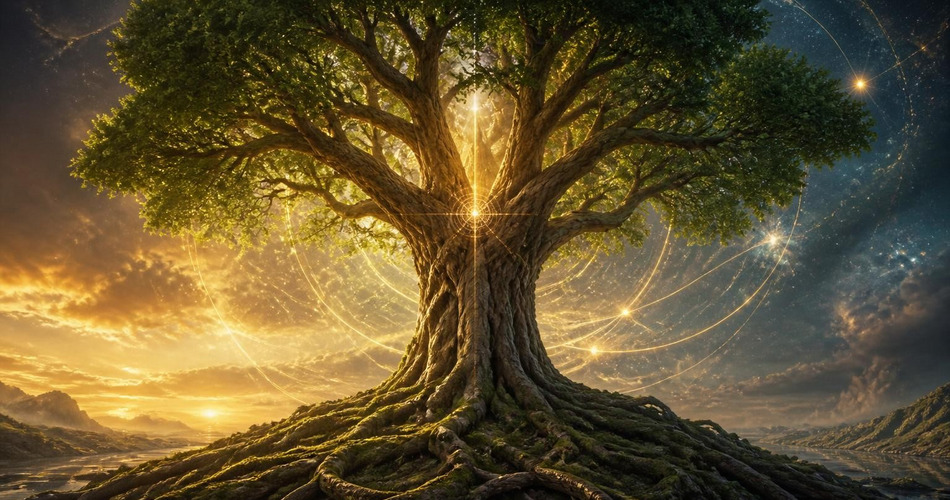
The ash tree (Fraxinus species) is a symbol of strength, resilience, and cosmic connection. In Norse mythology, the world tree Yggdrasil is often depicted as an ash, linking heaven, earth, and the underworld. Ash wood is known for its toughness and flexibility, qualities that have made it a metaphor for endurance and protection across many cultures. At the same time, the ash tree’s deep root systems and fast growth symbolize renewal and interconnectedness.
What Does the Ash Tree Symbolize?
The ash tree is most commonly associated with strength and stability. Its dense, elastic wood has been used for tool handles, furniture, and even chariots in ancient times. This practical durability translates into a symbolic meaning of steadfastness and reliability. Additionally, the ash often represents the axis mundi — the central pillar of the world — because of its towering height and widespread branches. In many traditions, it is a bridge between the physical and spiritual realms, a conduit for knowledge and wisdom.
The tree also symbolizes renewal. Ash trees are among the first to colonize disturbed land, and they grow quickly. This ability to thrive in harsh conditions makes them an emblem of resilience and new beginnings. The interconnected root systems of ash groves further emphasize community and mutual support.
Positive and Negative Meanings of the Ash Tree
Positive associations: The ash tree is regarded as a symbol of protection and strength. Its wood was traditionally used for spears and shields, offering martial defense. In folklore, carrying a piece of ash wood was believed to ward off evil spirits and snakes. The tree’s long life — some species live for hundreds of years — also represents endurance and wisdom gained through experience.
Negative meanings: Because ash wood burns quickly and produces intense heat, it has sometimes been linked to destruction and the transience of life. In some European folklore, the ash is considered a tree of ill omen if it grows too close to a house, as its deep roots were thought to undermine foundations. The recent threat of the emerald ash borer beetle has also cast the tree as a symbol of ecological fragility and loss.
History and Origins of the Ash Tree Symbolism
The symbolic history of the ash tree is rooted in ancient Indo-European traditions. In Norse cosmology, Yggdrasil — an immense ash — connects the nine worlds. This imagery likely dates back to pre-Viking era beliefs. The Celts also revered the ash; it was considered one of the seven sacred trees of the Druids and was associated with the sea and the sun. Ogham, the early medieval alphabet, includes the letter “N” for Nin (ash). In Greek mythology, the Meliae (ash-tree nymphs) were born from the blood of Uranus and became the mothers of the Bronze Age race. These early associations set the foundation for the tree’s enduring symbolic role.
Throughout medieval Europe, ash wood was prized for making spear shafts, ship timbers, and wheels — reinforcing its link to strength and utility. The tree’s importance in daily life ensured its place in folklore, where it was often planted near homes for protection.
Ash Tree Symbolism in Different Cultures
In Norse culture, Yggdrasil is the central cosmic ash — not just a tree but a living axis supporting all existence. It is described in the Poetic Edda and Prose Edda as an evergreen ash (though some sources dispute the exact species). The Norns water it from the Well of Urd, and it houses creatures like the eagle and the serpent Níðhöggr. This makes the ash a symbol of fate, knowledge, and the cycle of life.
In Celtic culture, the ash was sacred to the Druids and associated with the god Lugh. It was used for wands and magical rods. The ash also appears in the tale of the Mabinogion, where a character is born from an ash tree. In Native American traditions, the ash is seen as a tree of peace; it was sometimes used for ceremonial pipes and baskets. The Iroquois used ash wood for snowshoes, linking it to travel and resilience. In Slavic folklore, the ash is often associated with the spirit of the forest and with healing waters.
Spiritual Meaning of the Ash Tree
Spiritually, the ash tree is considered a world tree or axis mundi, serving as a portal between realms. Meditating under an ash or using ash wood objects is thought to ground a person while opening the mind to higher wisdom. In neo-pagan practices, the ash is used for protection spells and rituals that call on the energy of the sun and fire. Its fast growth also symbolizes spiritual growth and the ability to overcome obstacles. The ash’s connection to water (via wells and springs in myth) adds an element of purification and emotional healing.
Ash Tree in Myths and Folklore
The most prominent myth involving the ash tree is the Norse creation story: humans were made from ash and elm trees. The god Odin and his brothers found two logs on the seashore and shaped them into the first man (Ask, from ash) and woman (Embla, from elm). This myth establishes the ash as the origin of humanity, representing life and breath.
In Celtic folklore, the ash was thought to have healing properties. Children were passed through a cleft ash tree to cure rupture or rickets. Ash twigs were used for water divination. In English folklore, the Ash Faggot was burned at Christmas to ensure good luck. However, the ash also appears in darker tales: it was said that a snake would not lie under an ash tree, and its leaves were used as a cure for snakebite — a form of sympathetic magic.
Ash Tree in Superstitions and Omens
- In parts of England, a “shrew ash” tree (one that had a live shrew enclosed in it) was believed to cure paralysis if its twigs were touched to the afflicted part.
- Ash leaves were sometimes placed in cradles to protect babies from being taken by fairies.
Ash Tree in Art and Literature
The most famous literary depiction of the ash tree is Yggdrasil in the Norse sagas, such as the Poetic Edda and Prose Edda. In the Edda poem “Völuspá,” Yggdrasil is described as the “evergreen ash” that spreads out over all the world. J.R.R. Tolkien, inspired by Norse mythology, included a Great Ash in his legendarium, though he more often used the White Tree as a symbol. The Victorian poet Henry Wadsworth Longfellow wrote in “The Evangeline” of the “forest of vast extent, where the ash and the maple stand.” In modern literature, M.R. James’s ghost story “The Ash-tree” (1904) features a malevolent spirit that dwells in an ancient ash tree. The tree becomes a symbol of hidden evil and the persistence of dark history.
Frequently Asked Questions About the Ash Tree
Q: What does the ash tree symbolize in Norse mythology?
A: In Norse mythology, the ash tree Yggdrasil symbolizes the cosmos, connecting the nine worlds and representing the cycle of life, death, and rebirth.
Q: Is the ash tree considered lucky or unlucky?
A: Its symbolism is dual: it is protective and lucky when planted near a home, but it can also be seen as an omen if it withers or fruits unusually.
Q: What is the spiritual significance of the ash tree?
A: Spiritually, the ash is a world tree, a symbol of the axis mundi that provides a connection between earthly and divine realms.
Related Symbols
- Oak tree — strength and endurance, often paired with ash in mythology
- Yggdrasil — the cosmic ash tree in Norse lore
- Elm tree — partner to ash in the Norse creation myth
- World tree — a universal archetype of which the ash is a prime example