Briefly
A doorway is more than an architectural feature; it is a powerful symbol of transition, passage, and the boundary between known and unknown spaces. Doorways represent opportunities, new beginnings, and the choice to move forward or stay behind. They can also evoke feelings of uncertainty, exclusion, or fear of what lies beyond. Across cultures, doorways are thresholds that mark significant changes in life, from entering a new home to embarking on a spiritual journey.
What Does a Doorway Symbolize?
A doorway primarily symbolizes a threshold — a point of transition between two states, places, or phases of life. It represents the act of crossing from one realm to another, whether physical, emotional, or spiritual. Doorways are often associated with opportunity, as they present a choice to enter or exit, to begin or end. They also symbolize protection, as doors can be closed to keep out threats or opened to welcome guests. In a broader sense, doorways embody the concept of passage: they are the liminal spaces where change occurs.
Positive and Negative Meanings of Doorways
Positive associations: Doorways are commonly seen as symbols of new opportunities, fresh starts, and personal growth. An open doorway invites exploration, adventure, and the possibility of positive change. In many traditions, passing through a doorway marks a rite of passage, such as a wedding or a homecoming, and is associated with welcome, hospitality, and protection. The act of opening a door can signify readiness to embrace the future.
Negative meanings: Doorways can also represent fear of the unknown, uncertainty, and exclusion. A closed or locked door may symbolize rejection, missed opportunities, or barriers to progress. Doorways can evoke anxiety about what lies on the other side, especially in dreams or folklore where they lead to dangerous or mysterious places. They may also represent the finality of death or irreversible change.
History and Origins of Doorway Symbolism
The symbolic significance of doorways dates back to ancient civilizations. In Roman culture, the god Janus was the guardian of doorways, gates, and beginnings. Depicted with two faces looking in opposite directions, Janus represented the duality of doorways as both an entrance and an exit, a past and a future. This dual nature has influenced Western symbolism of doorways as points of transition. In many ancient societies, doorways were considered sacred thresholds, often adorned with protective symbols or rituals to ward off evil spirits. The practice of carrying a bride over the threshold, for instance, originates from the belief that evil spirits lurked at the entrance, and the groom protected his bride by carrying her across.
Doorway Symbolism in Different Cultures
In Chinese culture, doorways are often decorated with red banners and couplets during festivals like the Lunar New Year to invite good fortune and keep away negative energy. The placement and orientation of doors in Feng Shui are believed to influence the flow of qi (energy) and the prosperity of a household. In Hindu tradition, doorways are adorned with rangoli patterns and torans (garlands) to welcome deities and guests. In many African cultures, doorways are carved with symbols that tell stories or offer protection. In European folklore, stepping over a threshold with the right foot first was considered lucky, while tripping at the door was an ill omen. These practices highlight the universal recognition of doorways as powerful symbolic boundaries.
Spiritual Meaning of Doorways
Spiritually, a doorway represents a passage between the material world and the divine or the subconscious. In meditation and visualization, doorways are used as symbols of opening to higher consciousness or inner wisdom. Many spiritual traditions view doorways as thresholds to enlightenment or transformation. For example, in Christian iconography, Christ is referred to as the “door” to salvation (John 10:9). In Eastern philosophies, doorways in temples often symbolize the transition from the mundane to the sacred. The act of passing through a doorway can be a metaphor for spiritual rebirth or a shift in awareness.
Doorway in Myths and Folklore
Doorways appear prominently in myths and folklore as gateways to other worlds. In Greek mythology, the doorway to the Underworld was guarded by Cerberus, and souls had to cross the threshold of Hades. In Norse mythology, the door of Valhalla opened to welcome fallen warriors. In fairy tales, doorways often lead to magical realms — for instance, the wardrobe door in C.S. Lewis’s The Lion, the Witch and the Wardrobe opens into Narnia. In Japanese folklore, the torii gate marks the entrance to a sacred Shinto space, separating the ordinary from the divine. These stories reinforce the idea of doorways as liminal spaces where the ordinary meets the extraordinary.
Doorway in Dreams
Dreaming of a doorway is a common symbol that often reflects a transition or decision point in the dreamer’s life. The state of the doorway — open, closed, locked, or broken — provides clues about the dreamer’s feelings toward change. An open doorway may indicate readiness for new opportunities, while a closed door might suggest fear or resistance. A mysterious or hidden doorway can represent undiscovered potential or suppressed desires. The context of the dream is crucial: entering a doorway may signify embarking on a new phase, while leaving one can represent letting go of the past.
Common Dream Scenarios Involving Doorways
- Open doorway: Often symbolizes welcome, opportunity, and a clear path forward. It may indicate that the dreamer is ready to embrace change.
- Closed or locked doorway: Represents obstacles, rejection, or missed chances. It may reflect feelings of being blocked or excluded.
- Doorway that won’t open: Suggests frustration, fear of the unknown, or a need to find another way forward.
- Doorway leading to a dark or unknown space: Can symbolize the subconscious, hidden fears, or unexplored aspects of the self.
- Multiple doorways: Indicates choices and the need to make a decision. Each door may represent a different path in life.
- Doorway that suddenly appears or disappears: May reflect unexpected opportunities or changes that are not yet fully realized.
Doorway in Superstitions and Omens
Doorways are central to many superstitions. In Western tradition, it is considered bad luck to enter a house through the back door or to leave by a different door than the one you entered. Knocking on wood (originally a door frame) is thought to ward off bad luck. In some cultures, a black cat crossing your path near a doorway is an omen, while hanging a horseshoe above a door brings good fortune. The practice of not stepping on a doorstep is common in many traditions, as the threshold is seen as a sacred boundary. These beliefs reflect the enduring power of doorways as symbolic points of transition and protection.
Doorway in Art and Literature
Doorways have been used in art and literature to symbolize transition, mystery, and the unknown. In literature, the poem “The Door” by Miroslav Holub uses a doorway as a metaphor for the act of stepping into new possibilities. In Lewis Carroll’s Alice’s Adventures in Wonderland, Alice must pass through a tiny door to enter the fantastical world, representing the threshold between reality and imagination. In film, the doorway is a recurring motif in movies like The Matrix, where doors represent choices and alternate realities. In visual art, the painting The Door by René Magritte depicts a door that opens onto a blank wall, challenging perceptions of expectation and reality. These examples show how doorways serve as powerful symbols of passage and transformation in creative works.
Doorway Tattoo Meaning
A doorway tattoo often symbolizes a transition or a significant life change. It can represent the wearer’s journey through a difficult period, a new beginning, or a passage to a different stage of life. Some choose a doorway tattoo to signify leaving behind the past and stepping into the future. The design may include an open door to welcome opportunities or a closed door to signify protection or the end of a chapter. Doorway tattoos are also popular among those who have overcome obstacles, as they embody the idea of crossing a threshold to a better place.
Meanings of Different Types of Doorways
- Open doorway: Represents invitation, opportunity, and transparency. It suggests a willingness to welcome new experiences.
- Closed doorway: Symbolizes privacy, protection, or exclusion. It may indicate a need for boundaries or a refusal to engage.
- Locked doorway: Often associated with secrets, barriers, or unattainable goals. It can also represent security and safety.
- Broken doorway: May signify vulnerability, decay, or the collapse of barriers. It can also represent liberation from restrictions.
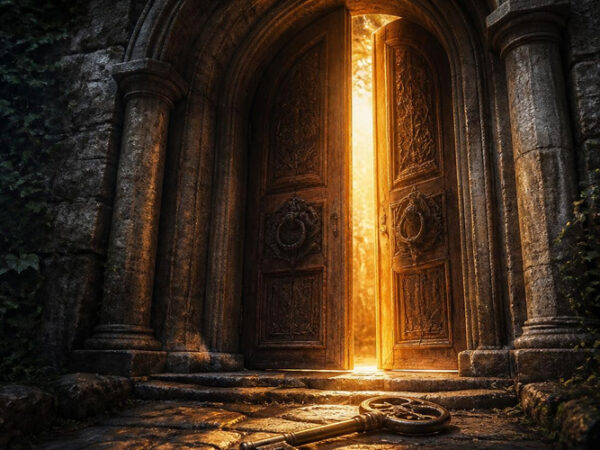
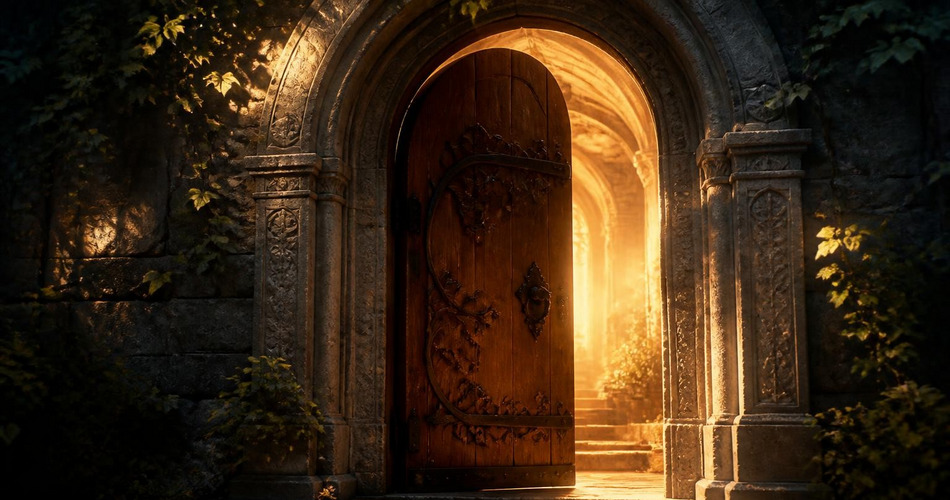
- Arched doorway: Often carries a sense of grandeur or sacredness, common in religious or ceremonial architecture.
- Double doorway: Suggests a grand entrance or a significant transition, often used in palaces or important buildings.
Frequently Asked Questions about Doorway Symbolism
Q: What does it mean when you dream of a doorway?
A: Dreaming of a doorway typically symbolizes a transition or choice in your life. The condition of the door (open, closed, locked) provides insight into your feelings about the change.
Q: Why are doorways considered sacred in many cultures?
A: Doorways are seen as thresholds between the ordinary and the sacred, the known and the unknown. Many cultures perform rituals at doorways to protect against evil spirits and to welcome blessings.
Q: What does a closed door symbolize?
A: A closed door often symbolizes rejection, privacy, or a barrier to progress. It can also represent a need for protection or a desire to keep something hidden.
Q: How is a doorway different from a gate in symbolism?
A: While both represent thresholds, a doorway is typically part of a building and implies entry into a specific space, whereas a gate often marks the boundary of a larger area like a garden or city.
Related Symbols
- Door – The physical object itself, often interchangeable with doorway but more specific to the movable panel.
- Threshold – The strip at the bottom of a doorway, symbolizing the exact point of crossing.
- Gate – A larger entrance, often associated with boundaries and transitions between territories.
- Arch – A curved structure over a doorway, symbolizing triumph or passage.
- Window – Another opening in a wall, but representing insight or view rather than passage.
- Bridge – A structure that connects two separate places, similar to a doorway in its transitional function.