Briefly
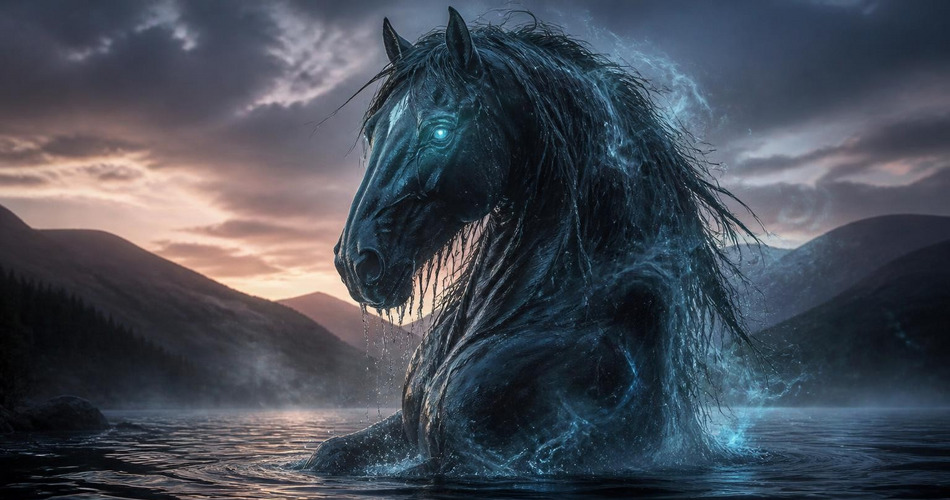
The kelpie is a shape-shifting water spirit from Scottish and Irish folklore, most often taking the form of a horse. It symbolizes the deceptive and dangerous nature of water, the power of transformation, and the allure of the unknown. While it can represent the untamed forces of nature and deep emotional currents, its primary meaning is a warning against false appearances and hidden dangers.
What Does the Kelpie Symbolize?
The kelpie embodies deception and illusion. Its ability to appear as a beautiful horse, only to lure riders into the water and drown them, makes it a powerful symbol of something attractive that hides a deadly trap. This duality also speaks to transformation —the kelpie can change its form at will, representing the unpredictable and mutable nature of both water and the subconscious mind. In a broader sense, the kelpie symbolizes the untamed and wild aspects of nature that demand respect and caution.
Positive and Negative Meanings
Positive associations: On a positive note, the kelpie can symbolize a deep connection to the natural world, especially water environments like rivers and lochs. It represents the raw power of nature and the potential for spiritual transformation when one confronts the depths of their own psyche. Encountering the kelpie in folklore sometimes grants the ability to understand water or even control it, reflecting a mastery over one’s emotions.
Negative meanings: The kelpie is overwhelmingly a warning figure. It symbolizes betrayal, seduction leading to destruction, and the hidden risks of seemingly safe situations. As a water spirit that drowns its victims, it embodies the finality of death, the loss of control, and the terror of being pulled into the unknown against one’s will.
History and Origins of Kelpie Symbolism
The kelpie originates from Celtic mythology, particularly in the lowland regions of Scotland and parts of Ireland. The name likely derives from the Scottish Gaelic calpa or cailpeach, meaning a heifer or colt. Early references appear in oral traditions and later in 19th-century folklore collections. The kelpie was often used as a cautionary tale to keep children away from dangerous water bodies and to warn travelers about risky crossings. Over time, the symbolism evolved to represent not just physical danger but also the peril of trusting appearances.
Kelpie Symbolism in Different Cultures
While the kelpie is most famous in Scottish culture, similar water horse spirits appear across Celtic regions. In Ireland, the each-uisce is a closely related creature, often more malevolent, that drags victims into the sea. In the Orkney and Shetland islands, the nuckelavee shares some traits but is more grotesque. These shared symbols reflect a common cultural understanding of water as a boundary between life and death, and the horse as a powerful, sometimes dangerous, animal. In modern global culture, the kelpie has become a symbol of mysterious and treacherous water spirits, appearing in fantasy literature and games.
Spiritual Meaning of the Kelpie
Spiritually, the kelpie represents the shadow self and the parts of the psyche that are hidden beneath the surface. It calls attention to emotions or desires that may be seductive but ultimately destructive if not approached with awareness. The kelpie also symbolizes a test of character: are you drawn to appearances, or can you see the truth? In a positive spiritual context, encountering the kelpie (in meditation or symbolically) may signal a need to face deep fears or undergo a profound personal transformation.
The Kelpie in Myths and Folklore
In traditional tales, the kelpie is most often encountered by lonely travelers near rivers or lochs. A common story tells of a beautiful horse standing by the water, inviting someone to ride. Once mounted, the rider’s hands stick to the horse’s mane, and the kelpie races into the water, drowning the victim and devouring them (except for the liver, according to some versions). Another motif involves a kelpie that can be controlled by stealing its bridle — a magical object that, if taken, forces the kelpie to obey the finder. This bridle often appears as a silver ornament and grants power over water. The kelpie also sometimes shape-shifts into a human, usually a handsome young man, to lure young women. These myths reinforce the theme of deception and the high cost of falling for superficial charms.
The Kelpie in Dreams
Dreaming of a kelpie often points to a situation in waking life that appears attractive but may be dangerous. It can symbolize a temptation that leads to emotional or psychological drowning. Because the kelpie is a water spirit, its appearance in a dream may also indicate suppressed emotions or unresolved fears rising to the surface. The dreamer is being warned to look beyond appearances and trust their intuition.
Common Dream Scenarios
- Riding a kelpie: You may be allowing yourself to be drawn into a risky situation or relationship that feels exhilarating but is potentially harmful.
- Seeing a kelpie from a distance: A warning that deceptive influences are near, but you still have time to avoid them if you remain cautious.
- Being chased by a kelpie: Indicates a fear of being overwhelmed by emotions or by a person who seems charming but may have ulterior motives.
- Stealing the kelpie’s bridle: This suggests you have the ability to take control of a dangerous situation in your life by understanding its true nature.
The Kelpie in Superstitions and Omens
In Scottish and Irish superstition, seeing a kelpie was considered an omen of death or disaster, especially if the creature was spotted near a home. Some believed that a kelpie could predict storms by howling or by appearing with a coat that drips constantly. Fishermen regarded the kelpie as a bad omen, and it was common to avoid certain stretches of water at dusk or dawn when the creature was thought to be most active. To this day, some locals in the Scottish Highlands treat isolated lochs with a wary respect that echoes these ancient beliefs.
The Kelpie in Art and Literature
One of the most famous modern appearances of a kelpie is in J.K. Rowling’s Harry Potter series, where it is mentioned as a magical creature that inhabits deep waters and can be found in the Black Lake. In Scottish literature, the poet and folklorist Sir Walter Scott referenced kelpies in his works, contributing to their lasting fame. The kelpie also features in children’s fantasy novels such as The Water Horse by Dick King-Smith (which inspired the film The Water Horse: Legend of the Deep), though that story adapts the creature into a more benevolent version. In visual arts, the kelpie has been depicted in numerous paintings and illustrations, most famously in the monumental kelpie sculptures in Falkirk, Scotland — The Kelpies, created by Andy Scott, which symbolize the horse’s enduring cultural significance.
Kelpie Tattoo Meaning
Kelpie tattoos are chosen by those who feel a connection to water, nature, or Celtic heritage. The symbol often represents an awareness of life’s hidden dangers and a personal journey of transformation. A kelpie tattoo can also signify inner strength and the ability to navigate emotional depths without being consumed. Because of the creature’s dual nature, the tattoo may serve as a reminder to stay grounded and see beyond illusions.
Frequently Asked Questions
Q: Is a kelpie a demon?
A: No, the kelpie is not a demon in the traditional sense. It is a nature spirit or fairy from Celtic folklore, typically considered malevolent but not inherently evil in a theological way.
Q: Can a kelpie be good?
A: In most folklore, kelpies are dangerous. However, some stories say a controlled kelpie (via its bridle) can serve humans or bring good luck. Modern interpretations sometimes soften the creature into a more neutral or even protective spirit.
Q: What does a kelpie symbolize in dreams?
A: In dreams, a kelpie usually symbolizes a deceptive influence or a hidden danger in your life, especially related to emotions or relationships. It urges caution and self-awareness.
Q: Are kelpies and each-uisge the same?
A: They are very similar but come from different regions — kelpie from Scottish lowlands, each-uisge from Irish and Highland traditions. The each-uisge is generally considered more vicious.
Related Symbols
- Each-uisge: A closely related Irish/Highland water horse, often more deadly.
- Nuckelavee: A malevolent orcadian sea spirit with horse-like traits.
- Selkie: A seal-like creature that can shed its skin to become human, also tied to transformation and water.
- Water Horse: A broader category of mythical equine water spirits found in many cultures.
- Bunyip: An Australian water spirit with similar warning symbolism.