Briefly
A tombstone is a carved stone or marker placed at a grave to commemorate the deceased. It symbolizes the finality of death, the enduring memory of a life, and the physical boundary between the living and the dead. Across cultures, tombstones also represent legacy, respect for ancestors, and the hope of remembrance beyond one’s lifetime. While primarily associated with mourning and loss, they can also convey messages of love, faith, and the continuity of family or community.
What Does Tombstone Symbolize?
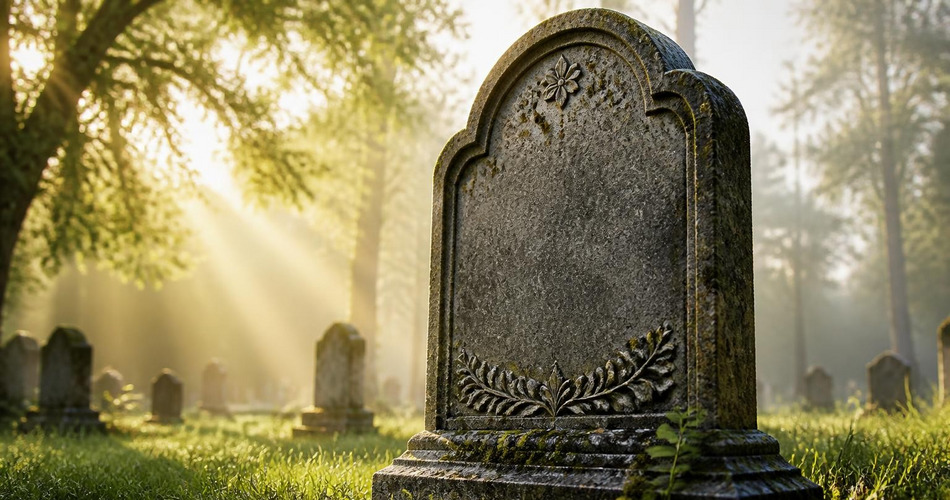
Tombstones universally symbolize death and the physical end of a person’s life. They mark a specific location where a body is interred, serving as a permanent reminder of mortality. Beyond that, tombstones often represent memory — the desire to keep the deceased’s name and story alive. The inscription, dates, and sometimes epitaph or imagery on a tombstone preserve a fragment of the person’s identity for future generations.
In many societies, tombstones also symbolize legacy. The size, material, and ornamentation of a tombstone can reflect the social status, wealth, or achievements of the deceased. A simple stone may indicate humility, while an elaborate monument might celebrate a public figure or a family’s prominence. Additionally, tombstones often carry religious symbols — crosses, stars, or other icons — that express the deceased’s faith and the hope of an afterlife.
Positive and Negative Meanings
Positive associations: Tombstones provide a tangible place for mourning, remembrance, and healing. They allow families and communities to honor the dead, preserve history, and maintain a connection across generations. A well-maintained tombstone can be a source of comfort and a symbol of enduring love and respect.
Negative meanings: Tombstones are inevitably linked to grief, loss, and the fear of death. They can evoke feelings of sadness, loneliness, and the finality of human existence. In some contexts, neglected or vandalized tombstones symbolize forgotten lives or unresolved mourning. They may also be associated with superstitions about hauntings or restless spirits.
History and Origins of Tombstone Symbolism
The practice of marking graves with stones dates back thousands of years. Ancient cultures such as the Egyptians, Greeks, and Romans placed stone markers or stelae over burials to honor the dead and prevent disturbance. The word “tombstone” itself comes from the Greek tymbos (burial mound) and the Old English stan (stone).
In medieval Europe, tombstones often bore religious imagery and inscriptions asking for prayers for the soul of the deceased. During the Victorian era, elaborate tombstones with symbols like weeping willows, urns, and angels became common, reflecting a romanticized view of death and the afterlife. The symbolism of tombstones evolved to emphasize not just the end of life but the virtues and social identity of the person buried beneath.
Symbolism of Tombstones in Different Cultures
In Western Christian traditions, tombstones frequently feature crosses, angels, or biblical verses, symbolizing faith in resurrection and eternal life. The orientation of the stone (often facing east) reflects the belief in Christ’s second coming.
In Jewish culture, tombstones are typically simple and unadorned, with Hebrew inscriptions. Small stones are often placed on the grave by visitors as a sign of respect and remembrance. The absence of elaborate decoration emphasizes equality in death and focus on the soul rather than material status.
In East Asian cultures, such as China and Japan, tombstones often include the family name and ancestral lineage. Offerings of food, incense, and paper money are made at the grave, reinforcing the connection between the living and the dead. The tombstone itself is seen as a gateway for the spirit to receive these offerings.
In Islamic tradition, tombstones are usually modest, with only the name and dates of the deceased, and sometimes a Quranic verse. Extravagant monuments are discouraged to avoid idolatry and to remind the living of the humility of death.
Spiritual Meaning of Tombstones
Spiritually, tombstones are often viewed as markers of transition. They represent the boundary between the physical world and the afterlife or spirit realm. For many, visiting a tombstone is an act of spiritual connection — a way to communicate with the deceased through prayer, reflection, or meditation.
In some belief systems, tombstones are thought to anchor the soul to the earth, preventing it from wandering. Others see them as symbols of the soul’s release, with the stone marking only the empty shell left behind. The spiritual meaning of a tombstone ultimately depends on cultural and personal beliefs about what happens after death.
Tombstones in Myths and Folklore
Tombstones appear frequently in folklore as sites of supernatural activity. Stories of ghosts haunting cemeteries often center on specific tombstones, especially those of people who died tragically or were buried improperly. In European folklore, a tombstone might be said to glow or move if the deceased was a witch or a vampire.
In some traditions, touching a tombstone is believed to bring bad luck or even illness, while in others, rubbing a tombstone is thought to grant a wish or cure an ailment. These beliefs vary widely and are often tied to local legends about particular graves.
Tombstones in Dreams
Dreaming of a tombstone can symbolize the end of a phase in life, such as a relationship, career, or personal habit. It may also reflect unresolved grief or fear of death. The condition of the tombstone in the dream — clean and legible versus old and crumbling — can indicate how the dreamer feels about the past or about letting go.
Psychologically, a tombstone in a dream might represent repressed memories or aspects of the self that have been “buried.” It can also be a call to honor something that has passed, whether a person, an experience, or an old identity.
Common Dream Scenarios Involving Tombstones
- Seeing your own name on a tombstone: Often interpreted as a warning about health or a major life change, but can also signify a desire for a fresh start or the end of an old self.
- Reading an epitaph on a tombstone: May indicate that a message from the subconscious or from a deceased loved one is trying to reach you.
- Cleaning or repairing a tombstone: Suggests a need to resolve unfinished business with the past or to honor a forgotten memory.
- A tombstone cracking or falling: Could represent a sudden realization or the breakdown of long-held beliefs about death or life.
Tombstones in Superstitions and Omens
Many superstitions surround tombstones. Walking over a grave is thought to bring bad luck in some cultures, while in others it is considered disrespectful. A tombstone that leans or sinks is sometimes seen as an omen of further death in the family.
In some folk traditions, a raven or crow perched on a tombstone is considered a messenger from the spirit world. Conversely, finding a coin on a tombstone is believed to be a sign of protection or a token from the deceased. These superstitions vary by region and are often passed down orally.
Tombstones in Art and Literature
Tombstones appear in numerous works of art and literature as powerful symbols of mortality and memory. In William Shakespeare’s Hamlet, the graveyard scene (Act V, Scene 1) features a tombstone and the skull of Yorick, prompting Hamlet’s famous meditation on death. The tombstone here symbolizes the leveling power of death, reducing even great men to dust.
In Edgar Allan Poe’s poem “The Raven”, the narrator’s sorrow over a lost Lenore is intensified by the raven’s shadow falling on a bust, but the poem’s setting near a tombstone-like monument reinforces themes of grief and the impossibility of forgetting. The 1993 film Tombstone uses the title itself as a symbol of the violent end that awaits the characters in the Old West, linking the town’s name to the inevitability of death.
In visual art, tombstones are central to many memento mori paintings, such as those by the Dutch Golden Age artists, where a skull and a tombstone remind viewers of life’s transience. Contemporary artists like Andy Warhol have also used tombstones in their work to comment on fame and mortality.
Tattoo Meaning of Tombstones
Tombstone tattoos are often chosen to memorialize a loved one or to express an acceptance of death. They can symbolize a significant loss, a life-changing event, or a philosophical stance on mortality. Some designs incorporate names, dates, or epitaphs, while others use a generic tombstone shape to represent the concept of death itself.
In certain subcultures, such as rockabilly or punk, tombstone tattoos may also be worn as a symbol of rebellion or a dark sense of humor about death. The placement and style of the tattoo can add layers of meaning, from a small, discreet marker to a large, ornate monument.
Meanings of Different Types of Tombstones
- Upright headstones: The most common form, symbolizing a vertical connection between earth and heaven, and often used to display inscriptions and carvings.
- Flat markers (ledgers): Placed flush with the ground, these symbolize humility and equality, and are common in military cemeteries.
- Obelisks: Tall, four-sided pillars that represent eternal life or the sun’s rays, often used for prominent individuals.
- Cross-shaped tombstones: Directly reference Christian faith and the hope of resurrection.
- Angel statues: Guardians of the grave, symbolizing the soul’s ascent to heaven or the presence of divine protection.
Frequently Asked Questions About Tombstone Symbolism
Q: What does a broken tombstone symbolize?
A: A broken tombstone often represents a life cut short, an untimely death, or a family tragedy. In art and literature, it can also symbolize the fragility of memory and the decay of all earthly things.
Q: Why do some tombstones have symbols like a hand pointing up?
A: A hand pointing upward on a tombstone symbolizes the soul ascending to heaven. A hand pointing downward may indicate a sudden death or the deceased’s role as a guide from the afterlife.
Q: Are tombstones always made of stone?
A: While stone (especially granite, marble, or limestone) is traditional, modern tombstones can be made of metal, wood, or even glass. The material itself can carry symbolic weight: granite for permanence, marble for purity, wood for humility.
Q: What does an empty tombstone mean?
A: An empty tombstone (with no name or dates) can symbolize an anonymous death, a forgotten life, or the universal nature of death. It is sometimes used in art to represent every person’s eventual fate.
Related Symbols
- Skull – A direct symbol of death and mortality, often paired with tombstones in memento mori imagery.
- Grave – The burial site itself, of which the tombstone is the marker.
- Cross – A common religious symbol on tombstones, representing Christian faith and resurrection.
- Angel – Guardian or messenger figures frequently carved on tombstones to watch over the dead.
- Epitaph – The inscription on a tombstone, carrying the message or legacy of the deceased.