Briefly
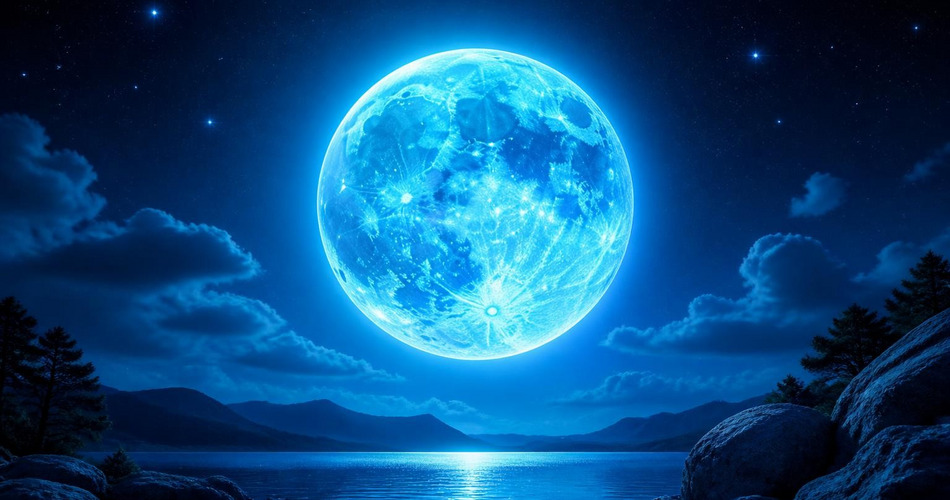
A blue moon is a rare astronomical event that has captured the human imagination far beyond its scientific definition. While commonly understood as the second full moon within a single calendar month, the term has come to symbolize rarity, the unexpected, and a break from the ordinary. Its very name evokes a sense of the surreal and the impossible, making it a powerful symbol of hope, transformation, and the magic of chance. This unique lunar event encourages us to embrace the unusual and believe in the improbable.
What Does the Blue Moon Symbolize?
The blue moon primarily symbolizes rarity. The phrase “once in a blue moon” is universally understood to mean a very infrequent event, giving the blue moon an aura of special significance. It represents a moment out of time, a pause in the usual rhythm of life. Symbolically, it encourages embracing the unusual and believing in the improbable. The “blue” aspect adds layers of meaning, often associated with calm, mystery, sadness (the “blues”), or the ethereal. A blue moon can represent a second chance, a bonus opportunity that comes when least expected, making it a potent symbol for new beginnings and unexpected blessings.
Blue Moon: Positive and Negative Meanings
Positive associations: The blue moon is a powerful symbol of hope and magic. It suggests that even the rarest occurrences are possible, encouraging people to dream big and pursue seemingly impossible goals. It represents a second chance, a bonus opportunity that comes when least expected. In spiritual circles, it is a time of heightened intuition and manifestation.
Negative meanings: Because of its connection to the phrase “once in a blue moon,” it can also symbolize loneliness, isolation, or a long period of waiting. In some contexts, the “blue” moon can be associated with sadness or melancholy, representing a rare but profound sorrow. Historically, an actual blue-tinted moon caused by volcanic dust was seen as an omen of disaster or great upheaval.
History and Origins of Blue Moon Symbolism
The modern definition of a blue moon as the second full moon in a month arose from a misinterpretation in a 1946 article in Sky & Telescope magazine by James Hugh Pruett. The original definition from the Maine Farmers’ Almanac referred to the third full moon in a season that has four full moons. Regardless of the technical definition, the phrase “once in a blue moon” has been in use for centuries, dating back to at least the 16th century. It originally referred to something absurd or impossible, much like the idea of the moon literally turning blue. This historical use firmly established the blue moon as a symbol of the impossible or the highly improbable. The literal blue moon, caused by atmospheric particles from events like the 1883 Krakatoa eruption, further cemented its connection to dramatic transformation and awe.
Blue Moon Symbolism in Different Cultures
In many Western cultures, the blue moon is seen as a time of heightened spiritual energy and manifestation, largely due to the general mysticism surrounding full moons. The rarity of the event amplifies its perceived power. While specific folklore directly about the “blue moon” is sparse compared to the regular full moon, the color blue holds significant meaning across cultures. In Hinduism, blue is associated with Krishna, representing the divine and the infinite. In many traditions, blue is the color of the heavens, the throat chakra, and communication. A blue moon thus combines the potent feminine energy of the moon with the expansive, communicative energy of the color blue. In Celtic traditions, the moon was a marker of time and a guide for planting, and an extra moon was a powerful anomaly.
Spiritual Meaning of the Blue Moon
Spiritually, a blue moon is considered a highly potent time for setting intentions. Because it is a “bonus” full moon, it is seen as an extra opportunity to release what no longer serves you and to call in miracles. It is a time for deep introspection, connecting with the subconscious, and embracing the unexpected twists of fate. The blue moon is often associated with the energy of the Water element, making it a powerful time for emotional healing and cleansing. It represents a portal for the impossible to become possible, making it a sacred time for manifestation work and deep spiritual reflection.
The Blue Moon in Myths and Folklore
Folklore surrounding the blue moon is less about a specific myth and more about the general superstitions attached to full moons, amplified by their rarity. Historically, an actual blue-tinted moon was a real, observable phenomenon caused by volcanic eruptions or massive forest fires (e.g., the 1883 Krakatoa eruption). This literal blue moon was seen as an omen of great change or disaster. This connection to dramatic natural events cemented its symbolic link to transformation and upheaval. In agricultural folklore, an extra full moon could disrupt the planting and harvesting calendar, adding to its reputation as a time of unpredictability.
The Blue Moon in Dreams
Dreaming of a blue moon can be a profound experience. It often signifies that a rare or significant event is on the horizon. It can represent a feeling of being special or chosen, or conversely, a feeling of being isolated or different from others. The context of the dream is crucial. It often appears during times of transition or when a major life decision is pending, serving as a subconscious signal to pay attention to the unusual and the magical in waking life.
Common Blue Moon Dream Scenarios
- Seeing a bright blue moon in the sky: Symbolizes a sudden realization, a moment of clarity, or the arrival of a long-awaited opportunity.
- A blue moon in a dark, starless sky: Represents hope and guidance during a difficult or confusing time in life, acting as a lone beacon.
- Two full moons in one sky: Directly references the “blue moon” phenomenon and symbolizes an overwhelming abundance of energy, choices, or changes.
- A blue moon turning red or white: Suggests a shift in perspective, a change in fortune, or the passing of a rare opportunity.
- Trying to touch or catch a blue moon: Represents the pursuit of an impossible dream or a deeply held aspiration that feels just out of reach.
Blue Moon Superstitions and Omens
- An actual blue moon in the sky: Historically seen as an omen of great upheaval, such as war, famine, or natural disaster, due to its association with volcanic winters.
- Making a wish on a blue moon: A modern superstition holds that wishes made under a blue moon are more powerful and likely to come true because of the event’s rarity.
- Planting crops under a blue moon: Some agricultural traditions suggest that planting during a blue moon leads to a bountiful harvest, as it is a “bonus” moon.
- Getting married under a blue moon: Considered auspicious for a long and happy marriage, symbolizing a love that is as rare and special as the event itself.
The Blue Moon in Art and Literature
The most famous cultural touchstone for the blue moon is the song “Blue Moon” (also known as “Blue Moon: The Marcels’ Song” / “Blue Moon” by Rodgers and Hart). Written by Richard Rodgers and Lorenz Hart for the 1934 film Hollywood Party, it became a standard. The lyrics “Blue moon, you saw me standing alone” perfectly capture the symbol’s association with rare, poignant moments of solitude and longing. The song has been covered by numerous artists, including Frank Sinatra and Elvis Presley, cementing its place in popular culture.
The Blue Moon cocktail, a mix of gin, blue curacao, and lemon juice, is a modern cultural symbol. Its vibrant blue color is an artificial representation of the natural phenomenon, symbolizing creativity, mystery, and a touch of the exotic. In literature, the phrase “once in a blue moon” is used extensively to denote rarity. The term itself has been used in titles, such as the novel Once in a Blue Moon by Dorothea Benton Frank, which uses the concept to explore themes of family, secrets, and the unexpected turns of life.
Blue Moon Tattoo Meaning
A blue moon tattoo is a beautiful and meaningful choice for those who wish to symbolize rarity, individuality, and a touch of magic. It often represents a unique personal journey, a transformative period in one’s life, or a deep connection to the cycles of the universe. Because the blue moon is a rare event, the tattoo can signify that the wearer is one of a kind or has overcome improbable odds. It can also be a tribute to a special memory or a loved one, representing a bond that is as rare and precious as a blue moon.
Meanings of Different Types of Blue Moons
While all blue moons share the core symbolism of rarity, the specific type can add nuance to its meaning. The monthly blue moon (the second full moon in a calendar month) is the most common modern definition. It symbolizes a bonus, a second chance, and the unexpected. The seasonal blue moon (the third full moon in a season of four) is the original definition. It is even rarer and carries a stronger connotation of disruption and a break from the natural order. A literal blue moon, where the moon appears blue due to atmospheric conditions, is a powerful symbol of dramatic change, natural forces, and the awe-inspiring power of the Earth.
Blue Moon Frequently Asked Questions
Q: What does the phrase “once in a blue moon” mean?
A: It is an idiom meaning a very rare event, occurring infrequently. It originates from the rarity of the astronomical blue moon event.
Q: Is a blue moon actually blue in color?
A: Almost never. The term “blue moon” refers to the calendar rarity of the event. The moon can appear blue due to atmospheric dust from volcanic eruptions or fires, but this is unrelated to the calendar definition.
Q: How often does a blue moon occur?
A: On average, a blue moon (the second full moon in a month) occurs about once every 2.5 years. This is where the phrase “once in a blue moon” derives its meaning.
Q: What is the spiritual significance of a blue moon?
A: Spiritually, a blue moon is a powerful time for manifestation, intention-setting, and emotional healing. It is seen as an extra opportunity for release and renewal.
Related Blue Moon Symbols
- Full Moon: The base symbol of completion, power, and illumination, of which the blue moon is a rare variation.
- Harvest Moon: The full moon closest to the autumnal equinox, symbolizing abundance and the end of the growing season.
- Blood Moon: A lunar eclipse, often symbolizing change, danger, or prophecy.
- Supermoon: A full moon that appears larger than usual, symbolizing amplified energy and visibility.
- New Moon: Symbolizes new beginnings, fresh starts, and setting intentions for the cycle ahead.